
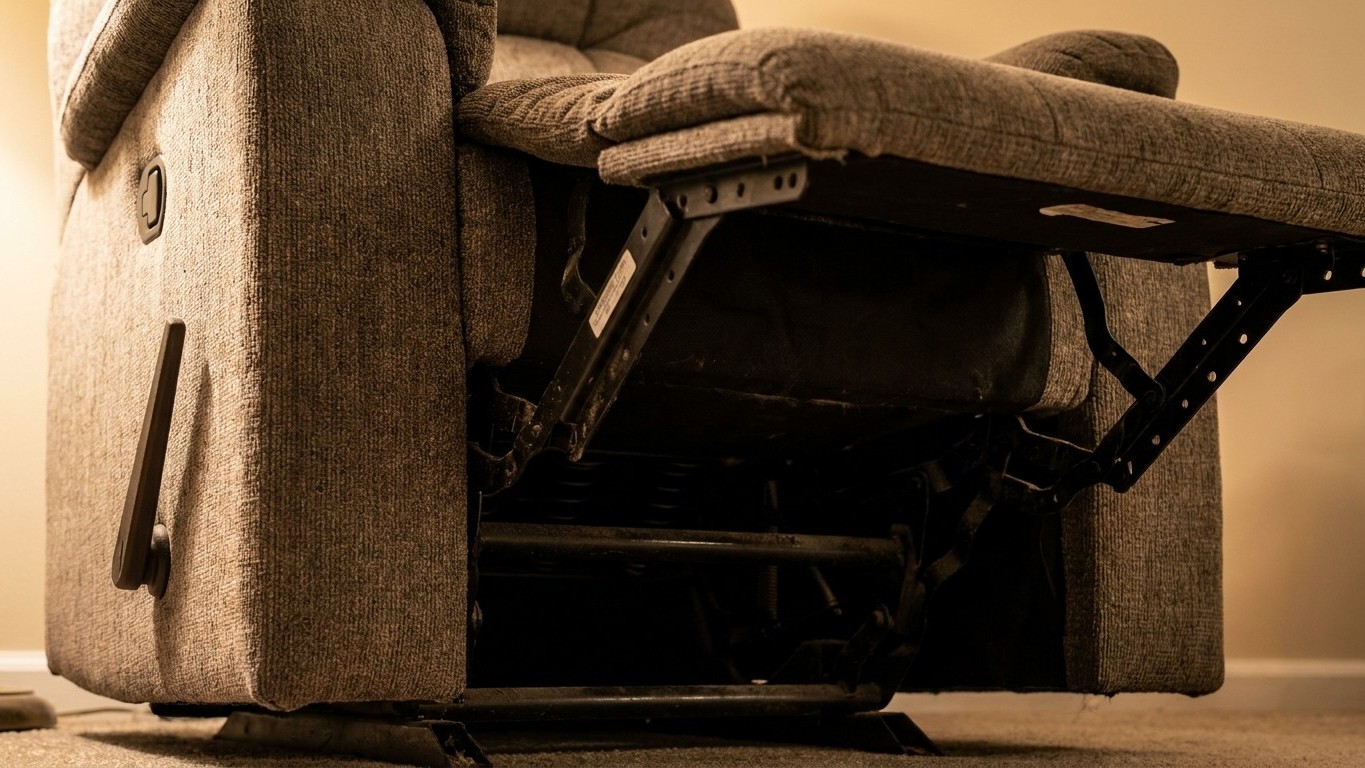
A recliner chair is one of the most treacherous pieces of furniture in any pet-owning home. That might sound dramatic, but the number of cats, dogs, and small animals seriously injured or killed by recliner mechanisms every year is genuinely alarming, and almost never talked about. The familiar sound: a yelp, a crunch, or a desperate scramble under a descending footrest. For many owners, that sound is one they never forget.
Key takeaways
- A common household item claims more pet lives than most owners realize—and the injuries are often invisible
- Your pet can look fine after a recliner accident but deteriorate dangerously within hours
- A three-second habit could save your pet’s life every single time you use your chair
Why Recliners Are Particularly Dangerous for Pets
Recliners are cosy for people and irresistible hideouts for cats. The warm nooks, rocking motion, and secret spaces under the seat make them perfect feline territory. Unfortunately, the same features that make recliners comfortable for us, linkages, scissor arms, and moving footrests, create real hazards for curious paws, tails, and whiskers.
When you open the footrest part of a recliner, you create an open space full of dangerous parts like springs or sections of the metal frame. For curious cats, this may be a death zone. What makes it worse is how quickly the situation turns. You’re settling back for an evening’s television, you push the footrest down without thinking, and in a split second, a cat you didn’t know was underneath pays an enormous price.
Power recliners move quietly, giving less warning to a sleeping cat. Rocking and glider bases introduce fore-to-aft motion that can catch paws under runners or base plates. Push-back models snap closed if you shift weight rapidly, while lever-style mechanisms give more deliberate control, a small but potentially life-saving distinction for pet owners.
The horror stories are not rare. One foster carer had a kitten get his head caught in a recliner chair; he was lucky he wasn’t killed but was in intensive care with brain swelling, and it took him weeks to recover. Reports suggest recliner and rocker accidents can be seen at veterinary practices with concerning regularity, and the outcome is often fatal. Workers at pet cremation services have noted this is a fairly common cause of death for cats, dogs of all sizes, and ferrets. The sofa bed is another offender, incidentally, sofa beds commonly trap and kill pets in the same way. It’s a category of household hazard that furniture manufacturers have been painfully slow to address.
What Happens to a Pet’s Body After a Crush Injury
A pet that seems to walk away shaken but intact after being caught under a footrest may not be out of danger. The deceptive part of crush injuries is how invisible the damage can be.
Dogs and cats instinctively mask pain, so watch for subtle indicators rather than relying on visible injuries alone: pale or white gums indicating poor blood circulation, rapid or laboured breathing even when the pet is resting. Pets may look normal after an accident and then decline hours later as hidden injuries progress.
Indoor cats can suffer falls, get accidentally stepped on or slammed in a door, or injured by a reclining chair, and recliner injuries carry the same risk of internal damage as any blunt-force trauma. The normal resting respiratory rate in cats is 35 or fewer breaths per minute. With internal bleeding, blood is pouring into a cavity, typically the chest or abdomen, which means fewer circulating red blood cells to carry oxygen to the body tissues.
If a cat is caught under furniture, watch for limping, swelling, difficulty moving, vocalising in pain, or lethargy. Internal injuries may cause breathing issues or abdominal tenderness. Immediate veterinary evaluation is necessary if symptoms worsen or persist. Always get your pet seen by a vet as soon as possible after any crush incident, even if they appear outwardly normal. It is not possible to stop internal bleeding without veterinary intervention.
How to Actually Protect Your Pet
The honest answer is that the safest approach is a combination of habit, environment, and smart furniture choices. No single measure is foolproof on its own.
The most effective thing you can do is make “check before you close” a non-negotiable household rule. Some owners feel so concerned about their chairs injuring their cats that they count every pet before operating the recliner. It sounds fussy, but it takes three seconds and it saves lives. Knocking the sides of the chair before closing, and always closing slowly, gives any animal underneath a chance to bolt. Closing a footrest gradually rather than letting it drop is especially important if you have children visiting or guests who don’t know your pets’ habits.
Blocking access to the space beneath the chair is the next line of defence. Some owners stuff old standard-sized pillows at the front and back of the recliner when not using it, preventing pets from crawling underneath, and report that this works well even with persistent cats. Closing the base with a dust barrier and blocking crawl-access entirely is a more permanent solution — a fitted cover stapled or sewn around the underside of the chair removes the hazard completely. It’s a five-minute DIY job that could prevent a tragedy.
For those buying a new recliner, the design itself matters. Slower, controlled movement mechanisms ensure that pets have time to move away from moving parts, and some systems include safety sensors that detect obstructions and automatically stop movement if resistance is encountered. Wall-hugger and zero-wall recliners slide forward as the back reclines, creating fewer open cavities behind the backrest, a safer configuration overall. Swivel, rocker, and glider designs are the most risky for lurking paws because motion occurs at floor level.
Training your pet to stay away from the recliner is worth attempting, though it requires consistency. Even if a cat isn’t physically injured by getting caught in a recliner, the experience can be traumatic, and cats may become fearful of furniture or develop anxiety and behavioural issues as a result. Providing an appealing, alternative spot right beside the chair, a warm cat bed at the same height, often works better than deterrents alone. Offering a reserved perch such as a cat bed next to you and teaching a “go to bed” cue before you move the chair can work well; never close the footrest while a cat is on or behind it.
If the Worst Happens
If your pet is caught in a recliner mechanism, stop movement immediately. Lift the weight off the animal by reversing the motion or manually lifting the footrest, using two people if necessary. Do not yank the cat free if trapped. Wrap them in a towel to prevent scratching and call your veterinarian or an emergency clinic. Even minor crush injuries can swell and worsen over the hours that follow.
Get to a vet. Not tomorrow morning. Now. Pets losing large volumes of blood rapidly can decline in minutes to hours; slower internal bleeding may show signs over days, but in either case, prompt veterinary intervention is non-negotiable. Once at the practice, blood tests, coagulation panels, and ultrasound FAST scans can help visualise fluid accumulation and organ injury that would be completely invisible to you at home.
One final thing worth knowing: reclining chairs can kill people too. A cinema-goer was crushed by a reclining chair as he searched for his keys underneath it; it took 15 minutes to release him and he died in hospital a week later from a hypoxic brain injury. The crushing force of a recliner mechanism is not trivial, which is precisely why so many pet owners, once they have experienced a near-miss, end up counting their animals every single time they use the chair. That habit, inconvenient as it feels, is what keeps them safe.
Sources : amazon.com | alpineanimal.net