
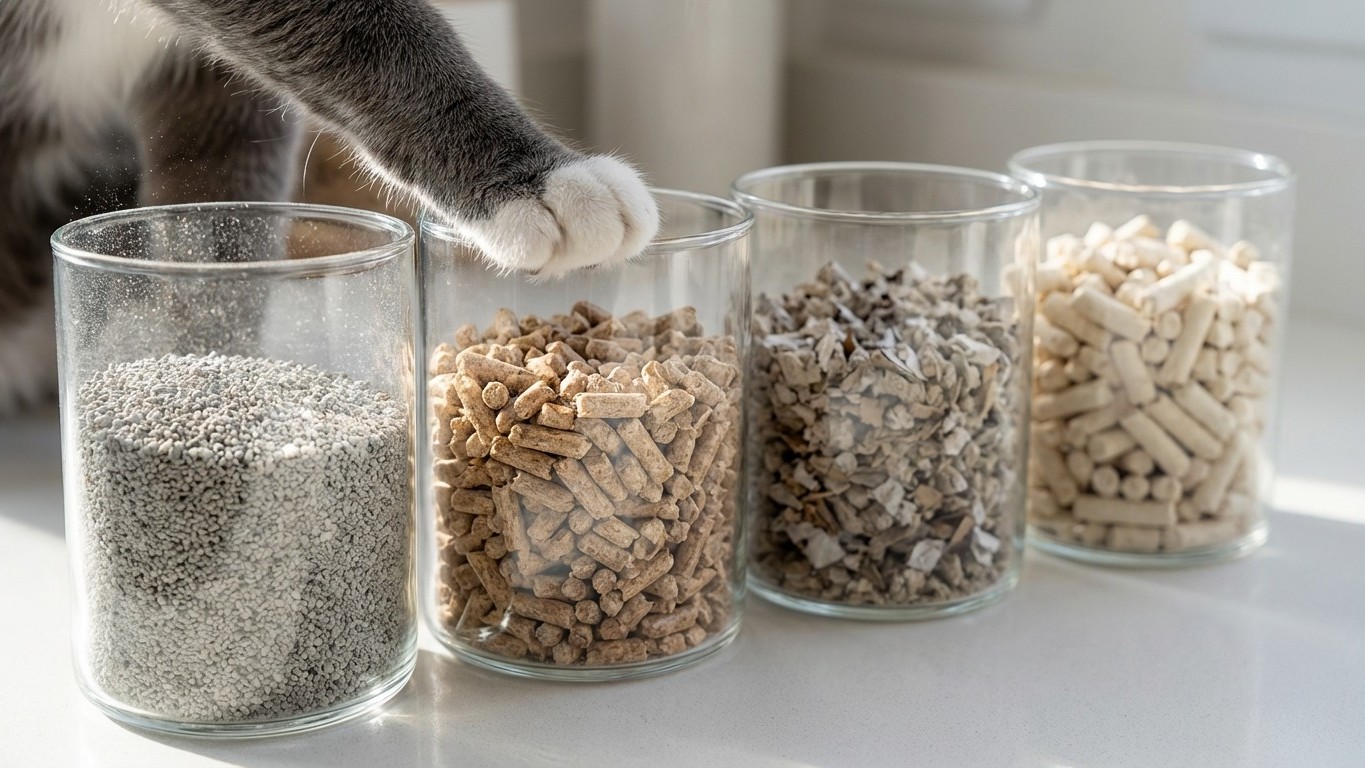
Clay clumping litter has ruled the cat litter market for decades. It’s cheap, widely available, and does a reasonable job of containing odours. But over the past couple of years, concerns from veterinary professionals and animal welfare organisations have grown loud enough that many cat owners are rethinking what they put in the tray. The type drawing the most scrutiny? Sodium bentonite clay litter, particularly the fine-grained, highly dusty varieties, and the reasons go beyond simple inconvenience.
Key takeaways
- A litter type used by millions of cat owners is drawing unexpected warnings from veterinary experts — but most owners have no idea why
- The health risks go beyond just sneezing: respiratory damage, digestive complications, and environmental damage are all part of the picture
- Several alternatives have evolved dramatically and now perform as well as traditional litter — but success depends on knowing how to make the switch
Why Clay Litter Has Come Under the Spotlight
The issue with sodium bentonite clay isn’t new, but awareness has spread significantly. This type of clumping clay produces silica dust when disturbed, and cats disturb it constantly, digging, covering, sniffing, and sometimes even eating litter out of curiosity or pica behaviour. Kittens are especially vulnerable, as they tend to mouth everything in their environment. When fine clay particles are inhaled repeatedly, there’s concern about respiratory irritation, and in cats with asthma or chronic bronchitis (conditions far more common in domestic cats than many owners realise), dusty litters can actively worsen symptoms.
There’s also the ingestion angle. Sodium bentonite is an expansive clay, meaning it swells when it absorbs moisture, which is precisely why it clumps so satisfyingly around waste. In a cat’s digestive tract, that same swelling action is far less desirable. Kittens under four months are now routinely advised against having clumping clay litter in their trays for this reason. Many veterinary professionals recommend alternative substrates during those early months, full stop.
The environmental picture adds another layer of concern. Sodium bentonite is strip-mined, a process that strips topsoil and disrupts ecosystems on a fairly large scale. For cat owners who care about their carbon footprint, that background detail tends to land with some weight.
What’s Actually Replacing It
The good news is that the alternatives have genuinely improved. A few years ago, “eco litter” was a polite term for something your cat might refuse to use entirely. That’s changed, and the market now offers several options that perform well and come with better welfare credentials.
Wood pellet litter has become one of the most popular switches. Made from compressed sawdust (often from sustainable forestry waste), it absorbs urine effectively and produces far less dust than clay. The pellets break down into sawdust once saturated, which some owners find slightly fiddly to manage but ultimately not difficult once you adjust your cleaning routine. Pine-based versions have a Natural scent that masks odour Without added chemicals, though a small number of cats find the smell off-putting at first.
Paper-based litters, made from recycled newspaper or other paper waste, are another strong contender. These are among the lowest-dust options available, making them a common recommendation for cats recovering from surgery (vets often suggest paper litter post-operatively to avoid getting clay particles into wounds) or those with respiratory sensitivities. The texture is quite different from clay, and yes, some cats will protest. Patience and a gradual transition usually solve this.
Corn and wheat-based litters have carved out a devoted following, particularly among owners with multiple cats. They tend to clump reasonably well, are biodegradable, and produce minimal dust. The main caveat worth knowing: they can be prone to mould if the tray isn’t cleaned frequently enough, and in humid environments, some owners have noticed issues with grain mites. Not a dealbreaker, but something to be aware of.
Tofu litter, made from soybean pulp, arrived relatively quietly but has picked up considerable momentum, especially among flat-dwellers whose cats use covered trays. It’s flushable in small amounts (though always worth checking local water authority guidance before making that a habit), clumps firmly, and is virtually dust-free. The price point is higher than clay, which is honestly the most common complaint about most of these alternatives.
Making the Switch Without Losing Your Cat’s Cooperation
Cats are, famously, not enthusiastic about change. Any litter transition done abruptly risks a cat deciding the corner of the living room is a more acceptable bathroom. The method that tends to work best is a gradual blend approach: start with roughly 80% of the current litter and 20% of the new one, then shift the ratio over two to three weeks until the changeover is Complete. Some cats breeze through this with complete indifference. Others will make their feelings known immediately and loudly.
Texture preference is genuinely individual. Research into cat litter preferences (yes, this has been formally studied) suggests that most cats prefer a fine, sand-like texture, which is one reason clay became so dominant in the first place. The softer, finer versions of wood or paper litter tend to see better acceptance than coarser pellet styles. If a cat consistently rejects a new litter despite a slow introduction, it’s worth trying a different texture within the natural/alternative category rather than giving up on the switch entirely.
One thing that doesn’t get mentioned enough: tray hygiene matters far more than litter type for odour control. The cleanest tray will outperform any litter brand. Daily scooping, full tray changes regularly, and washing the tray itself with unscented soap goes a long way regardless of what you fill it with.
If your cat has been sneezing more, seems reluctant to use the litter tray, or shows any respiratory symptoms, a vet conversation is the right first step before assuming the litter is the culprit. There are plenty of causes for those signs, and getting a proper diagnosis matters. But if your cat is healthy and you’ve been using a dusty clay litter for years on autopilot, this might be the year to genuinely reconsider what’s in that tray, for their sake, and for yours too, since you’re breathing that dust every time you scoop.