
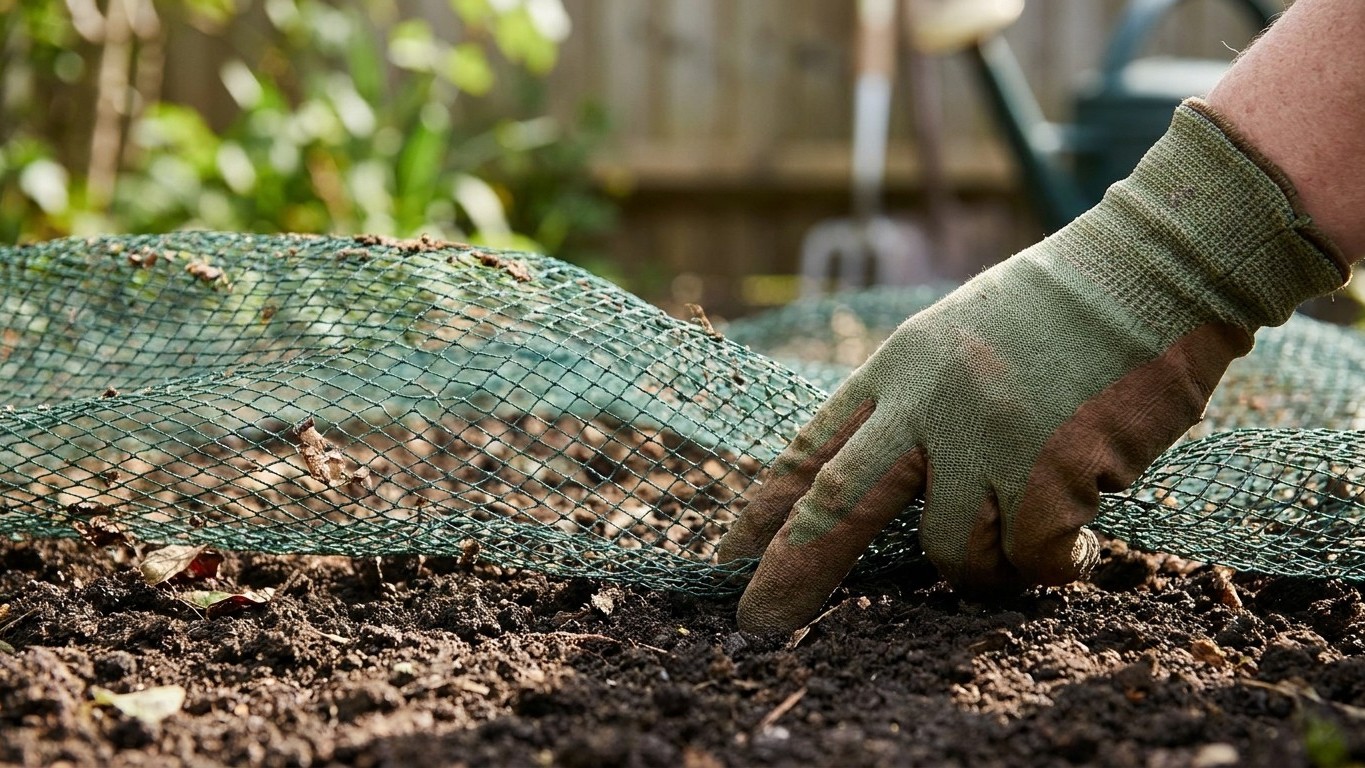
That gentle tug along the base of your netting reveals more than you’d think. If two fingers slide through easily and the mesh gives way when you pull, you’ve found exactly the kind of gap a hedgehog, fledgling or even a cat’s paw can wriggle into and never get back out of. Vets and wildlife rescuers see the aftermath of this every single summer, and the fix takes about thirty seconds.
Key takeaways
- A single loose fold at ground level can strangle hedgehogs, birds, and cats—but most gardeners never notice
- The RSPCA rescues hundreds of animals yearly tangled in garden netting, some with life-threatening injuries
- One five-minute check every few days could prevent heartbreak and save a life
Why a floppy net becomes a death trap
Netting doesn’t need to be dramatic to be lethal. A loose fold at ground level, a sagging corner where a stake has worked free, a few centimetres of slack where the net meets the lawn: that’s all it takes. In one Derby garden, netting trailing on the floor caught around a hedgehog’s head, neck, body and back legs, leaving the animal in danger of suffocating before an RSPCA officer arrived to cut it free with scissors. The Scottish SPCA has recorded similarly grim outcomes, warning that hedgehogs have either died or had to be put to sleep due to injuries after being strangled by football netting.
Birds fare no better. A tawny owl swooping for a mouse near a pond ended up hopelessly tangled overnight, and by the time an RSPCA rescue officer arrived he found the bird exhausted from struggling to escape, barely moving while netting was cut away. In Devon, a woodpecker wasn’t so lucky. An RSPCA inspector who attended the scene put it plainly: netting like this is potentially lethal to wild animals and birds, who can end up with life-threatening injuries getting their legs, wings or beaks tangled, or starve to death if not spotted. Multiply these individual tragedies across the country and the numbers add up fast; the RSPCA rescues hundreds of animals a year that’ve been tangled in netting.
Fruit cages are particular offenders because gardeners put them up in spring, forget about them by July, and never notice the netting has slipped as the ground settles or plants grow into it.
The finger test, and what “good” netting actually looks like
Australian wildlife guidance offers a wonderfully simple benchmark that translates perfectly to a British allotment: use netting with a mesh aperture no greater than 5 x 5mm at full stretch, and an easy way to check is to see whether you can poke your finger through the mesh. If your fingers pass through with room to spare, the gaps are large enough for a hedgehog’s snout, a fledgling’s wing, or a cat’s claw to get trapped. Slide two fingers along the bottom edge specifically, because that’s where slack accumulates and where ground-dwelling animals actually approach the barrier.
The RSPCA’s own advice reinforces this from a different angle. Keeping fruit nets taut reduces the risk of animals getting tangled up in them, or you can replace them with solid mesh if possible. When netting isn’t in use, the charity suggests going further: pack it away or roll it up and store it at least 30cm above the ground. That height matters because it’s roughly the reach of a curious hedgehog nose. A taut, well-pegged net with a small aperture is a minor inconvenience to wildlife. A loose one is a snare, whether anyone intended it that way or not.
Worth remembering too: this isn’t only a wildlife issue. Cats squeezing under fruit cages to reach birds or simply exploring can push their heads through gaps and panic when they can’t reverse out, twisting the mesh tighter with every struggle. The same taut-netting, small-aperture rule protects them just as effectively.
If you find something already trapped
Resist the urge to free the animal single-handedly and walk away feeling job done. Wildlife rescue specialists are firm on this point: an animal shouldn’t just be released after being freed, because if trapped for some time it may be dehydrated, malnourished, exhausted, suffering from shock, hypothermia, or heat stroke. Hedgehogs are especially prone to a nasty delayed injury. The British Hedgehog Preservation Society warns that even once all the netting is removed, the friction caused by a hedgehog trying to escape can cause its skin to break down several days later, so a trip to an independent hedgehog rescue centre is the safest next step, not a quiet release back into the border.
For birds, foxes, or anything larger and frightened, don’t attempt heroics alone. Cover what you safely can with a towel to calm it, cut a generous margin of netting rather than trying to unpick individual strands against the skin, and get the animal to a vet or wildlife centre for a proper check.
None of this demands new equipment or a weekend project. It’s a habit: run your hand along the base of the cage every couple of days through summer, particularly after windy weather or heavy rain has had a chance to loosen pegs and shift the ground beneath. Check it again at dusk, when hedgehogs start foraging and owls start hunting low over lawns. If the mesh gapes, tighten it, peg it down properly, or swap it for solid wire mesh, which despite the slightly higher upfront cost outlasts flimsy netting by years and never develops the sagging pockets that trap animals in the first place. A five-minute check most gardeners have never thought to do turns out to be one of the simplest welfare wins in the whole garden.
Sources : pressreader.com | wells.nub.news