
Skipping the two-week quarantine before introducing a rescue kitten to a resident cat is one of the most common, and most dangerous, mistakes new adopters make. A kitten can look bright-eyed, bouncy and perfectly healthy while incubating a virus that won’t show up on a blood test for days, sometimes weeks. By the time symptoms appear, the resident cat has already been exposed, and in cases involving feline leukaemia virus or panleukopenia, that exposure can turn fatal fast.
Key takeaways
- A negative blood test doesn’t mean a rescue kitten is actually virus-free—infections can hide for weeks
- FeLV spreads through casual contact like shared bowls; panleukopenia survives on surfaces for a year
- One breeder’s skipped quarantine resulted in a resident cat’s near-fatal FeLV infection within four weeks
Why “he seems fine” isn’t good enough
Feline retroviruses are the sneakiest culprits here. FeLV is more readily transmitted through casual contact, like shared food bowls or mutual grooming, while FIV spreads primarily via deep bite wounds. That means two cats simply sniffing noses or sharing a water bowl on day one can be enough for FeLV to pass between them. The real trap is timing. The point-of-care FIV test assesses for the presence of antibodies against FIV, and most patients who become infected will develop antibodies as early as 60 days post-infection. A kitten tested too early can come back clear, then genuinely become positive weeks later, purely because the infection hadn’t had time to register on the test yet.
This isn’t theoretical scaremongering. A breeder introduced three 10-week-old kittens to a household with two resident cats, and all kittens screened negative on initial testing, yet within four weeks one resident cat developed severe oral inflammation and anaemia, with FeLV PCR confirming infection because the source kitten had been in the early “window period”, undetectable by antigen test but infectious. That’s exactly the nightmare scenario buried in this article’s title: a negative result on paper, a sick or dying cat in reality.
Panleukopenia is even scarier because it doesn’t need prolonged contact to spread. It’s a highly contagious and extremely hardy virus that can survive in the environment for up to a year, present in the kittens’ secretions and excretions during illness, and spread not only through direct contact but through contaminated surfaces like bedding, litter boxes, food bowls, and even hands and clothes. The incubation period is short but sinister. The time it takes from exposure for a cat to show clinical signs can be up to 14 days, though typically closer to 3-7 days, and cats can shed the virus for 2-3 days prior to showing clinical signs. Translation: a kitten can be spreading the virus before you or your vet have any idea it’s there.
What proper quarantine actually looks like
Every credible source lands on the same figure, more or less. If you have rescued a kitten from outdoors or from someone unaffiliated with a shelter or recognised animal rescue, you should quarantine the kitten for a minimum of 2 weeks. Shelter medicine guidance is even blunter about it: a 2-week quarantine in a fully sanitisable space for new foster kittens is mandatory, as most illnesses such as ringworm, panleuk, or upper respiratory infection will begin showing symptoms within 2 weeks.
Ringworm deserves its own mention because owners often underestimate it, mistaking those crusty little bald patches for nothing more than a cosmetic nuisance. It’s a fungal infection, not an actual worm, and it’s zoonotic, meaning your family can catch it too. This round lesion is a tell-tale sign of a ringworm infection, which is a zoonotic fungal infection common in cats that typically has a quarantine period of between 3 and 6 weeks. Given that spores can linger on soft furnishings for months, a “quick sniff and see” introduction is asking for trouble on the skin front too, quite apart from anything brewing in the bloodstream.
Blood tests aren’t a magic instant answer
Here’s the part that trips people up most: a single negative FeLV/FIV test at intake is not the all-clear it feels like. All cats that are new to the household should have a second FeLV/FIV test 2 months after their first test, and for kittens, the spay/neuter appointment is a convenient time for that second test. Vets echo this from the other direction too. Testing kittens as soon as possible or by 3 months of age matters partly because FeLV is easily passed through mutual grooming. And if a young kitten does flag positive on FIV, don’t panic immediately, because it’s not uncommon for kittens under 6 months of age to have a false positive test result for FIV, thanks to maternal antibodies rather than a real infection. Only a recheck at six months gives a trustworthy picture either way.
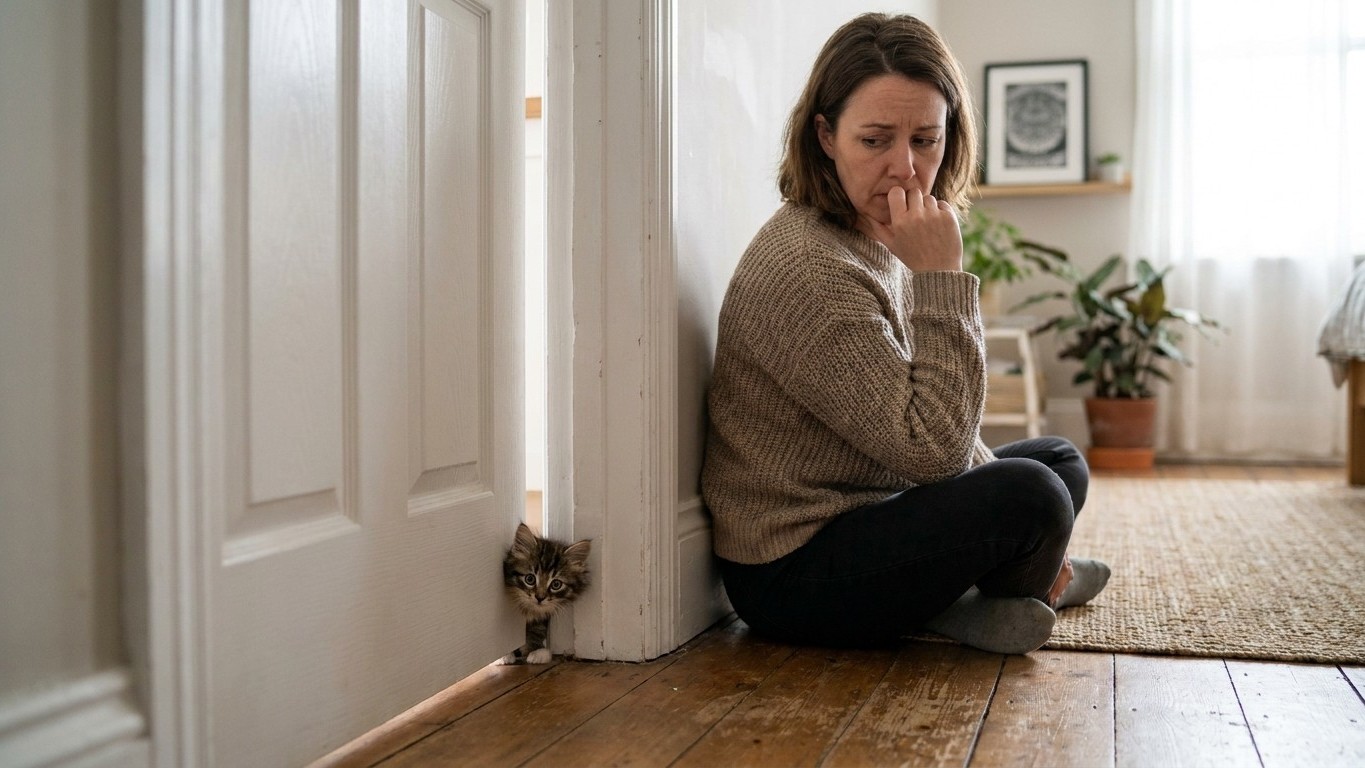
None of this means keeping two cats in separate rooms for a fortnight is fun. It isn’t. Your new kitten will yowl at the door, your resident cat will sulk, and you’ll feel like the world’s meanest cat parent. But feed them either side of the same closed door, swap blankets between rooms so they learn each other’s scent, and let the actual face-to-face meeting wait until the vet has given a genuine thumbs up, not just a first blood draw.
What to actually do before day one
Before any cats share airspace, get the kitten seen by a vet independently of your resident cat’s household routine. The kitten needs to be checked for infections, dewormed, and possibly de-flea, and you shouldn’t rush into making the introductions until the kitten gets a clean bill of health. Worth remembering too that the risk runs both ways. If you adopted a kitten rescued off the streets or from a shelter, the kitten could be carrying some kind of disease or parasites, and this time it’s your older cat who’s at risk. An elderly cat with a less robust immune system, or one already managing a chronic condition, has far less capacity to fight off something a boisterous newcomer brings home.
A sensible sequence looks like this: vet check and first blood test on arrival, two full weeks of separate rooms with scent-swapping and door feeding, a recheck if anything seems off, then a slow, supervised introduction through a cracked door or baby gate before anyone touches noses freely. The second retrovirus test at eight weeks after the first, ideally timed around the neutering appointment, is what actually closes the loop that a single day-one blood draw can’t. Skipping straight to the fun bit might save you a fortnight of awkward door-sniffing, but it can cost your resident cat a great deal more than that.
Sources : sheltermedicine.wisc.edu | sheltermedicine.wisc.edu