
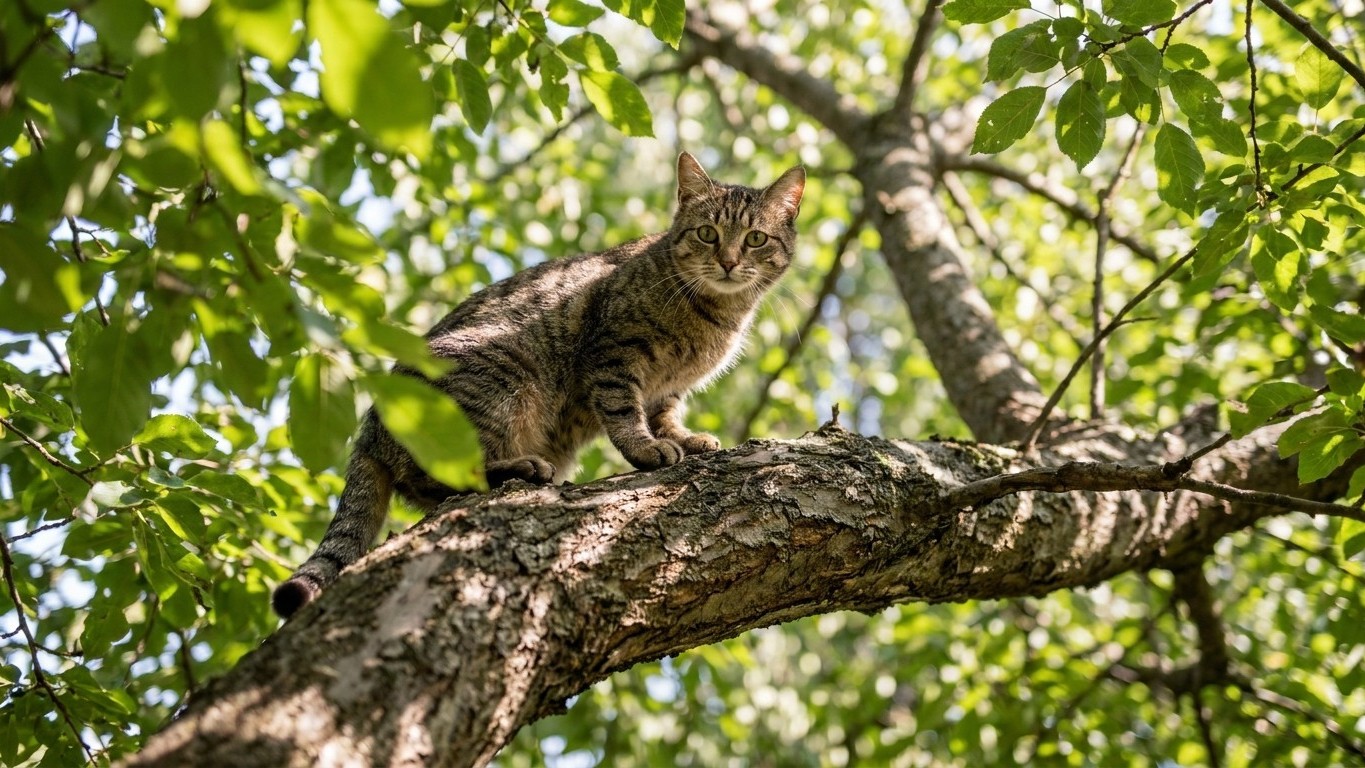
Right, that sinking feeling when you’re told 999 isn’t for cats up trees isn’t just bad luck, it’s official fire service policy across the whole country. Every fire brigade in England and Wales follows near-identical guidance: cats up trees are not classed as life-threatening emergencies, and callers are routinely redirected elsewhere. It’s frustrating in the moment, especially six hours into a garden vigil, but there’s a proper system behind that hang-up, and knowing it now could save you hours of panic next time.
Key takeaways
- Fire brigades stopped attending routine cat rescues after being overwhelmed with 10+ animal calls weekly
- The RSPCA advises waiting 24 hours first—most cats descend on their own when calm returns
- Real emergencies are measured in days, not hours: extreme weather, injury, or 24+ hours trapped trigger actual rescue
Why the Fire Brigade Won’t Come for a Cat in a Tree
Fire crews aren’t being callous. They’re following a nationwide protocol built after years of being swamped with animal calls that pulled engines away from actual fires and road traffic collisions. Firefighters across London alone attend around 539 animal rescues a year, roughly 10 a week, with more than 100 already logged early in some years. Cats dominate those figures: curious cats were involved in almost half of all the rescues crews attended, with birds and dogs making up much of the rest.
That volume is precisely why the system changed. If pets or animals are in no danger, such as cats up trees, you should always contact the RSPCA first, as fire crews don’t attend unless RSPCA officers are at the scene and specifically request assistance. London Fire Brigade has been blunt about it publicly: crews said “most cats find their own way back down trees so if you see an animal in distress, please call the RSPCA first who can judge whether they need our help.” This isn’t a London quirk either. Fire services from Shropshire to the West Midlands operate the same referral chain, and the reasoning is consistent everywhere: engines and personnel need to stay free for genuine 999 emergencies, human ones especially.
What the RSPCA Actually Wants You to Do
The correct first call was never the fire brigade, it’s the RSPCA’s emergency line on 0300 1234 999. But even they won’t dash out the moment you ring. Before calling for professional help the RSPCA advise waiting at least twenty-four hours to see if the cat will come down on its own. That’s not indifference, it’s grounded in feline behaviour. Cats climb using their front claws, which grip brilliantly going upward, but descending means reversing down at a steep angle using back claws, a technique many house cats have simply never practised and panic when faced with.
The scale of these calls might surprise you. The RSPCA fields upwards of 100,000 enquiries a year concerning cats trapped in trees, and it advises people to contact the charity first before ringing the Fire and Rescue services. An RSPCA animal officer explained the delicate judgement call involved: “Every job is different and it can depend on the age and health of the cat and whether it is injured or physically caught and the weather conditions… if we try to rescue too early sometimes cats will go higher or they may jump from tree to tree or fall.” Rushing in with a ladder can genuinely backfire, sending a frightened cat scrambling higher into branches nobody can safely reach.
When It Actually Becomes an Emergency
Six hours, in fairness, rarely crosses the threshold that gets anyone moving with equipment. The trigger points the RSPCA and fire services actually act on are narrower than most owners expect: if a cat is stuck up a tree for more than 24 hours, the weather conditions are particularly bad, or if the cat is injured or very young, owners can call the RSPCA emergency line, and the charity may then contact the fire service if health and safety implications require it. Some services set the bar even higher; Shropshire Fire and Rescue Service confirmed it will attend following a request from the RSPCA only after a risk assessment and confirmation that the animal has been stranded for over 24 hours with the RSPCA already in attendance.
Real cases show how this plays out on the ground. In Middleton, Greater Manchester, a cat called Sparky was discovered hanging on to a branch 30 feet up a tall tree, trapped for around 30 hours and appeared unable to make his way down before RSPCA officers and fire crews stepped in together. Further north in Huddersfield, the outcome was less happy. Fire crews were only called out after four days, and even a number of methods were used, including a drone, a 10.5 metre ladder, rope and a hose reel, over nearly two hours, but the cat still couldn’t be brought down safely that day. And in Sawston, Cambridgeshire, a cat named Tom spent six days stuck 40ft up a tree before crews eventually cut through brambles and freed him within about an hour once they got the go-ahead. Weather extremes shift the calculus too: if the temperature has dropped to minus figures, or there’s extreme hot or cold weather, that alone can justify calling the emergency line straight away.
What Actually Helped, Six Hours In and Beyond
Long before you dial anything, there’s genuinely useful groundwork you can do yourself. Tempting a cat down with strong-smelling food left at the base of the tree is the RSPCA’s own first-line advice, and it costs nothing but patience. Keep noise, crowds and dogs well away, since a stressed cat under scrutiny climbs higher, not lower. If hours tick past without progress, ringing round local tree surgeons is worth trying too, since firms with extendable ladders sometimes help directly, though caution is needed here as a poorly judged ladder rescue can spook a cat further out of reach.
Here’s the fact that genuinely reassures worried owners at hour six: cats are extraordinarily resilient up there. Cats have been known to survive over a week in a tree and have sustained falls of over a hundred feet without serious injury. That’s not licence for complacency, dehydration and exhaustion are real risks after a day or two, but it does mean six hours of yowling from the branches is more distressing for you than it is dangerous for your cat. Keep the RSPCA’s number saved, resist the ladder yourself, and trust that gravity, patience and a tin of sardines usually win in the end.
Sources : news.yahoo.com | merseyfire.gov.uk