
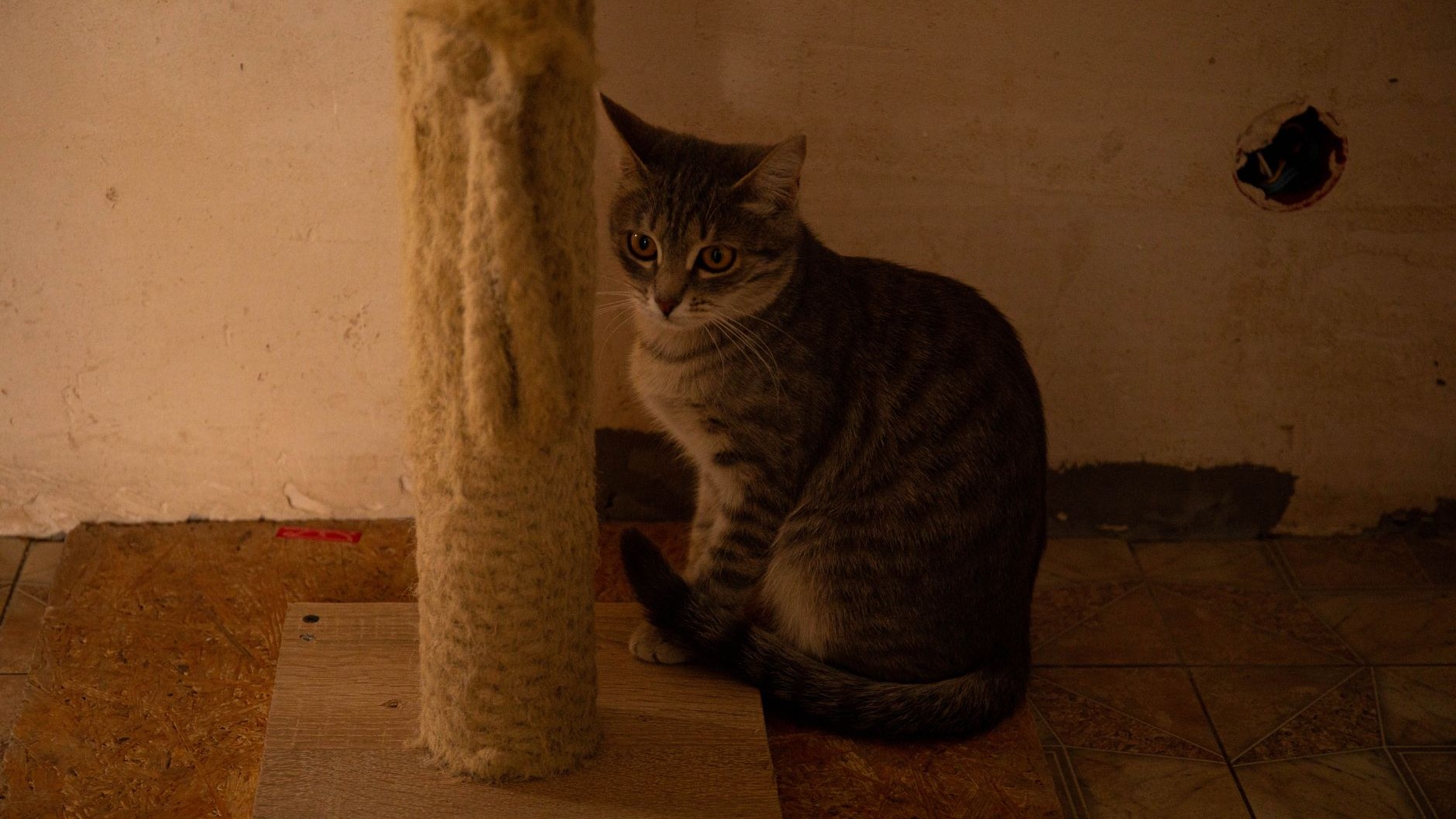
Seventy to ninety centimetres. That’s the vertical reach of an adult cat standing on its hind legs with front paws stretched skyward, and it’s the number that should be etched into every pet shop shopping list before you buy a scratching post. Ideally, a scratching post should be at least 30 inches tall to allow a full-body vertical stretch, which works out to roughly 76 centimetres. Anything skimming under the one-metre mark might look perfectly adequate in a shop display, propped against a wall with nothing to compare it to. The trouble only becomes obvious once your cat actually uses it properly, hooks both front claws in at full extension, and either topples the thing or abandons it for the sofa arm instead.
Key takeaways
- Adult cats need 70-90cm of vertical reach when fully stretched—most budget posts fall dangerously short
- A post that’s too low doesn’t just fail physically; it blocks your cat’s territorial marking behavior
- Cats abandon inadequate posts within weeks, redirecting their scratching to sofas and curtains instead
Why height isn’t just about comfort
Cats don’t scratch simply to file their claws. Cats scratch to maintain healthy claws, exercise the muscles in their front legs and spine, and as a form of territorial communication or marking behaviour. That’s three separate jobs bundled into one action, and a stunted post only lets your cat tick the first box. The muscle-stretching element depends entirely on being able to extend fully through the shoulders and spine, the same reason we instinctively arch and reach when we wake up stiff. Cut that stretch short and the behaviour feels unsatisfying, which is precisely why a cat will abandon a too-short post within days and start eyeing up the curtains instead.
There’s a scent element too, and it’s the part most owners never think about. Cats also have scent glands located on the pads of their paws and between their toes. When cats scratch surfaces, they sharpen their claws. Also, leave a chemical signature that reassures them the space belongs to them. Official veterinary guidance backs this up directly: the AAFP and ISFM’s environmental needs guidelines instruct owners to provide scratching areas that allow a cat to deposit its scent through glands in the pads of its feet. A post that’s too low to allow a proper stretch doesn’t just fail on the physical front, it fails on the marking front as well, leaving your cat feeling less secure in its own home. Given that these paw pad glands sit alongside eight other scent-producing zones on a cat’s body (cheeks, chin, forehead, flanks, and tail among them), scratching is really just one thread in a much wider tapestry of feline communication that most of us walk past every day without noticing.
The furniture connection nobody warns you about
Here’s where the “fabric gives” part of the equation comes in. A post that’s marginally too short doesn’t fail loudly. It fails quietly, over weeks, as your cat gradually redirects that unsatisfied stretching urge somewhere with more height, usually the nearest armchair or door frame. Cats prefer to scratch objects that are sturdy or tall allowing them to get a good grip and dig their claws in. Sofas tick both boxes brilliantly. They don’t wobble, they’re taller than most budget scratching posts, and the weave of the upholstery gives that satisfying resistance sisal rope is meant to provide. By the time you notice frayed threads or a visibly shredded corner, the habit is already established, which is why so many owners feel blindsided.
A 2024 study published in Frontiers in Veterinary Science, led by veterinary researcher Dr Yasemin Salgirli Demirbas at Ankara University, surveyed over a thousand French cat owners and found genuine behavioural patterns behind unwanted scratching. certain factors – such as the presence of children at home, personality traits of cats, and their activity levels – significantly impact the extent of scratching behavior, according to the research team. Height and stability of the post available weren’t the sole variables studied, but the underlying message chimes with decades of feline behaviour advice: environment shapes where a cat chooses to scratch, and an inadequate post is an environmental gap a cat will fill on its own terms.
Stability matters just as much as height, and the two problems often travel together. A wobbly post that shakes mid-scratch startles a cat almost as reliably as a short one frustrates it. AAFP guidance is unambiguous that scratching implements should be tall enough to allow full stretching and stable enough to provide resistance, and a post failing on either count sends a cat straight back to the furniture, which never wobbles and never lets it down.
Matching the post to the cat
Not every cat needs the same tower. Kittens are forgiving; kittens will not mind if you buy them a short post. Most scratching posts on the market designed for kittens are about 20 inches tall, roughly 51cm. Larger breeds are a different story entirely. Big cat breeds, such as the Ragdoll or Maine coon, need a tall scratching post of about 39 or 40 inches, which translates to around a metre or slightly more. If you share your home with one of these gentle giants, that “under 1m” post from the title isn’t just marginal, it’s actively too small for the job.
Orientation is worth a thought too, since not every cat is a natural climber. Some genuinely prefer to dig in low and rake sideways rather than stretch upward, and for those cats a horizontal scratching pad works better because the hips stay bent and the reach demand drops. Watching where your own cat currently scratches, doorframes and bookshelf edges point to a vertical preference, while carpet edges and rug corners suggest horizontal, gives you a much better steer than guessing from a shop shelf.
Getting it right at home
Placement solves half the battle. Position any new post directly against the furniture your cat has already been targeting, letting the geography do the persuading before you gradually shift it to a permanent spot. Combine that with genuine height, real base weight so it can’t rock underfoot, and a texture (sisal rope holds up best for most cats) that rewards repeated use, and you’re offering something that actually beats the sofa arm on every front that matters to a cat.
If scratching suddenly increases, targets new and unusual surfaces, or seems to accompany other stress signs like altered appetite or toileting habits, it’s worth booking a chat with your vet rather than assuming it’s simply a post problem. Scratching that shifts pattern overnight can sometimes flag anxiety, pain, or an underlying medical issue that no amount of sisal rope will fix on its own.
Sources : goodpetscorner.com | betterbehavedcat.com