
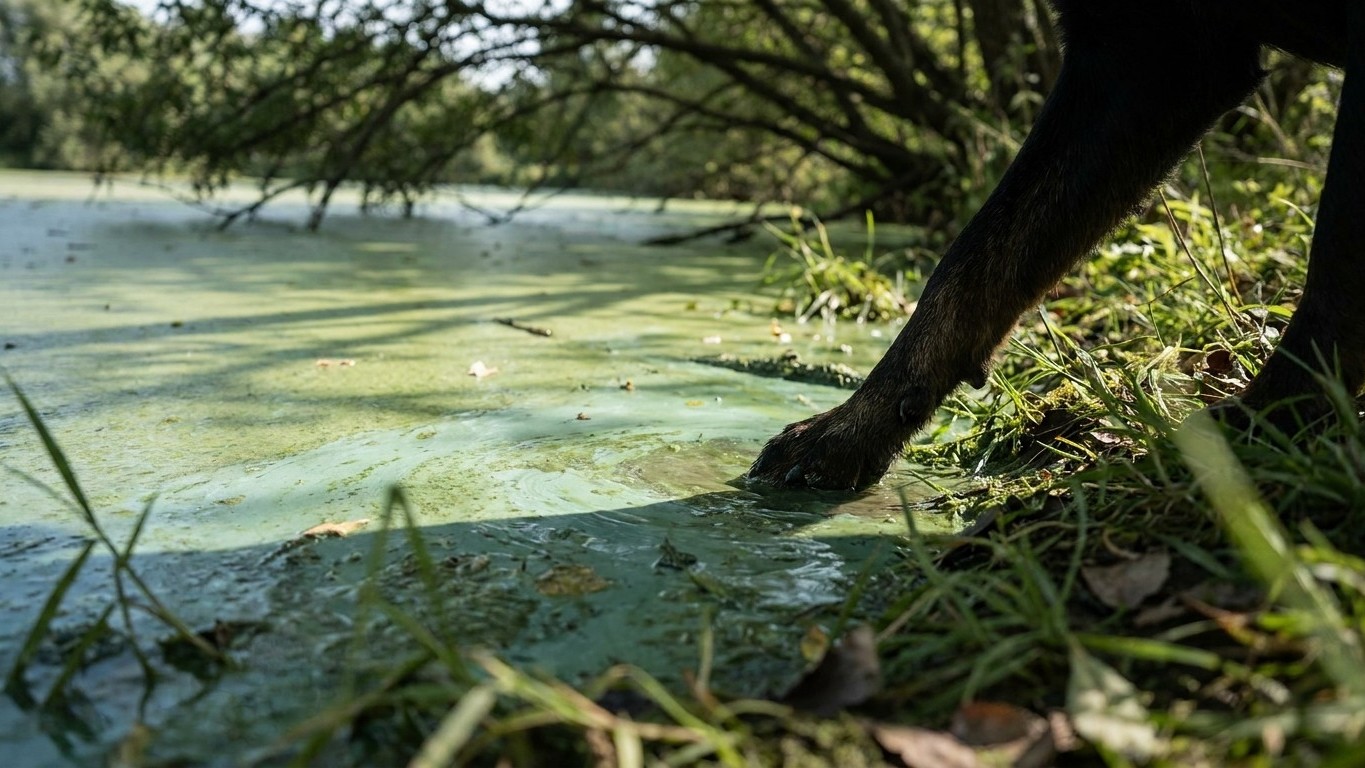
A puddle by the park bench, a stagnant garden pond, that suspiciously green pool your spaniel just dive-bombed into on a walk: these can be far More Dangerous Than anything sitting in a stainless steel bowl on your kitchen floor. While devoted owners scrub and refill indoor water dishes daily, worrying about bacteria that mostly cause an upset tummy at worst, the water lurking outside during warm spells can contain toxins capable of destroying a dog’s liver within hours of a single lap.
Key takeaways
- A puddle that looks innocent could contain a toxin that reaches your dog’s liver in under an hour
- Some dogs show no warning signs before sudden collapse—the damage happens invisibly
- The shadiest, most stagnant water in your neighborhood is precisely where the deadliest bacteria thrive longest
The Green Menace Hiding in Ponds and Puddles
The real culprit is cyanobacteria, often called blue-green algae, though it isn’t actually algae at all but a type of bacteria that thrives when sunshine and warmth meet slow-moving or stagnant water. Algal blooms can be found in stagnant water, especially during warm weather spells or after periods with a noticeable lack of rain, appearing as blue-green or red-brown coloured blooms, mats, foam or scum on the water. Sometimes it doesn’t even look dramatic. The water may also smell of rotting plant material.
Two toxin families do the real damage. The two most serious types of cyanotoxins, called microcystin and anatoxin, can cause liver or neurologic injury. The liver toxin is the one that should genuinely alarm any dog owner. Microcystin can cause severe liver damage, which can lead to liver failure and death within hours to days. Some vets have documented signs appearing shockingly fast. Signs can develop quickly, often within 15 minutes to several hours after exposure. That’s the bit that gets me every time I write about this: a dog can look perfectly fine on the walk home, then collapse before dinner.
It isn’t only drinking that puts a dog at risk, either. Toxicity occurs from swimming in or drinking from contaminated water, although toxicity secondary to licking hair coat coated with contaminated water has also been reported. So a dog who simply paddled and then groomed itself dry on the sofa afterwards can still absorb a dangerous dose.
Leptospirosis: The Silent Hitchhiker
Cyanobacteria isn’t the only threat brewing in that ditch water. Leptospirosis, a bacterial infection with the rather Victorian-sounding human name of Weil’s disease, spreads through the urine of infected rodents and other wildlife into standing water. Direct contact with infected urine or contaminated water sources, especially drinking from slow-moving or stagnant water sources like ponds, rivers, lakes, or streams, is a key route of infection, and almost every dog is at risk, whether they live in the country, suburbs, or city.
The bacteria are remarkably tenacious once they’ve settled into a damp environment. Wild animals can carry the bacteria for years without signs, spreading it via their infected urine, and once in moist soil or stagnant water, the bacteria can remain infectious for several months. Unlike blue-green algae poisoning, leptospirosis doesn’t strike within the hour, but it’s no less serious. After exposure, it can take between 2 to 12 days for symptoms to appear. By the time your dog seems off-colour, the infection has already had days to settle into the liver and kidneys.
There’s a small silver lining worth knowing, though. The bacteria are quickly destroyed by light and temperatures in excess of 20°C, so it’s recommended you keep your pet away from any water that appears stagnant or is in shaded areas. That gloomy, tree-shaded pond your dog loves is precisely the sort of spot where leptospires survive longest, while a sunny, exposed puddle on a scorching August afternoon is comparatively lower risk. Comparatively. Not risk-free.
What This Actually Looks Like in a Real Dog
Vomiting, diarrhoea, wobbliness, pale or yellowish gums, laboured breathing, seizures. Signs of cyanobacteria poisoning in dogs may include muscle rigidity, muscle tremors, convulsions or seizures, weakness or collapse, respiratory distress, bluish or grey gums, anxiety, hypersalivation, urinary incontinence, diarrhoea, vomiting, and death. Chillingly, some dogs skip the warning signs altogether. Clinical signs due to hepatotoxins can occur within minutes to a few hours of exposure and may include vomiting, diarrhoea, weakness, pale gums or tongue, and collapse from acute hypovolaemic shock, and some animals may collapse and die with no other noticeable signs.
Some dogs seem to rally briefly before the real damage becomes apparent. Patients who survive the peracute phase may initially vomit, appear to recover or have mild lethargy for approximately 12 hours, and then develop signs of liver failure. That deceptive lull is exactly why any suspected exposure, even without symptoms yet, warrants an immediate call to your vet rather than a wait-and-see approach.
Keeping Walks Safe Without Becoming Paranoid
None of this means locking your dog indoors all summer. It means being sensible about where you let them drink and swim. Steer clear of ponds with visible scum, foam or discolouration, and don’t let a thirsty dog lap at puddles that have clearly been sitting for days. Bringing along a collapsible bowl and bottle of water is sensible when going on longer walks, so there’s never a reason for your dog to gamble on unknown water when you’re the one holding the lead.
If you do spot a suspicious bloom, don’t just walk away and forget about it. You can report algal blooms to the Environment Agency 24 hours a day on 0800 80 70 60. Reporting it protects every other dog, child and family that might wander past that same water over the following weeks, since a bloom rarely clears overnight.
Vaccination remains the single most reliable defence against leptospirosis, and it’s worth a proper conversation with your vet about which strains are covered given how your dog spends its time, whether that’s countryside rambles, canal towpaths or the odd dip in a farm pond. Meanwhile, that daily ritual of rinsing and refilling the indoor water bowl is still worth doing, mainly to keep it appetising and free of slime, but it’s the water your dog never sees you pour that deserves the sharper eye this summer.