
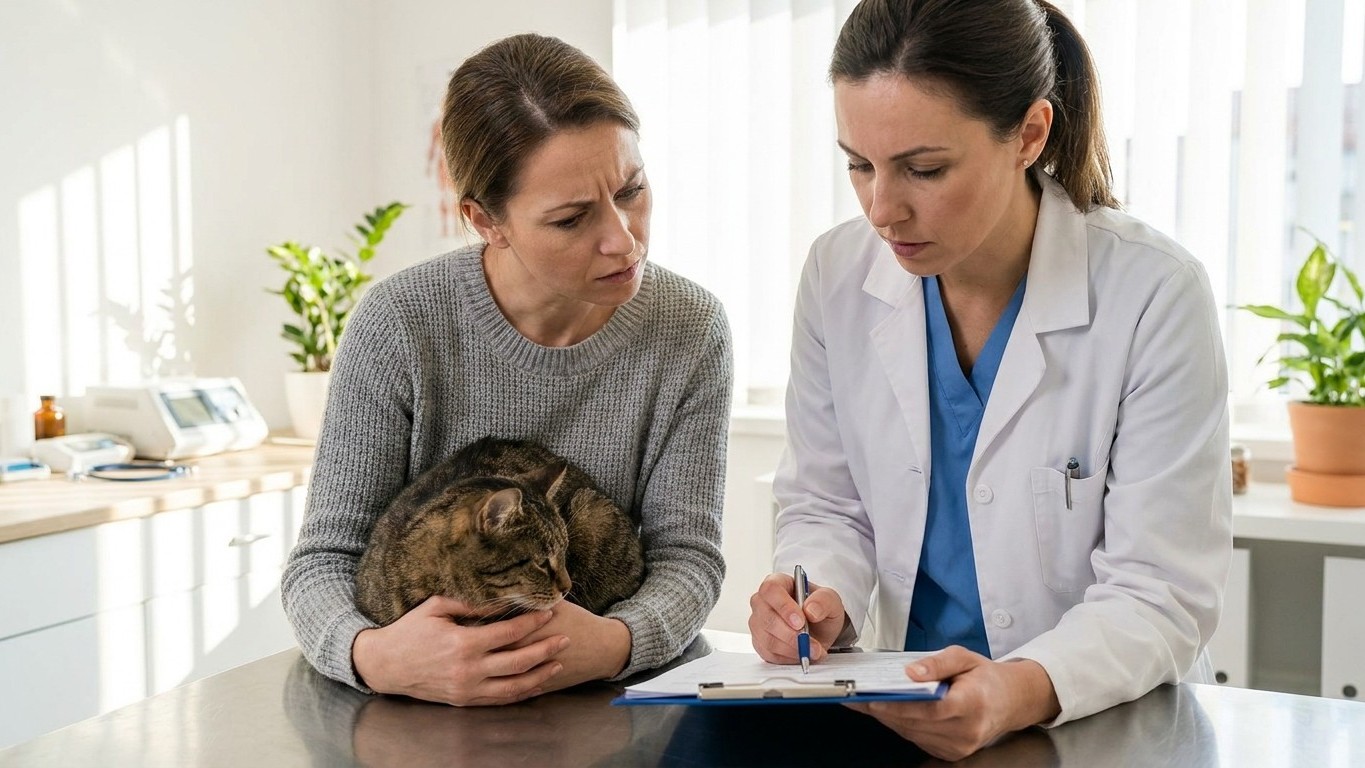
Three days after finishing that shared kebab, my cat’s blood told a story I never wanted to read. What looked like an innocent treat, a bit of leftover doner meat scraped off the foil at the end of August, had quietly begun destroying her red blood cells from the inside out. The vet called it Heinz body haemolytic anaemia, and it’s one of the most common reasons cats end up needing emergency blood transfusions after “harmless” table scraps.
The culprit wasn’t the meat itself. It was the onion and garlic tucked into the marinade and sauce, ingredients that turn up in nearly every kebab, from the doner to the shish. Onion and garlic toxicity occurs when cats ingest plants from the Allium genus, which includes onions, garlic, leeks, chives, scallions, and shallots, and these common culinary ingredients found in virtually every kitchen are highly toxic to cats. It doesn’t matter whether it’s raw, fried, powdered or simmered into a sauce for hours. Toxicity can occur from raw, cooked, dried, or powdered forms of these plants, so that garlicky yoghurt drizzle is just as dangerous as a raw clove.
Key takeaways
- One shared kebab plate sparked a medical emergency that didn’t show symptoms until days later
- Onion and garlic toxicity destroys cat blood cells from the inside—and it’s far more common than most owners realize
- Garlic is five times more toxic than onions, and your cat is biologically more vulnerable than your dog
What actually happens inside the bloodstream
Here’s the part that genuinely unsettled me when the vet explained it. The toxicity results from organosulfur compounds found in all Allium plants, which cause oxidative damage to red blood cells, and once absorbed, these compounds begin attacking the hemoglobin in red blood cells, forming structures called Heinz bodies. Those damaged cells get flagged as abnormal, and the body starts destroying its own blood supply. The presence of Heinz bodies marks the cells as abnormal, triggering their removal from circulation by the spleen, which leads to hemolytic anaemia. Essentially, my cat’s own immune system was quietly dismantling her red blood cells because they’d been chemically altered by something as ordinary as onion powder.
The cruel twist is the delay. Nothing looks wrong on day one. Although marked Heinz body formation may be present within a day after onions are ingested, the anemic nadir typically develops several days later. One veterinary source I found even described a near-identical case: a dog that shared onion and garlic seasoned mashed potatoes with his owner, only for blood work to reveal he was anemic, having just a bit over half of the blood he should have, days after the meal. That timing lines up exactly with why my cat seemed fine on August bank holiday but was booked in for urgent bloods within the week.
Garlic is worse than you’d think, and cats are worse off than dogs
Doner and shish kebabs are typically seasoned heavily with both onion and garlic, and garlic is the more dangerous of the two by a wide margin. Garlic is thought to be the most potent of the Allium family, five times more toxic than onions. That’s not a rounding error, that’s the difference between a mild scare and a genuine emergency. Even more alarming, some studies have shown that for garlic, ingestion of a single clove can cause severe illness in a cat. Given how much garlic goes into a typical kebab marinade, even a small forkful of meat can carry a meaningful dose.
Cats also draw the short straw biologically. Compared to humans, dogs and cats are more sensitive to oxidative damage on their red blood cells, and dogs have more areas on their red blood cells that oxidizing agents can attach to, but cats still come out worse overall. Dogs are similarly affected by Allium toxicity as cats, but cats are more sensitive to lower amounts, in general. If you’re the type who splits a takeaway with both a dog and a cat, know that your cat is the one at greater risk from the smaller portion.
There’s a genetic wrinkle too, one I hadn’t come across before this whole ordeal. Breeds including Burmese, Oriental shorthair, Siamese and Turkish Angora have been shown to be more susceptible to Allium toxicity. If you own one of these breeds, that leftover kebab plate needs to stay firmly out of reach, no exceptions.
Spotting it early and what the vet actually does
The early warning signs are frustratingly vague and easy to write off as a dodgy tummy. Initial gastrointestinal symptoms including nausea, drooling, vomiting, and diarrhea may occur soon after ingestion, and decreased appetite may be noticed as the cat feels unwell. By the time the real damage shows, things look more serious: pale gums, breathing problems, and red urine are the signs that should have you in the car to the vet immediately, not waiting to see if it passes.
Diagnosis relies heavily on a blood smear under the microscope, where those telltale Heinz bodies become visible. Findings of labwork suggestive of hemolytic anemia coupled with seeing Heinz bodies on a blood smear is suggestive of an oxidative toxicosis, as these can be seen on the edges of red blood cells microscopically and are indicative of oxidative injury. Treatment isn’t glamorous but it works: fluids to protect the kidneys, sometimes oxygen, and in the more severe cases a blood transfusion. Life-threatening clinical signs are managed first with oxygen supplementation and blood transfusion as needed, alongside IV fluid therapy to help protect the kidneys against hemoglobinuric nephrosis.
What surprised me most, and what I’d genuinely never considered before this happened, is how forgiving the timeline actually is if you catch it in the window. Symptoms may appear hours to days after ingestion, and early recognition is critical, so you shouldn’t wait for symptoms to appear. If your cat has swiped a chunk of kebab meat off your plate, ring your vet that day, not once she starts looking off colour. Blood tests done proactively, even before any symptoms show, catch this far earlier than waiting for pale gums to appear, and that head start can be the difference between a course of fluids and a transfusion.
Sources : exoticpetvet.net | northcareanimalhospital.com