
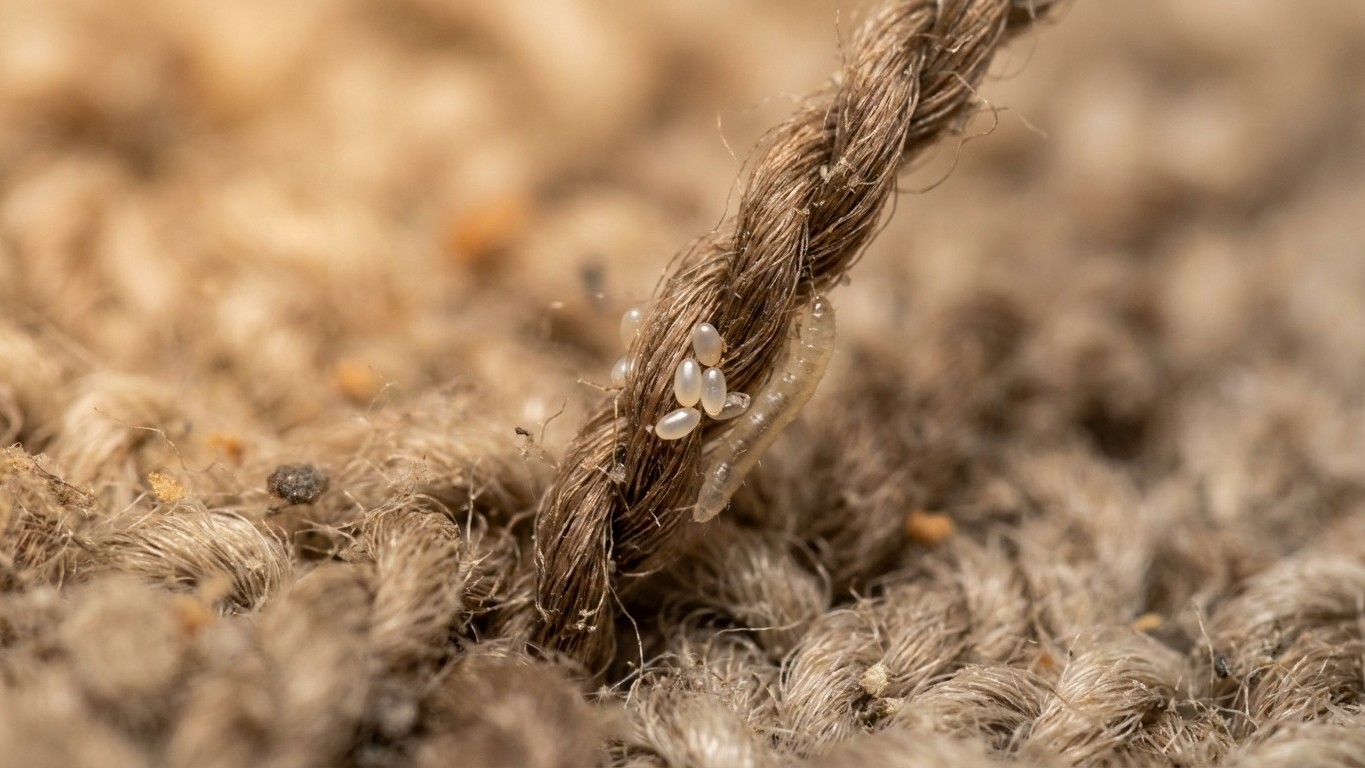
Your cat’s flea treatment isn’t failing. Your house is. According to veterinary sources, roughly 95% of a flea population at any given moment isn’t sitting in your cat’s fur at all, it’s hiding in your carpets, sofa cushions, skirting boards and garden beds. As much as 95% of a flea population at any given time is thought to be in the environment, and these stages are usually inaccessible to on-animal agents, meaning control of fleas on the animal does not necessarily mean the flea population has been controlled. That’s the bombshell a vet dropped on me after months of applying monthly spot-on treatments to my cat and watching the fleas march right back in within weeks.
I’d assumed the product simply wasn’t strong enough. Turns out I was fighting the wrong battle entirely. Because most of the flea population lives in the environment, successful flea treatment must also focus on interrupting the fleas’ life cycle in the home and yard, and fleas prefer warm, ambient temperatures and moderate humidity, which makes inside the home a prime environment to thrive. A centrally heated British house with soft furnishings everywhere is, frankly, flea paradise.
Key takeaways
- Only 5% of fleas live on your cat—the other 95% are developing invisibly in your home’s carpets and furniture
- Flea pupae can survive dormant for up to 170 days inside insecticide-proof cocoons, explaining why fleas mysteriously return after treatment
- A single female flea produces 2,000 eggs in her lifetime starting within 24 hours of her first meal—treating just the pet is like mopping floors while the tap runs
The maths behind why treating just your cat was never enough
Fleas have a four-stage life cycle, and the numbers explain Everything. A typical flea population consists of 50 per cent eggs, 35 per cent larvae, ten per cent pupae and only five per cent adults, and only adult fleas live on pets, with the rest in the environment, so the number visible on your pet is only the tip of the iceberg. Every flea you spot grooming itself on your cat’s back represents a much larger, invisible army developing somewhere in your home.
It starts the moment an adult female feeds. Each female flea lays about 40 eggs per day on animals’ skin, and these eggs can easily roll off into the surrounding environment. Unlike sticky flea dirt, the eggs themselves aren’t adhesive, so they scatter wherever your cat wanders, on the sofa, the bed, that favourite sunny spot by the window. Eggs hatch in one to ten days depending on environmental conditions such as temperature and humidity. Once hatched, the larvae are the bit nobody wants to picture: tiny, worm-like creatures that actively avoid light. Flea larvae are negatively phototaxic, meaning they crawl away from light, and they crawl deep into carpets and under skirting boards, anywhere dark and warm. They aren’t feeding on your cat at this stage. For about two weeks, they feast on their favourite food: flea dirt, which is essentially the faeces of adult fleas. It’s a grim little ecosystem thriving beneath your feet, entirely out of sight.
The pupa: nature’s tiny, indestructible bunker
This is the stage that genuinely floored me. Once larvae have fed enough, they spin themselves into a cocoon, and this is where most flea treatments hit a brick wall. Flea pupae are particularly troublesome, and while inside the pupal cocoon, flea pupae cannot be killed by any insecticides, plus they are very sticky, so debris from the environment, like carpet fibres, dust and hair, sticks to them helping create camouflage. They’re essentially wearing a disguise made from your own home.
And they can wait. The pupal or cocoon stage of the life cycle is resistant to any and all insecticides, leading to failure to regulate the population of fleas, and the pupal stage can lay dormant for 140 to 170 days. That single fact explains the classic pattern so many cat owners describe: you treat aggressively, Everything seems fine for a fortnight, then fleas reappear as if from nowhere. The common failure scenario is that the owner treats for fleas, then in one to two weeks the flea infestation returns because the “new” adults are emerging from the insecticide-resistant cocoon. You haven’t failed. You’ve simply been waiting out a biological timer that no product on the market can fast-forward.
Reclaiming your home, not just your cat
Knowing this changes the whole strategy. Vets and parasitologists agree that spot-on treatments and oral medications remain essential for killing adult fleas and, with the right formulation, sterilising future eggs. But getting rid of fleas naturally requires treating every environment where fleas develop, not just the pet. That means thinking about your home as a second patient.
Vacuuming isn’t a chore to squeeze in when you remember; it’s frontline defence. Daily vacuuming of carpets, skirting boards, sofa seams and under furniture physically removes eggs and larvae before they can mature, and the vibration itself can trigger pupae to hatch prematurely, right into the path of your next treatment cycle. Wash pet bedding on a hot cycle weekly, and don’t neglect your own bedding if your cat shares it (mine absolutely does, and I’ve stopped pretending otherwise). Outdoors, focus on the shaded, sheltered spots your cat favours; fleas hate direct sunlight and desiccation, so a patch of sun-baked patio is far less risky than a shady flowerbed near a fence line.
For genuinely stubborn infestations, household sprays containing insect growth regulators (IGRs) such as methoprene or pyriproxyfen are worth discussing with your vet, since these compounds specifically target eggs and larvae rather than relying solely on killing adults. Combining an on-cat product with an environmental IGR treatment breaks the cycle at multiple points simultaneously, which single-front approaches simply can’t manage. If your cat is scratching persistently, developing scabs, or you’re seeing flea dirt (those tell-tale black specks that turn reddish-brown on a damp tissue), speak to your vet promptly rather than escalating home treatments alone, since some cats develop flea allergy dermatitis from even a small number of bites.
Here’s the detail that still surprises me most: a single female flea can produce up to roughly 2,000 eggs across her lifetime, and she starts laying within 24 to 48 hours of her very first blood meal. Treat the cat all you like; until you’ve broken that production line in your carpets, you’re just topping up a factory that never stopped running.
Sources : petshed.com | onlynaturalpet.com