
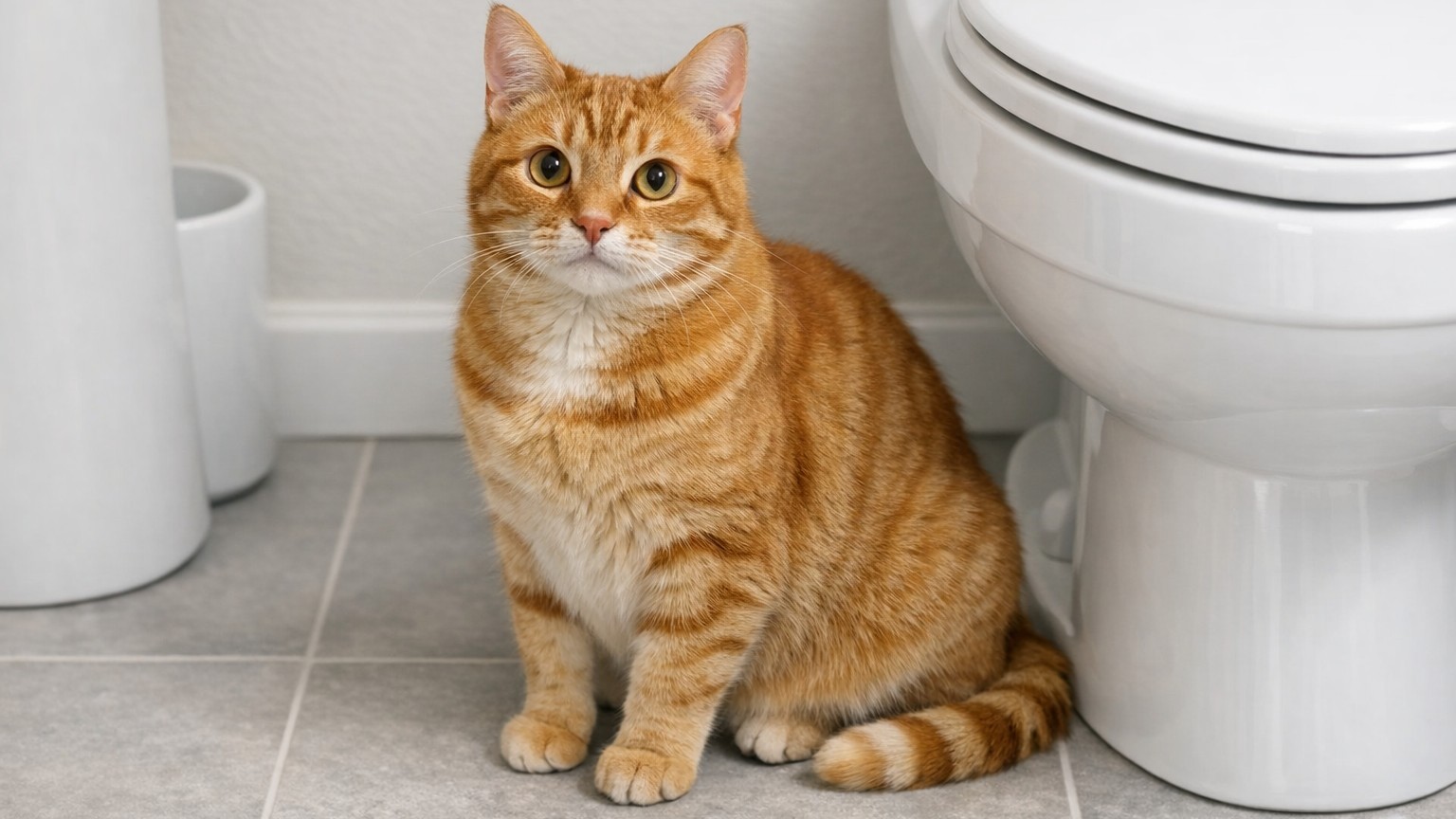
Your cat has just padded into the bathroom behind you, again. Tail up, eyes fixed on your every move, utterly unbothered by the complete lack of invitation. Most owners laugh it off, chalk it up to feline weirdness, and assume it’s about food. Sometimes it is. But sometimes, that little shadow in the doorway is telling you something far more important than “I’d like a biscuit.”
Key takeaways
- Cats may follow you to the bathroom for affection, curiosity, or to protect you during vulnerable moments
- Sudden behavioral changes like unexpected clinginess could indicate hidden illness—cats are masters at concealing pain
- Cognitive dysfunction syndrome affects over 50% of cats over 15 and often manifests as clingy, anxious behavior
It’s Not Just Curiosity : It’s Communication
This behaviour is rooted in a complex mix of social instincts, curiosity, and deep emotional connections, because cats are, despite their reputation, incredibly social creatures. If there is one thing many cats seem personally offended by, it’s a closed door. Cats are naturally curious and territorial animals, and barriers can feel genuinely frustrating to them — closed doors limit access to part of their territory, and many cats want to investigate whatever is happening on the other side.
When you’re in the bathroom, you’re typically stationary and less distracted by phones, computers, or household chores. For many cats, this represents a prime opportunity to seek attention, enjoy gentle strokes, or simply bask in close proximity to their favourite human. There’s also a subtler element at play. The acts of urinating and defecating are vulnerable times for cats: they must remain stationary, and the smell of urine and faeces may attract predators. So your cat may actually want to stay with you in the bathroom to protect you. Yes, your cat thinks you need a bodyguard on the loo. Hard to argue.
There is also a good chance you’re providing some type of positive reinforcement every time your cat follows you into the bathroom, a morning conversation with your chatty feline, an appreciative scratch, or even picking them up to place them outside. Whatever attention you give them, they’ve learned the bathroom is the place to get it. Routine, too, plays a part: cats love routines, and if you usually visit the bathroom around a similar time during the day, your cat may simply develop a habit of spending time with you while you’re taking care of business.
When “Following You Everywhere” Becomes a Red Flag
Cats are experts at hiding illness, it is a survival instinct deeply embedded in their DNA, because showing weakness in the wild makes an animal a target. A change in behaviour like increased clinginess may be the only visible sign your cat is sick. This is the part that catches many owners off guard. A cat that has always been independent but suddenly becomes your bathroom shadow is not necessarily growing fonder of you. Sudden clinginess in a previously independent cat may be the first visible sign of illness. Conditions like hyperthyroidism, kidney disease, and arthritis can all trigger behaviour changes.
Although cats hide signs of illness, a feline displaying subtle behavioural changes, such as increased vocalisation, urinating outside the box, and/or human over-attachment — may be experiencing pain or distress, and require a veterinary examination. Pain or disease can cause a sudden behavioural change, triggering a cat to follow their owner around the home. Particularly worth noting in older cats: cognitive dysfunction syndrome, the feline equivalent of dementia, is one of the most common causes of sudden clinginess in older cats, affecting an estimated 28 percent of cats aged 11 to 14 and more than 50 percent of cats over 15.
Cats with cognitive dysfunction often become clingy because they are anxious and disoriented. They may follow you because they feel lost when you are out of sight. They may cry when you close a door because being separated from you triggers panic. They may sit on your lap for hours not because they are content, but because they are confused and your presence is the only anchor they have.
Separation Anxiety in Cats: Rarer Than in Dogs, But Very Real
Cats can develop separation anxiety and find it unbearable when they’re away from their owners. They often hate closed doors and will follow their owners everywhere, including to the bathroom. Other signs of separation anxiety in cats include excessive vocalisation, destroying things, excessive grooming, and extreme neediness.
A cat with separation anxiety may insist on being with their owner at all times, following them from room to room. When the owner gets ready to leave the house, the cat may sulk and hide, or try to get between the owner and the door. When the owner returns, the cat may show an abnormally enthusiastic greeting. It can be tempting to dismiss this as affection. But signs of separation anxiety in cats can be quite subtle, and it is vital we know exactly what to look out for, if symptoms go unnoticed or unchecked for a prolonged period, serious health complications can quickly arise.
Grief can also trigger this pattern. When a cat loses a companion animal with whom it had a close bond, they can become insecure and crave more attention by shadowing their owner. A change in your own schedule, returning to the office, working longer hours, a new baby in the household — can have the same effect, since cats, like most other animals, love routines in their daily schedule.
What You Should Actually Do
The distinction between “endearing quirk” and “something to take seriously” comes down to one question: is this behaviour new? It is important to pay attention when following behaviour appears suddenly, as sudden changes in behaviour can indicate something negative is causing it, so it’s helpful to take your cat to your veterinarian to rule out any medical causes if this is new and you notice other concerning behaviours.
Combine the bathroom-following with any of the following and book a vet appointment without delay:
- Weight loss, changes in appetite, increased thirst, or litter box issues.
- A coat that has become dull, greasy, or matted, which usually happens when a cat is too tired or in pain to groom themselves.
- Restlessness at night, or sudden howling that wakes the household, which can point to hyperthyroidism.
- Clinginess paired with sudden aggression or snapping when touched, which may signal a cat in pain seeking comfort while also being defensive about being handled.
If your cat has been a bathroom companion since kittenhood and nothing else has changed, you almost certainly have nothing to worry about. Enjoy the company. But if the behaviour arrived out of nowhere, especially in a cat over ten, treat it as the signal it probably is. Your cat cannot speak. Their sudden clinginess is their way of telling you they need your help.
One final fact that often surprises people: some cats don’t like drinking from a water bowl and prefer drinking from a running water source, like a sink tap, so your cat may actually follow you to the bathroom when they’re thirsty because they expect you to turn on the tap. If that turns out to be the case, a cat water fountain could save you both a great deal of bathroom loitering — and keep your cat considerably better hydrated in the process.
Sources : thailandtatler.com | embracepetinsurance.com