
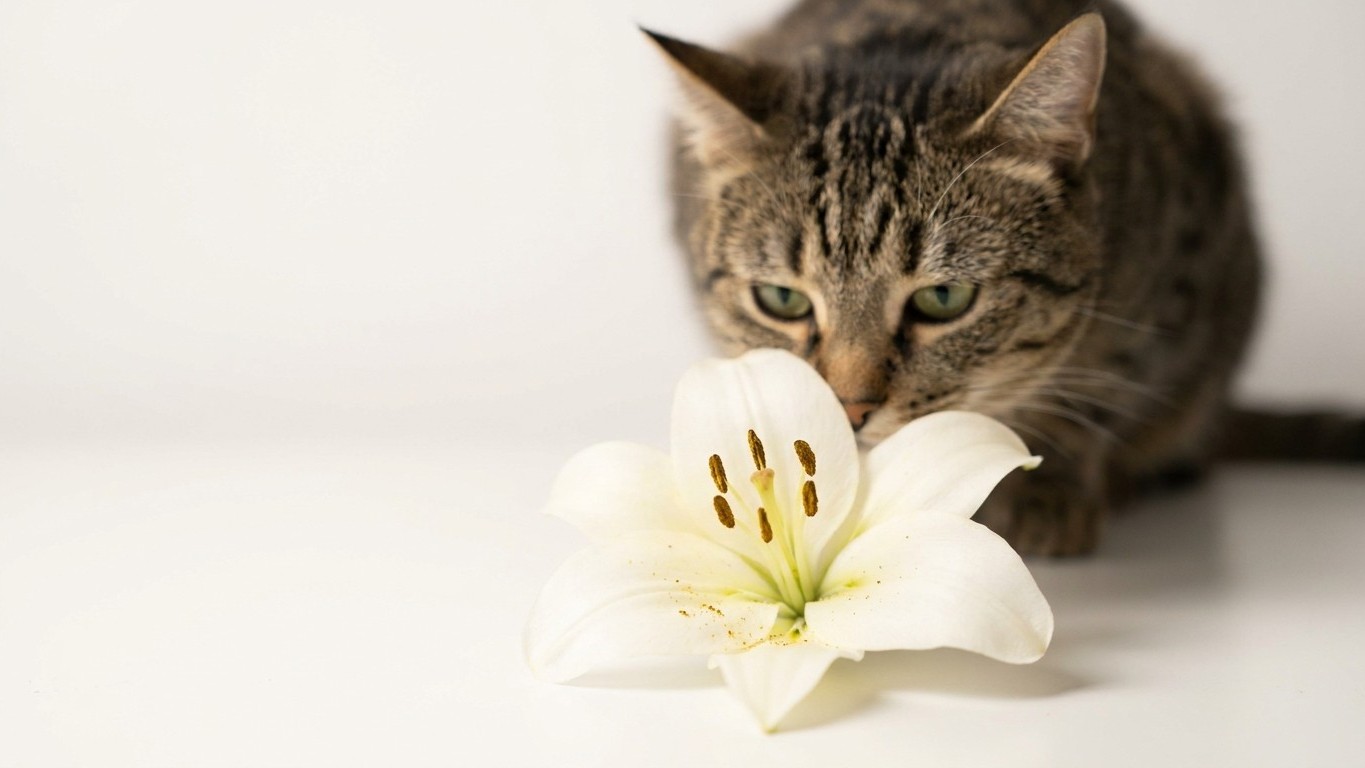
A single petal. That’s all it takes. One lily petal falling from a Sunday bouquet onto the floor, batted around by a curious cat, maybe chewed just once, and within hours, a perfectly healthy animal is in acute kidney failure. This is not a fringe risk or a worst-case scenario. It is one of the most well-documented veterinary emergencies in the UK, and it happens every week, often to cat owners who had absolutely no idea the flowers on their kitchen table were lethal.
Key takeaways
- A cat needs only minimal contact with a lily—even brushing past it during grooming—to develop fatal kidney failure
- The 18-hour window between ingestion and irreversible organ damage is shorter than a working day
- There is no antidote; survival depends entirely on emergency veterinary intervention within hours
The flower that acts like poison
Lilies contain an unknown toxin that makes eating even the smallest amount of any part of the plant, flowers, leaves, stem or pollen, extremely dangerous to cats. What makes this particularly alarming is that science still cannot identify the exact compound responsible. We know what it does, in devastating detail, but not precisely what it is. Cats seem to be unique amongst domestic pets for their susceptibility to this poisoning, possibly due to differences in their metabolism, the same reason they can also be easily poisoned by human medications such as paracetamol and ibuprofen in doses that would be safe for humans.
Dogs that consume large amounts of the plant develop only mild gastrointestinal signs, while rats and rabbits show no signs of toxicity at all. So the family cat carries a biological vulnerability that no other common household pet shares. A dog could chew the same stem and walk away fine. A cat cannot.
Certain lilies, such as Asiatic, Day, Easter, Japanese Show, and Tiger lilies, are highly toxic to cats. Lily of the valley is a different story, it can cause heart problems when ingested, including irregular heartbeat and low blood pressure, which can lead to seizures or coma. Even the vase matters. Every part of the lily plant is poisonous to a cat — including the flowers, leaves, pollen, bulbs, and even the water in a vase containing lilies.
How the clock runs out
Early signs of lily toxicity in cats include decreased activity level, drooling, vomiting, and loss of appetite. These symptoms start 0 to 12 hours after ingestion. The cruel twist is what happens next. Although an affected cat is likely to remain depressed, the patient may appear to improve briefly as the gastrointestinal signs abate. Many owners, seeing their cat seem to perk up, assume the danger has passed. It has not.
Signs of kidney damage start about 12 to 24 hours after ingestion and include increased urination and dehydration. Kidney failure occurs within 24 to 72 hours, leading to death if the cat isn’t treated. The window for effective intervention is brutally narrow. If treatment is delayed by 18 hours or more after ingestion, the cat will generally have irreversible kidney failure. Eighteen hours. That’s less time than a working day.
Just one lily leaf, if eaten, can kill your cat, but any part of the plant is dangerous, including the pollen and flower. Simply brushing by the plant, then grooming the pollen off a coat, can prove lethal. This is the detail that catches so many owners off guard. A cat doesn’t even need to deliberately eat the lily. A casual brush past the stems, followed by a normal grooming session on the sofa, is sufficient. When a cat does become unwell, it is usually because something has brushed on their fur or paws, which they have then ingested while grooming. There is greater risk within the home as it is a confined area, and a bored or curious cat might investigate an indoor plant or a cut flower display by playing and nibbling.
What treatment actually looks like
Rush your cat to a vet the moment you suspect any contact, even if the animal seems completely fine. Treatment may include emptying their stomach, giving activated charcoal to prevent further absorption of toxins, cleaning any lily pollen off their coat, and placing them on a drip to flush out the toxins in the bloodstream and support the kidneys. The treatment is intensive and expensive, typically involving intravenous fluid therapy and hospitalisation for several days. Even with the most diligent therapy, a successful outcome is not assured.
If treatment is delayed 18 hours or more after ingestion, or the cat ingested a significant amount, irreversible kidney failure is likely. If the cat stops urinating about 24 hours after ingestion, it is unlikely they will survive. That detail about urination is something many vets will tell owners to watch closely during hospitalisation, it is one of the clearest indicators of whether the kidneys are still functioning at all.
There is no antidote. There is no antidote for lily poisoning in cats. If detected early, the vet can provide supportive care to manage symptoms and give the cat the best chance of recovery. Take a photo of the plant on your phone before you leave the house, this will help the veterinarian determine if it’s one of the highly toxic varieties. Every minute of diagnostic time saved matters.
Flowers that are actually safe, and what to ask your florist
Lilies are often found in florist bouquets, and florists generally either don’t know or don’t issue warnings about lily toxicity. That is a genuinely uncomfortable fact. The person selling you a beautiful Sunday bouquet may have no idea they’re handing over something that could kill the family cat. Asking directly, “does this contain any lilies?”, is not paranoid. It’s sensible.
Pollen-free lilies are often marketed as a “safe” option for cat owners. However, as all parts of the lily are toxic, not just the pollen, a pollen-free lily will not be safe for cats, and the advice for cat owners to avoid lilies remains the same. So even that well-intentioned workaround fails.
The good news is that plenty of beautiful cut flowers pose no serious threat. Freesias, roses, and snapdragons are beautiful, pet-friendly options. Orchids, sunflowers, and antirrhinums can all brighten a room without risk. Many common plants and flowers found in UK homes and gardens are toxic to cats, including lilies, daffodils, tulips, and crocuses, so the caution extends well beyond lilies, but none carry quite the same speed and severity of kidney devastation.
One thing worth knowing if you have an outdoor cat: for free-roaming cats, removing lilies from the house and garden is no guarantee they won’t come into contact with them elsewhere. A neighbour’s front garden, an alleyway planting, a churchyard, lilies grow freely across the UK in summer. If your cat goes outside unsupervised, it’s worth familiarising yourself with what lily plants look like in the wild so you can recognise any unusual symptoms promptly. Lily intoxication should be considered as a diagnostic possibility for any cat, regardless of age, suffering kidney failure of sudden onset — even if you never had a lily in your home.
Sources : animalfriends.co.uk | gardeningknowhow.com