
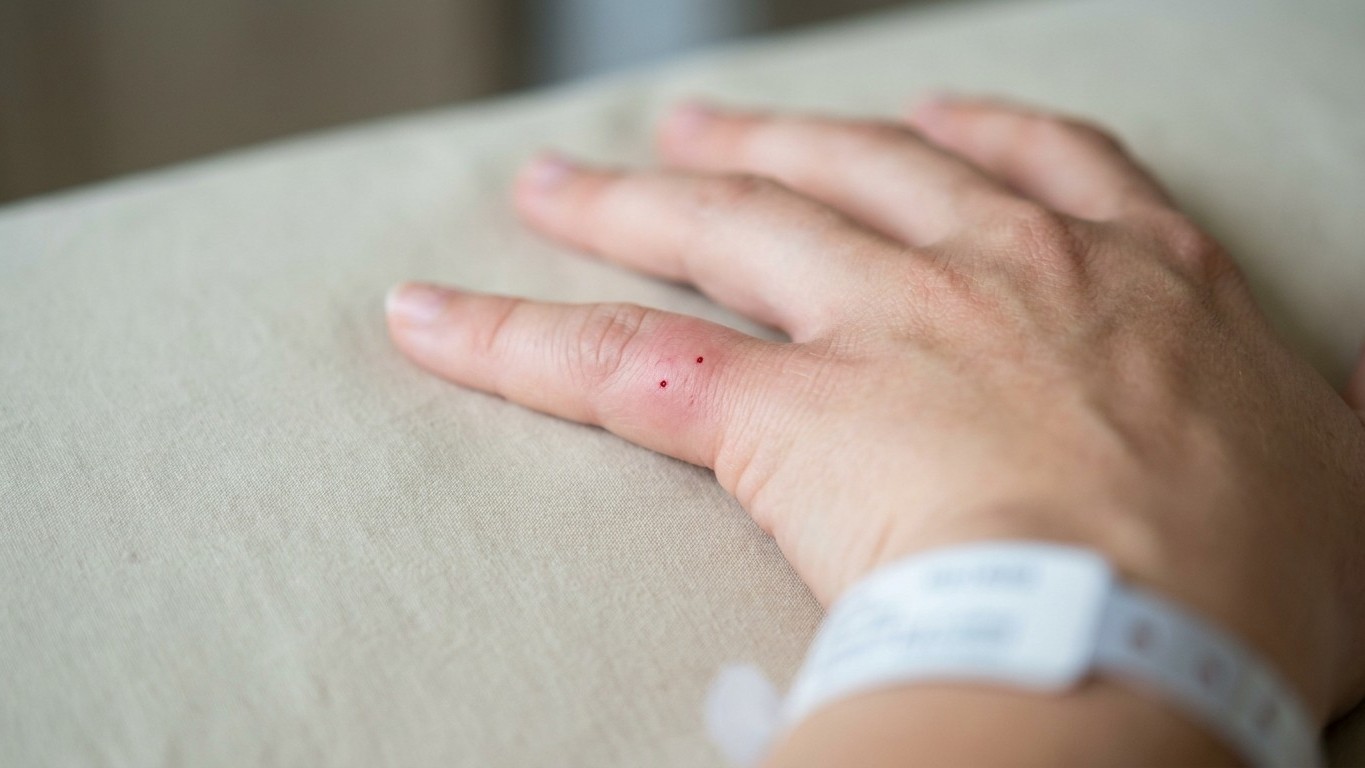
Two tiny puncture marks, barely visible, sealed over within sixty minutes. That’s exactly what makes cat bites so treacherous: the skin closes fast, but underneath, bacteria have already been driven deep into the tissue, with nowhere to drain and no oxygen to slow them down. By the time redness, throbbing pain and swelling forced a trip to A&E twelve hours later, what had been “pushed under the skin” was a cocktail of oral bacteria from the cat’s mouth, now multiplying in a warm, sealed pocket beneath the surface.
This isn’t a rare fluke. Between 28% and 80% of cat bites become infected, a staggeringly wide range that reflects just how unpredictable these small wounds can be. Compare that with dog bites, where only 3% to 18% become infected despite often looking far more dramatic. The reason lies in the shape of the injury itself. A dog’s jaw crushes and tears, leaving a wound that bleeds and stays open, flushing itself out somewhat naturally. A cat’s teeth are needle-thin and curved, built for the wild ancestor’s job of a precision kill bite. They slide in, deposit bacteria at depth, then slip out cleanly, leaving deep but narrow puncture wounds, and the small puncture hole on the surface often seals over very quickly, trapping everything inside.
Key takeaways
- A cat’s curved teeth are designed to inject bacteria deep into tissue while leaving a deceptively small surface wound
- The puncture seals over in minutes, creating an oxygen-free pocket where dangerous bacteria multiply rapidly
- Hand bites are especially treacherous because they can penetrate tendon sheaths, turning a minor bite into a surgical emergency
Why the wound closing so fast is bad news, not good news
It sounds counterintuitive. Surely a wound healing over quickly is a sign the body is coping well? With cat bites, the opposite is true. These punctures quickly seal over, trapping bacteria from the cat’s mouth under the skin of the bite victim, where they can easily multiply. Once trapped under the skin, these bacteria spread and multiply, causing infection and inflammation (cellulitis) of the surrounding soft tissues. The culprit most often identified is Pasteurella multocida, a bacterium that thrives specifically in this kind of environment. Cats showed the highest carriage rate among pets, ranging from 70 to 90%, meaning the vast majority of moggies wandering around British living rooms are carrying it in their mouths right now, without a single symptom themselves.
The clock on symptoms runs faster than most people expect. Signs of local infection appear in 3 to 6 hours according to feline veterinary guidance, while human medical sources note that symptoms typically appear within 12 to 24 hours. That fits neatly with a scenario where the wound looks fine at hour one, then by hour twelve the hand is swollen, hot and aching. Clinical infection after a cat bite is mostly characterised by acute onset of erythema, swelling and intense pain within 24 hours of initial injury in 70% of patients and by 48 hours in almost 90% of cases. if a bite is going to turn nasty, it usually shows its hand within a day or two, not weeks later.
Hands are the worst place to be bitten
Location matters enormously, and the hand is about the least forgiving part of the body for this kind of injury. The hand is a densely packed structure where skin, tendons, tendon sheaths, joint spaces, nerves, and blood vessels lie in very close proximity. A cat’s fine, sharp tooth can slip straight past the skin and muscle and inoculate a tendon sheath or joint capsule directly, an area with poor blood supply and therefore poor natural infection-fighting ability. Hand bites are especially dangerous and can penetrate tendon sheaths, the Kanavel signs indicate a surgical emergency. This is precisely why an emergency doctor examining a swollen, painful hand after a cat bite will check finger movement and grip so carefully. Left unchecked, an infection lodged in a tendon sheath can spread along the whole sheath towards the wrist within hours, a genuine surgical emergency rather than something a course of tablets alone will fix.
Age and health also shift the odds. Most healthy adults recover fully with prompt treatment, but the story can turn far darker for older or immunocompromised people. One striking case report described a 92-year-old woman who developed coma and fever a week after the bite of her cat, with blood cultures eventually confirming Pasteurella multocida sepsis, and, remarkably, the cat saliva was cultured and found positive for Pasteurella multocida with a similar antibiotic sensitivity to that isolated from the patient, proving the transmission beyond doubt. These severe outcomes remain uncommon, but they explain why vets and doctors alike treat every cat bite with more respect than its size suggests.
What actually happens in the emergency room, and what to do before you get there
Treatment in hospital usually starts with thorough irrigation of the puncture, sometimes reopening it slightly to let trapped material drain, followed by antibiotics chosen specifically because cat bite wounds are rarely infected by just one organism. Along with Pasteurella, the wound flora regularly includes Staphylococcus aureus, Streptococcus species, and various anaerobes, which is exactly why amoxicillin-clavulanate is the antibiotic of choice rather than a narrow-spectrum agent. Tetanus status gets checked too, since a deep puncture is a classic entry route for that particular nasty.
At home, before any of that, the advice is simple and worth repeating to anyone who shares a house with a cat: wash the bite immediately under running water with soap, resist the temptation to squeeze it shut, and watch the clock rather than the wound. Redness spreading outward, a hot or throbbing sensation, reduced finger movement, or a fever within that first day are the signals to stop waiting and get seen, particularly for a bite anywhere near the hand or wrist. And a quiet word for the cat’s side of the story: a bite is very rarely random malice. It’s usually fear, overstimulation during play, or pain the animal can’t express any other way, which is worth remembering before reaching for blame rather than a vet’s number for the cat too.
Sources : cats.com | ncbi.nlm.nih.gov