
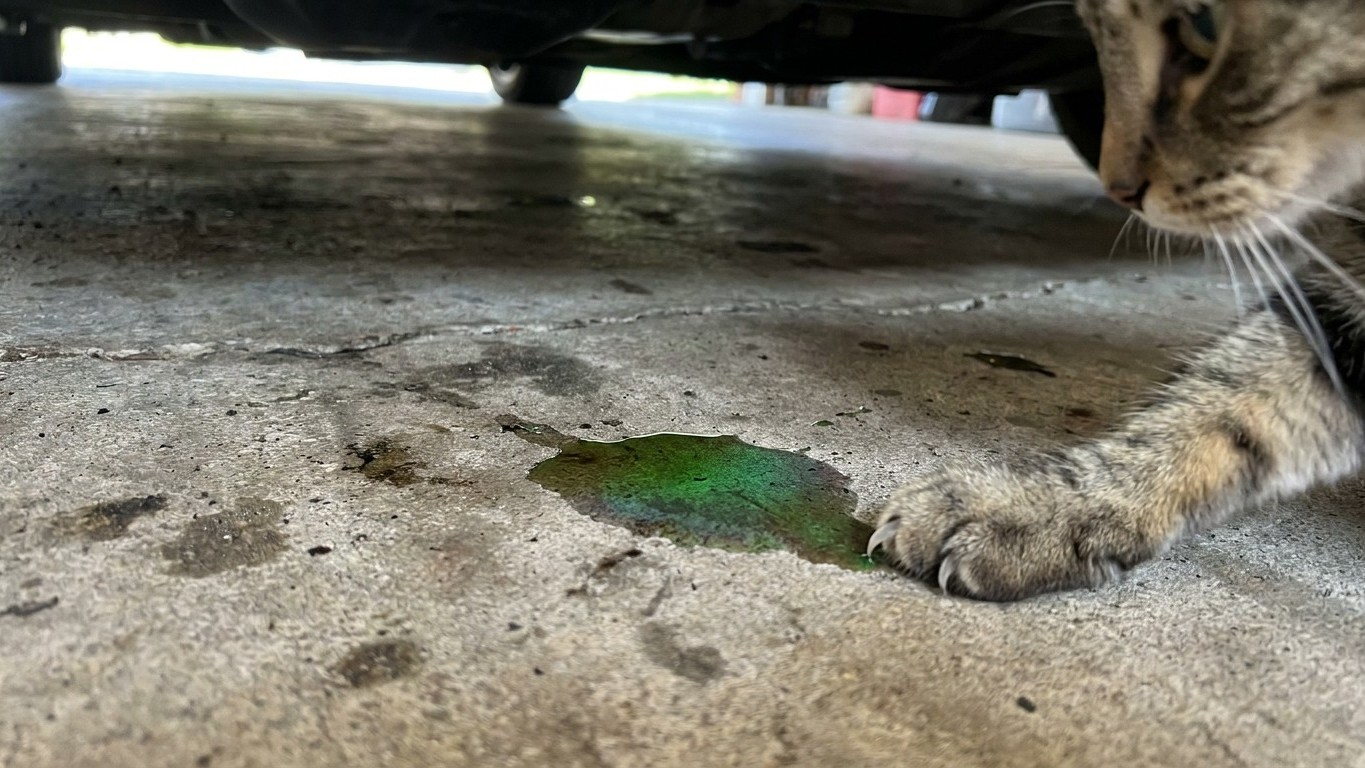
That green puddle was antifreeze, or engine coolant, and what I learned by nightfall turned my stomach: ethylene glycol, the main ingredient in antifreeze, is extremely toxic, and the same chemical is also found in car screen wash, brake fluid, radiator fluid and some garden water features. My cat, Mabel, had been sniffing around that exact spot on the drive an hour earlier. A quick call to my vet and a frantic bit of googling later, I understood exactly why she’d been shooed indoors so sharply, and why owners across the country lose pets every year to something that looks, frankly, like nothing at all.
Coolant leaks aren’t a winter-only problem, whatever the folklore suggests. Yes, ethylene glycol intoxication occurs most commonly in temperate and cold climates because antifreeze increases the boiling point of radiator fluid, and in colder climates most cases occur in the fall, winter, and early spring. But an August heatwave puts just as much strain on a cooling system as a January frost, more. Radiators work harder, hoses perish in the heat, and seals that have been fine for years suddenly weep. A tidy garage floor with a small emerald puddle underneath the engine bay is a summer sight I’d wager most of us have dismissed without a second thought.
Key takeaways
- A single teaspoon of antifreeze contains enough ethylene glycol to kill an average cat
- Symptoms disappear mid-poisoning while organs silently fail, luring owners into dangerous delay
- This toxic chemical lurks in windshield cleaner, brake fluid, snow globes, and printer cartridges
Why a teaspoon can be fatal
Here’s the bit that genuinely shocked me: cats don’t need to lap up much at all. Antifreeze is sweet, so cats like the taste, but a lethal dose is reported to be around 1 to 1.4 ml per kg of bodyweight. For an average moggy, that works out terrifyingly small. A 6ml teaspoon could be enough to kill a cat. The Merck Veterinary Manual, one of the most trusted references in veterinary medicine, is even more precise, putting the minimum lethal dose of undiluted ethylene glycol at 1.4 mL/kg in cats, a fraction of what a dog can tolerate. Cats simply aren’t built to process this chemical, and their small body mass means even a splash licked off a paw can tip into dangerous territory.
It isn’t just leaking radiators, either. Ethylene glycol can also be found in lower concentrations in windshield de-icing agents, hydraulic brake fluid, motor oils, solvents, paints, film processing solutions, wood stains, inks, and printer cartridges. Snow globes, of all things, sometimes contain it too. The chemical itself has no smell that would alert a cautious owner, which is part of what makes it so sneaky.
The cruel three-act poisoning
What makes ethylene glycol so dangerous isn’t just the tiny lethal dose, it’s the way symptoms play out in stages that can lull an owner into false relief. The first sign you see may be that your cat is very quiet and still, there may be vomiting and wobbliness or falling over as if drunk, and this may progress to having a fit, and kidney pain as the kidneys start to fail. Early signs typically appear within 30 minutes to 12 hours of ingestion, so a cat behaving oddly on the evening you noticed that puddle is not a coincidence to ignore.
Then comes the part vets dread explaining to owners, because it’s genuinely counterintuitive. During the middle stage, symptoms may temporarily disappear while the toxin continues damaging the kidneys and other organs, and this deceptive “improvement” often delays treatment, making the situation much more dangerous. Your cat looks brighter. You breathe a sigh of relief. Underneath, the kidneys are quietly failing. By the time obvious signs return, severe acute kidney injury has set in, with symptoms including severe depression, lack of appetite, vomiting, diarrhoea, drooling, halitosis, seizures and collapse; in one reported case series of 25 cats, 96% of those affected died. That statistic alone should be enough to make anyone check under their car bonnet tonight.
What to actually do about it
Speed is everything here, more than with almost any other household poison. Because antifreeze poisoning affects cats quickly, it’s important to take them to the vet immediately after a suspected ingestion. Don’t wait to see if symptoms develop. If you can see residue on fur or paws, wash it off straight away to minimise re-exposure before travelling to the vet. Bringing along the product bottle, or even a photo of the puddle’s colour, genuinely helps the vet narrow down treatment, since if possible, you should also bring the container or a label of the antifreeze product your cat has come into contact with as it will be helpful for the vets to know what exact chemical they’re dealing with.
Once at the clinic, treatment is intensive rather than instant. Vets typically pursue inducing vomiting to help remove toxins from the stomach, followed by antidote medication and intravenous fluids, and a hospital stay of several days is common. The antidote works best administered early; once neurological symptoms and kidney damage have set in, outcomes worsen sharply.
On the prevention side, three habits make a real difference for anyone who parks near a shed, garage or driveway a cat might wander through:
- Check underneath your car every few weeks, especially after long drives in hot weather, since checking your car regularly to make sure it isn’t leaking water coolant catches problems before a cat finds them.
- Mop up any spill immediately and thoroughly, then cover the area with cat litter or sawdust, because an absorbent material discourages pets from licking any small amount left on the ground.
- Consider switching to a propylene glycol formula where practical, since it carries a milder toxic profile and it also does not have the sweet taste of ethylene glycol, so animals may be less attracted to it.
Mabel, for what it’s worth, hadn’t touched the puddle itself, only sniffed nearby, and a nervous overnight watch turned out fine. Not every cat is so lucky. The next time you spot a stray patch of colour on the garage floor, in any month of the year, treat it as a small emergency rather than a chore for the mop, and ring your vet if there’s any chance a paw or a tongue got there first.
Sources : partridgepractices.co.uk | merckvetmanual.com