
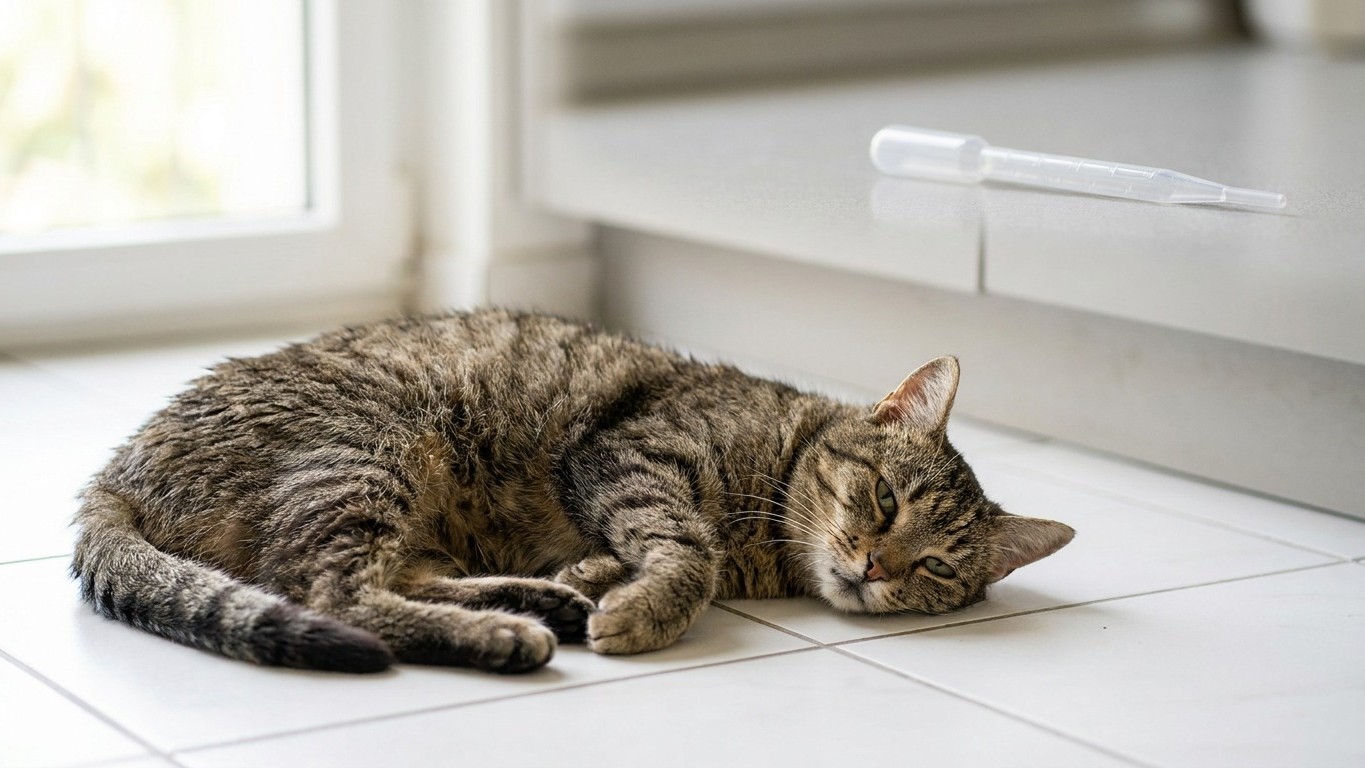
That shaking wasn’t a chill. It was permethrin poisoning, and it’s one of the most preventable emergencies a vet will ever see walk through their door.
Permethrin is a synthetic pyrethroid found in countless spot-on flea treatments for dogs, and it’s safe to use on dogs but high doses are extremely poisonous for cats. The reason isn’t dosage alone, it’s biology. A cat’s liver can’t break down certain chemicals into a harmless form, so the harmful chemical builds up in the cat’s body, causing serious illness, and this is just one of the reasons why we must never assume a product safe for dogs will also be safe for cats. Cats are missing a specific liver enzyme that dogs have in abundance, so instead of metabolising the compound quickly, it lingers and accumulates to toxic levels.
This isn’t some obscure, freak accident either. The Veterinary Poisons Information Service in London records permethrin intoxication as the most common toxicological cause of feline deaths reported, and it’s one of the most common feline poisonings worldwide, with hundreds of cases reported every year in the UK. A retrospective study looking at real cases found something telling: the overwhelming percentage of poisoned cats had been accidentally administered a dog-strength flea and tick preventative topical solution. this exact scenario, someone using up a leftover dog pipette on a cat, is the textbook cause.
Key takeaways
- A dog flea product applied to a cat triggers poisoning symptoms within hours, not minutes—and the danger window is deceptively wide
- Cats lack a crucial liver enzyme that dogs have, making even tiny amounts of permethrin accumulate to toxic levels
- There’s no antidote once poisoning starts, but early veterinary treatment has a high survival rate if you act fast enough
Why two hours matters more than you’d think
Cats don’t always collapse the moment the liquid touches their fur. Symptoms appear gradually, often starting in the first few minutes after application, with profuse salivation caused by the bitterness of the product as the cat starts licking it off. From there things escalate. Permethrin is absorbed very quickly so signs of poisoning usually appear within a few hours, but can take up to 36 hours. Two hours in, with visible tremors, is right in the danger zone where the poison has properly entered the bloodstream and started attacking the nervous system.
What’s actually happening inside that shaking body is genuinely nasty. Permethrin affects the nervous system, first causing it to become oversensitised, producing twitching and seizures, before eventually causing paralysis. A detailed review of 286 feline permethrin cases found that increased muscular activity, whether twitching, tremor, fasciculations, or convulsions, occurred in 87.8% of symptomatic cats, and worryingly, 96.9% of affected cats became symptomatic at all. This is not a “wait and see” poison. Left alone, the outlook is genuinely grim: fatality rates in untreated or late-treated cases have been reported between 10% and 40%.
There’s no shortcut once symptoms start. There is no known antidote for permethrin toxicity in cats, so treatment mainly consists of supportive care to treat the neurological signs and symptoms. That typically means tremor control with methocarbamol, decontamination, intravenous fluids, and sometimes intravenous lipid emulsion therapy in a veterinary hospital, not a home remedy. The reassuring flip side is that with early and aggressive treatment, most cats recover fully. Time really is everything here.
What to actually do if this happens
Ring the vet immediately. Don’t wait to see if things settle, and don’t Google symptom checklists while your cat is deteriorating on the kitchen floor. If your cat hasn’t started fitting yet and will tolerate it, there’s a first-aid step worth knowing: wash the affected area off immediately using warm water and dilute washing-up liquid, then call your vet straight away. Ordinary pet shampoo often isn’t strong enough because the medication is too oily for it to work effectively, which is exactly why washing-up liquid, unglamorous as it sounds, does a better job of cutting through the oil-based solution.
If your cat is already twitching, seizing, or drooling excessively, skip the bath entirely. If your cat is already showing signs and symptoms of permethrin poisoning, or you’re unable to bathe them safely, skip the washing step and seek veterinary treatment immediately. Cats are notoriously difficult to handle at the best of times, let alone mid-seizure, and stress alone can worsen their condition.
Stopping this before it starts
The honest truth is that most cases trace back to human error, not malice, just a moment of “it’ll probably be fine.” Common culprits worth knowing by name: dog flea treatments containing permethrin include Advantix spot-on and Vectra 3D. If you own both a cat and a dog, check the active ingredient on every box before it goes anywhere near your dog’s fur, not just when you’re applying it to your cat.
Multi-pet households need a bit more vigilance than single-species ones. If you have a dog who comes into close contact with your cat, use a cat-safe product on the dog instead, or keep them apart until the treatment has fully dried. That’s because contact exposure is a genuine risk, not a theoretical one: poisoning can happen when a cat comes into contact with a dog recently treated with a permethrin-based product, rubbing against them or even just sitting on the same furniture. Freshly treated dogs shouldn’t be sharing a bed or a sofa cushion with the cat for at least a day.
One detail that surprises a lot of owners: dosage doesn’t save you. Some owners use a dog flea product on their cat by mistake, assuming a smaller quantity will be safe, but sadly this isn’t the case, and even a very small amount of permethrin can make a cat seriously ill. There’s no safe fraction of a dog pipette for a cat. None. So that leftover box in the cupboard, tempting as it is to use up rather than waste, belongs in the bin, or better yet, back to the vet for safe disposal. Your cat’s liver was never built to handle what your dog’s can shrug off without blinking.
Sources : journals.sagepub.com | animalemergencyservice.com.au