
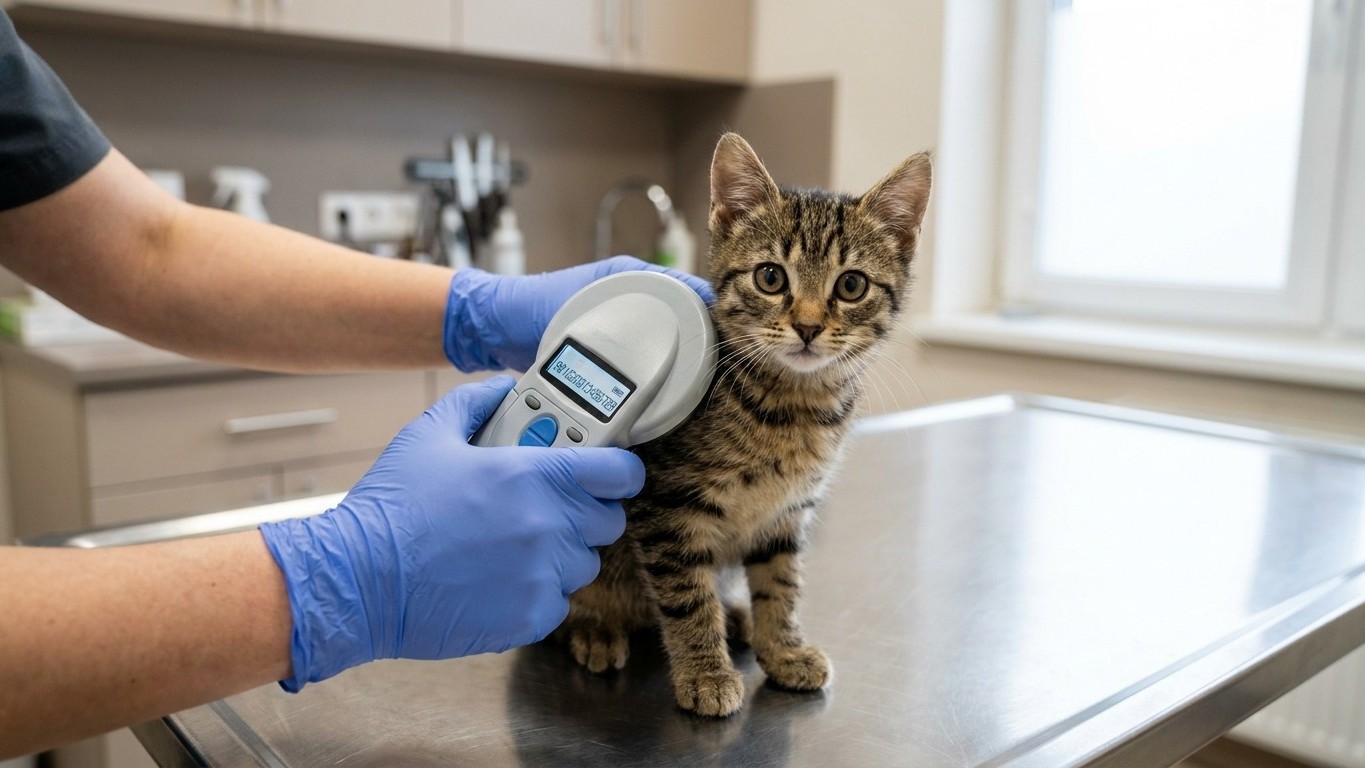
That name flashing up on the vet’s scanner screen, one that definitely isn’t yours, and definitely isn’t the “breeder’s” either, is the moment thousands of unsuspecting kitten buyers have learned a hard truth: a microchip only tells the truth if someone bothered to update it. A mismatched chip usually means one of three things. The kitten was never re-registered after being sold on, the chip was reused or swapped from a different animal entirely, or you’ve unknowingly ended up with a cat that was stolen, bred illegally, or passed through several hands before reaching that “vaccinated, no papers, bargain price” advert.
None of those scenarios are good. And the “no papers” phrasing that made the kitten seem like a harmless pocket-money saving? That’s precisely the wording that ought to have set alarm bells ringing.
Key takeaways
- That microchip with someone else’s name flashing on the scanner? It might mean the kitten was stolen, illegally bred, or passed through multiple illegal sellers
- The ‘no papers’ phrase that seemed like a harmless money-saver is actually the biggest red flag in pet sales
- Cat theft has quadrupled since 2015, and ‘bargain’ kittens from unverified sellers are prime targets
Why the chip says someone else’s name
Since 10 June 2024, microchipping cats has been a legal requirement across England, not just a nice-to-have. Microchipping is now a legal requirement for cats in England, meaning cats must be implanted with a microchip before they reach the age of 20 weeks with their contact details stored and kept up to date on a pet microchipping database. Fail to do it, and owners have 21 days to have one implanted, or may face a fine of up to £500. The law exists precisely because, before it came in, Defra estimated as many as 2.8 million cats in the UK were unchipped, making them near-impossible to trace if lost, dumped, or sold on dishonestly.
A chip itself is nothing more than a rice-grain-sized transponder holding a unique number. It doesn’t magically update itself when a kitten changes hands. Cats Protection is blunt about this: if you’re buying from anywhere other than a registered rescue, you’ll need to ask for further information about the microchip and see if you can access the cat’s original paperwork. Skip that step, as many buyers do when a seller insists there simply “aren’t any papers”, and you have no way of knowing whether the animal in your arms is the one the chip was originally implanted for.
This isn’t a rare glitch, either. Cat theft has become a genuinely serious problem in Britain. Cat theft has quadrupled since 2015, rising from 6% to 31% of all pet theft crimes recorded by the Metropolitan Police. Bengals, British Shorthairs and Persians have historically topped the “most stolen” lists precisely because their kittens fetch high prices with buyers who rarely ask enough questions. Parliament responded with the Pet Abduction Act, which received Royal Assent on 24 May 2024 and came into operational force on 24 August 2024 in England and Northern Ireland, finally making pet theft a distinct criminal offence rather than a footnote under general theft law. Encouragingly, reported thefts fell by 21% in 2024 following the change, though vigilance clearly hasn’t gone out of fashion.
The “vaccinated, no papers” trap
Every reputable rescue and welfare charity flags the same warning signs. The Pet Advertising Advisory Group, a coalition backed by Cats Protection, Dogs Trust, Battersea and the RSPCA, tells buyers to always ask for a copy of medical records, including vaccination certificate and records of worming and flea treatment, and ensure registration papers and microchip documentation are in order before any money changes hands. “Vaccinated” without a certificate is just a claim. “No papers” isn’t a quirky quirk of an informal home breeder, it’s usually a deliberate way of avoiding scrutiny.
Pets4Homes goes further, warning buyers to check to make sure you receive the microchip documentation with chip number before taking the cat home and then arrange to transfer the microchip to your own name. That transfer step matters enormously. Even a genuinely chipped kitten from an honest breeder is only useful to you once your own name and phone number sit against that chip number on an approved database. If a seller can’t produce that document on the spot, on their phone, printed, anything, walk away. As Pets4Homes bluntly puts it, buyers must ensure they receive the microchip documentation and check that it is genuine before taking their cat or kitten home.
What to actually do once the mismatch shows up
First, don’t panic and don’t hand the kitten back to the seller before you’ve reported it. Contact the microchip database shown on the scanner (your vet can tell you which one) and ask who the registered keeper is. Genuine confusion sometimes explains a mismatch, perhaps a rescue centre forgot to update details after a legitimate rehoming. But if the registered name belongs to a stranger who reports the cat as missing or stolen, you are legally holding someone else’s property, however innocently you came by it.
Report the transaction to the police, and to Trading Standards via Citizens Advice. Cats Protection specifically advises that if you think you might have been the victim of a scam involving pet sales, report it to the police by calling 101. Keep every message, screenshot and bank transfer as evidence; these cases increasingly lead to prosecutions now that pet theft carries its own offence category. Ask your vet to photograph the scan result too, since that digital record has real evidential weight.
Only ever check a chip against one of the databases Defra has actually approved; scam registries charging suspicious “renewal fees” have proliferated in recent years, and these unauthorised databases do not meet UK Government standards and are not on the list of government-endorsed pet databases. Your vet practice will know the legitimate list, or you can find it via gov.uk directly.
Buying the right way next time
The maths on “bargain” kittens rarely works out. Between the vet bills to untangle an unregistered chip, potential neutering costs, and the emotional gut-punch of discovering your new companion might legally belong to someone else, that few hundred pounds “saved” evaporates fast. Cats Protection’s own guidance is unambiguous: check the seller’s licence number if they’re breeding commercially, since anyone breeding three or more litters of kittens a year is required to have a licence, and always see the kitten with its mother in the place it was actually born.
One detail worth remembering: a microchip has no battery and, as vets confirm, is designed to last a lifetime and never expire. So if a seller ever tells you a chip has “run out” and needs renewing for a fee, that’s not a maintenance cost, that’s the same trick scammers use on unsuspecting owners after the sale. The chip in a genuine, well-bred kitten should need nothing from you except an update of your own name once, and then it simply waits, quietly doing its job, for the rest of that cat’s life.
Sources : heathvets.com | stolenandmissingpetsalliance.co.uk