
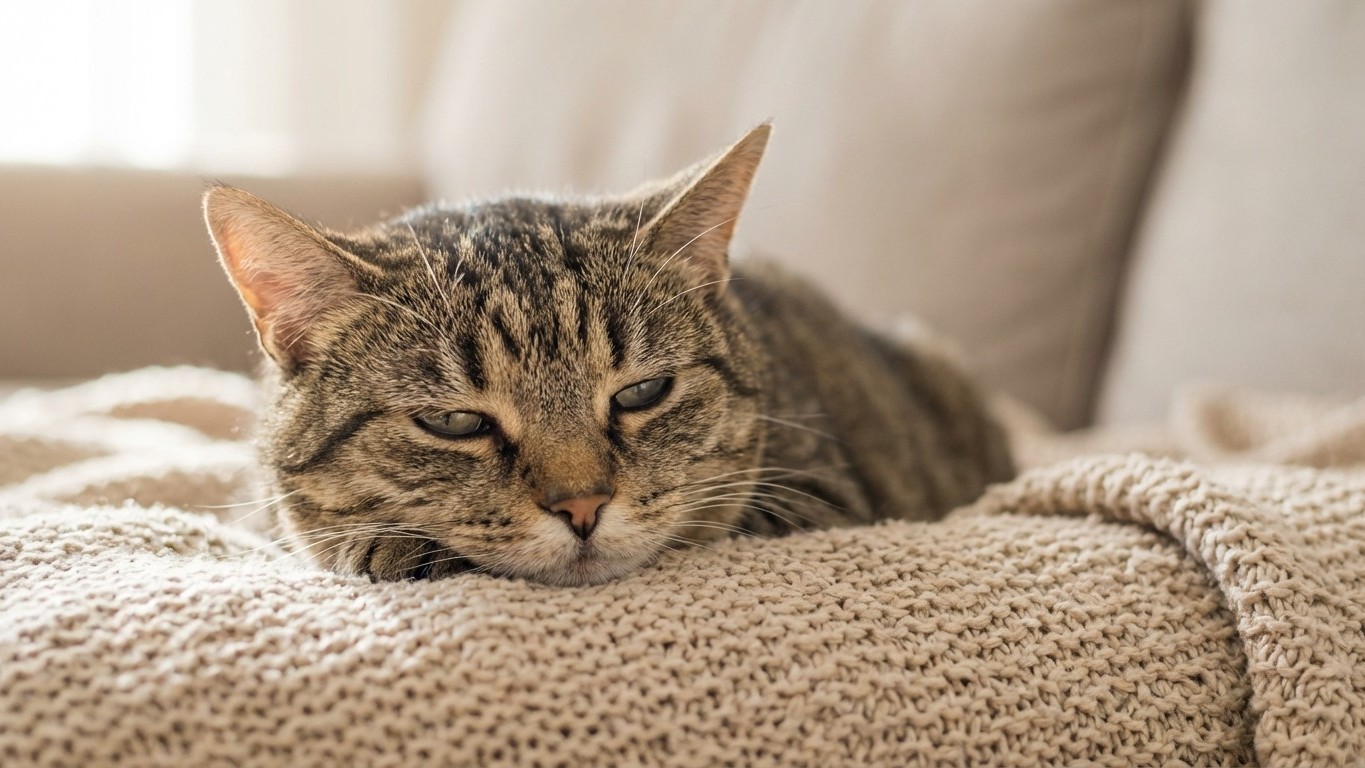
Your cat is asleep again. Third time this afternoon. You think nothing of it, maybe he’s just having a lazy day, but that Thought lingers a little longer than it should. The truth is, by the time most cat owners realise something is genuinely wrong, their pet has often been quietly suffering for days, weeks, or even months. Cats are, quite simply, masters of disguise when it comes to pain.
Key takeaways
- Your cat might be silently suffering while you think they’re just getting older
- Changes you’ve been overlooking—reduced jumping, grooming shifts, litter box accidents—could signal serious pain
- Two conditions cause most hidden cat pain, and they’re far more common than you’d expect
Built to hide it: why your cat won’t tell you they’re hurting
In the wild, a cat that shows weakness becomes an easy target. Domestic cats retain this evolutionary behaviour, they mask their symptoms, even serious ones, until they simply can’t anymore. That survival instinct, hardwired over thousands of generations, hasn’t disappeared just because your cat now splits his time between a heated blanket and a window ledge. Despite centuries of domestication, modern house cats retain this ingrained survival behaviour, making it genuinely Difficult for their owners to detect when something is wrong.
The result is a peculiar kind of cruelty: the animals we love most are also the ones best equipped to keep us in the dark about their Suffering. Unlike dogs, who might whimper or limp visibly, cats tend to retreat, go quiet, and behave more cautiously. And crucially, cats suffering with symptoms of chronic pain or illness can sometimes hide their discomfort for long periods of time. This kind of pain can also impact cats long-term at an emotional level, causing them distress and making them less resilient.
The signs hiding in plain sight
This is where it gets tricky, because unlike acute injuries that cause immediate limping or vocalization, many sources of feline pain, arthritis, dental disease, internal discomfort, develop gradually. There’s no dramatic moment. Just a slow shift in the fabric of your cat’s everyday life that’s easy to dismiss as ageing, boredom, or personality.
A change in activity level can be a sign of pain in cats. Your once-acrobatic companion no longer leaps onto the kitchen counter. Injuries and joint pain often prevent cats from jumping up onto surfaces and going up and down stairs. If your feline friend is suddenly spending more time on the floor when they used to hop up on your bed or sofa, don’t mistake this as a simple sign that your cat is getting older. That mental shortcut, assuming a cat is “slowing down with age,” is exactly how chronic pain goes unnoticed for so long. “I think that response of ‘he’s just getting old’ is embedded in our society,” as one pain specialist has noted.
Grooming habits are another window into your cat’s wellbeing, one that owners rarely think to look through. Pain can significantly impact a cat’s daily habits and grooming routine. If you notice that your cat has become less meticulous in grooming themselves, leading to a messy or matted coat, it may be a sign of discomfort. Paradoxically, some cats may excessively groom the areas that are causing them pain, often resulting in hair loss. Both extremes, the scruffy cat and the one obsessively licking one spot, deserve attention.
Then there’s the litter box, which is, frankly, one of the most informative places in your home if you know what to look for. Cats that suddenly have accidents in the house after years of using the litter box may be in too much pain to get in and out of a box with high sides. Painful urination or defecation, caused by issues like urinary tract infections or constipation — may cause your cat to avoid the litter box altogether. Accidents Outside the box, straining, or vocalizing during bathroom trips are signs to take seriously. And if your male cat is straining but producing little or no urine, that is an emergency: your cat could have a potentially life-threatening urinary blockage, requiring immediate veterinary care.
Personality changes are perhaps the most heartbreaking signal of all. A lap cat who suddenly can’t stand being held may be experiencing pain when they are touched or petted. Any of these changes in their usual personality and preferences may be signs of a medical issue. A cat who hisses when you stroke their back, or who retreats under the bed when they used to follow you room to room, these aren’t mood swings. They’re communication.
One sign that surprises almost every cat owner: purring is not always contentment. Some cats purr when they are frightened or hurting, and this is particularly true for cats with easygoing or gentle personalities. That gentle rumble on your lap might be your cat attempting to self-soothe rather than expressing happiness.
The common culprits: conditions that hurt quietly
Two conditions account for an enormous proportion of silent feline pain in the UK, and both are routinely underestimated.
Dental disease is so prevalent it’s almost mundane, which makes it all the more dangerous. Periodontal disease is the most commonly diagnosed disease in UK cats, with 15.2% of cats diagnosed annually, an estimated 1.8 million cats affected every year in the UK, and many more likely going undiagnosed. Although periodontitis can be painful, it can be difficult to identify because cats have developed evolutionary survival habits of masking chronic pain from potential predators. It’s important to check your cat’s teeth and gums regularly because most cats try their best to hide pain, so often don’t show symptoms of dental disease until it’s very severe. A cat with a raging toothache may carry on eating, simply switching to the other side of the mouth or preferring wet food, clues hiding in plain sight.
Arthritis is the other great silent offender. Studies estimate that 60% of cats aged 6 years and older have degenerative joint disease, yet it’s not common for cats to limp or cry out. Reluctance to go up or down stairs or to jump onto furniture, cat trees, or windowsills, and too little grooming, most cats with osteoarthritis stop grooming themselves as well as they used to. They develop a messy hair coat and may become matted over their painful body parts. Again, easy to chalk up to “just getting older.”
Reading the face, and what to do next
There is now a genuinely useful tool for those moments of uncertainty: the Feline Grimace Scale is a validated tool for acute pain assessment in cats based on changes in facial expressions. It measures the absence or presence of signs including ears flattened and rotated outward, squinted eyes, whiskers that are bunched together, and whether the cat’s muzzle is tense and their head is lowered. It is a valid, fast, reliable and easy-to-use tool for feline acute pain assessment by both veterinary health professionals and cat owners. A free app exists for both iOS and Android. Worth downloading before you ever need it.
At home, the practical adjustments are small but meaningful. Consider relocating your cat’s bed, food dishes, water bowls, and litter box so they’re easier to get to. Make sure the litter box is simple enough to climb in and out of, if you have a model with a lid or deep sides, you might need to replace it with an open, shallower structure.
One absolute rule: many human painkillers are toxic to cats. Never give ibuprofen, aspirin, or paracetamol. Instead, consult your veterinarian right away. Your vet can offer a proper diagnosis and a tailored pain management plan, and the sooner pain is recognised and managed, the better you will maintain your cat’s quality of life and their enjoyment of daily living.
The hardest part of living with a cat is accepting that you will not always know. Their silence is ancient and absolute. But you know your cat, their rhythms, their quirks, the specific way they ask for dinner or sulk after a bath. A cat’s human family members are in the best position to identify subtle changes in behaviour that may signal pain. That quiet nagging feeling that something is a little off? Trust it. It might be the most important thing your cat has ever told you.