
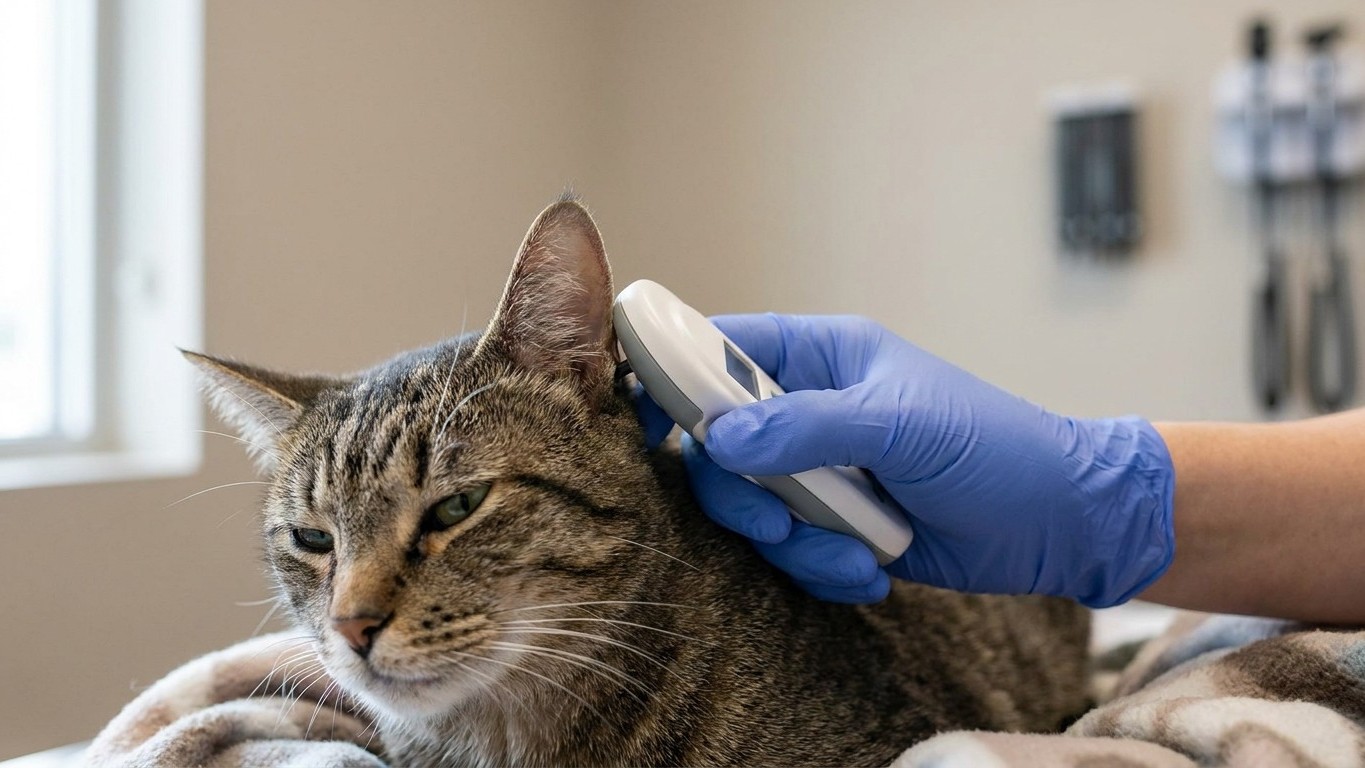
A microchip only works if three things line up: someone scans it, the database it’s registered on is the right one, and the contact details on file are current. Miss any one of those and that “he’s chipped, so I wasn’t worried” feeling turns into a frantic phone call to every vet and rescue within twenty miles. What almost nobody explains to new cat owners is that scanning a stray cat sets off a countdown, run by whichever vet, warden or rescue picked him up, and that countdown has real consequences for whether you get him back.
Key takeaways
- A microchip only reunites you with your cat if three critical things align—and most owners get at least one wrong
- The moment your cat is scanned, a secret 7-8 day clock starts ticking before rescues consider rehoming
- Thousands of microchipped pets aren’t returned because of one simple mistake buried in a database
What actually happens the second the scanner beeps
When a cat turns up looking lost, the person who finds him is meant to take him somewhere with a scanner: a vet practice, a dog warden, or a rescue like Cats Protection or the RSPCA. If your cat is microchipped and gets lost, anyone with a scanner such as vets, dog wardens, and rescue centres can scan them, call the microchip company and get you reunited, provided your contact details are up to date. Cats Protection puts it just as plainly: if a welfare organisation scans your cat, you will be contacted and advised of your cat’s whereabouts.
The catch is that this only works cleanly when your details are current. Research from the American Veterinary Medical Association looked at thousands of stray animals across US shelters and found something that applies just as much on this side of the Atlantic: for microchipped animals that weren’t returned to their owners, the most common reason was an incorrect or disconnected owner telephone number in the microchip registry database. Not a broken chip. Not a scanner failure. Just an old phone number sitting quietly in a database nobody thought to update after a house move.
The clock nobody warns you about
Here’s the part that catches people out. Once a cat is handed into a rescue as a stray, most organisations don’t hold him indefinitely while they try every possible lead. Battersea, one of the UK’s busiest rescues, is upfront about this: the majority of stray cats brought into Battersea will need to stay for seven days before staff can take steps towards their rehoming, and if the cat is owned, this gives the owner a chance to claim him. RSPCA branches run on a similar clock. Suffolk Central, for example, states that no animals should normally be rehomed within seven days for cats, to enable suitable assessments to be made.
Vets work to comparable timescales when a stray with no obvious owner is brought in, and anecdotal reports from cat forums suggest a week is the rough industry norm before a case gets passed on for rehoming. Depending on the organisation and how the days are counted (working days rather than calendar days, bank holidays, weekends), that window can easily creep toward eight working days by the time paperwork, phone attempts and voicemails are all accounted for. It’s not a single national law with a fixed number stamped on it. It’s a patchwork of internal welfare policies, all built around the same basic logic: give the owner a fair chance, then move on, because there’s always another cat waiting for a kennel space.
This is separate from, and often confused with, the legal side of microchipping. Under the Microchipping of Cats and Dogs (England) Regulations 2023, all cat owners in England must ensure their cat is microchipped from 10th June 2024, and owners found not to have microchipped their cat will have 21 days to have one implanted, or may face a fine of up to £500. That 21-day grace period is about compliance with the law, not about how long a rescue will hold a found cat. Two entirely different clocks, both counted in days, both easy to muddle when you’re panicking about a missing pet.
Why the chip alone isn’t the safety net people assume
There’s a wrinkle that catches out even conscientious owners: which database is your cat actually registered on. There are over 20 microchip databases to choose from in the UK, and a scanner reading the chip number is only step one. Whoever finds your cat then has to work out which of those databases holds your details, contact that specific company, and hope the record hasn’t gone stale. Move house, change your number, or rehome a cat between family members without formally transferring keepership, and the chip becomes little more than a grain-of-rice-sized paperweight.
There’s also a persistent myth worth flattening here: a microchip is not a tracking device. A microchip is not a GPS tracker and cannot locate an animal’s precise location, as it does not have a power source. It only becomes useful the moment somebody physically scans your cat, which is exactly why that first week after he’s found matters so much.
Keeping your side of the bargain
The fix is unglamorous but effective. Log into whichever database your vet registered your cat with (check your paperwork from the microchipping appointment if you’re not sure) and confirm your address and phone number are current, especially after a move. Do this every few months rather than waiting for a crisis.
- Update your microchip database immediately after any change of address, phone number or email
- Keep a paper or digital record of your cat’s chip number and which company holds it
- Fit a collar with an ID tag as a backup, since a chip only helps once someone finds and scans your cat
One detail worth remembering the next time your cat goes in for a routine jab: it’s not a requirement for vets to check every cat for a chip at each visit, but they will always check for a chip before implanting another, or if a stray or lost cat is handed in. Ask your vet to scan and confirm the number matches your records anyway. It takes seconds, costs nothing, and is the single best insurance policy against ever discovering, at the worst possible moment, that the safety net you were counting on had a hole in it all along.
Sources : stokeycatsanddogs.org | thebondbetween.org