I’ve got solid, well-sourced information from the FDA, ASPCA and UC Davis Veterinary School. Now I’ll write the article.
Within a single day, a cat that has simply groomed lily pollen off its fur can already have kidney cells beginning to die. That’s not scaremongering, it’s the reality vets deal with every spring and summer when lily-filled bouquets start appearing in British homes. Something as innocent as a £6 bunch from the supermarket flower stand can turn into an emergency vet bill and a fight for a cat’s life, and most owners have absolutely no idea until it’s almost too late.
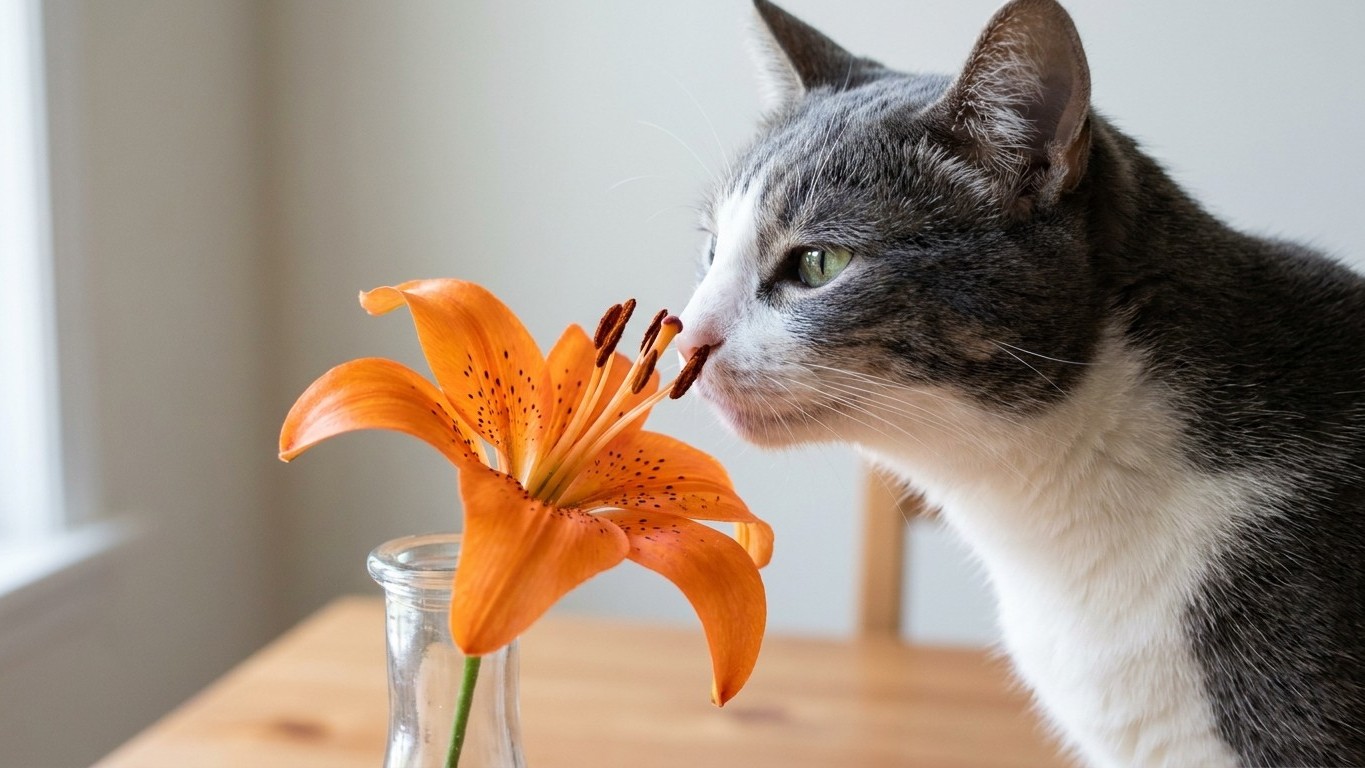
The mechanism is genuinely unsettling once you understand it. The entire lily plant is toxic: the stem, leaves, flowers, pollen, and even the water in a vase. Eating just a small amount of a leaf or flower petal, licking a few pollen grains off its fur while grooming, or drinking the water from the vase can cause your cat to develop Fatal Kidney Failure in less than 3 days. A cat doesn’t need to nibble a petal. It just needs to walk past the vase, brush against the stamens, get that rusty-orange dust on its coat, then do what cats do best: wash themselves meticulously a few hours later.
Key takeaways
A vet reveals what happens inside a cat’s body when lily pollen touches their fur during grooming
The 18-hour window that determines whether your cat survives — and why most owners miss it
Why dogs are completely fine around lilies, but cats face a mysterious, unstoppable toxin
What actually happens inside your cat’s body
The timeline is brutally quick. Early signs of lily toxicity in cats include decreased activity level, drooling, vomiting, and loss of appetite. These symptoms start 0 to 12 hours after ingestion. Signs of kidney damage start about 12 to 24 hours after ingestion and include increased thirst and dehydration. By the 24 to 72 hour mark, kidney failure occurs within 24 to 72 hours, leading to death if the cat isn’t treated.
Here’s the cruel twist that catches so many owners out: the early symptoms are mild, almost forgettable, then there’s a horrible lull. Vomiting is typically self-limiting and resolves within 2-6 hours, but don’t be fooled into thinking Fluffy is getting better. Your cat might seem to perk up for a day. Meanwhile, inside, the kidneys are quietly shutting down. As the kidneys shut down, metabolic waste products build up in the body causing vomiting to restart as well as the development of profound weakness typically seen within 30-72 hours post ingestion. Without treatment, within 3-7 days of ingestion, as symptoms progressively become worse, death will occur.
What makes this particularly frustrating for scientists and vets alike is that nobody has actually pinned down the culprit compound. The toxin, which only affects cats, has not been identified. Dogs can wander through the same bouquet, chew the same leaf, and walk away with nothing worse than a dodgy tummy, because dogs that eat lilies may have minor stomach upset but they don’t develop kidney failure. It’s a peculiarity of feline biology that researchers still can’t fully explain, which honestly makes it feel even more sinister. There’s no antidote to reach for, no simple blood test that flags “lily” specifically. Vets are essentially racing a clock against an invisible enemy.
Why the pollen is the sneakiest part
Most people picture poisoning as something a pet eats. Pollen throws that assumption out entirely. It settles on fur like a fine orange dust, gets transferred to paws when a cat brushes past the flower head, then ends up ingested during totally normal grooming. All parts of the plant are toxic and there are documented cases where exposure to the pollen alone has caused AKI (acute kidney injury), and vets consider this route just as dangerous as actually chewing a leaf.
One statistic from ASPCA research really stuck with me: 73% of owners whose cats were exposed to a lily didn’t even realize the plant was toxic to their pets. That’s not carelessness, that’s a genuine gap in public knowledge. Nobody hands you a warning leaflet with your bunch of Stargazer lilies at the till.
Not every flower sold under the “lily” name carries this risk, and the distinctions matter. True dangers come from Lilium species (Easter, Asiatic, Stargazer, Oriental, Tiger lilies) and daylilies from the Hemerocallis genus, both of which cause acute kidney injury: true lilies in the genus Lilium, which includes Easter lily, Asiatic lily, Stargazer lily, Oriental lily, and Tiger lily — and daylilies in the genus Hemerocallis. Peace lilies, Calla lilies, and Peruvian lilies won’t cause kidney failure, but don’t relax completely: Peace lily and Calla lily contain insoluble calcium oxalates that cause oral irritation and vomiting, Lily of the Valley contains cardiac glycosides that can affect heart rhythm. So “safe” is a relative term here, not a green light to let your cat chew freely.
What to actually do if this happens to you
Time is everything, and this isn’t an exaggeration for dramatic effect. If treatment is delayed by 18 hours or more after ingestion, the cat will generally have irreversible kidney failure. Eighteen hours. That’s roughly the length of one working day plus your commute. If you spot pollen on your cat’s coat, or catch them sniffing around a lily arrangement, don’t wait for symptoms to confirm your suspicions.
First, clean your pet’s face with warm water and try to remove as much pollen as possible before your cat has the chance to groom it off. Then get to a vet immediately, even if your cat seems perfectly fine, because immediate veterinary treatment is critical, even if symptoms are not yet visible. If possible, bring a sample of the flower with you (a cut stem or a petal in a sandwich bag works) since bringing the plant with you helps the vet identify the lily and offer the best treatment for your cat.
Treatment itself is intensive rather than glamorous. There’s no magic injection that neutralises the toxin. Instead vets rely on aggressive IV fluids for 48–72 hours to flush the kidneys while the toxin clears since there is no antidote. It’s supportive care, buying the kidneys time to cope while the body processes whatever compound is doing the damage. Blood and urine tests track kidney values throughout, because kidney disease may not be detected for two to three days after exposure even with treatment underway.
The genuinely good news is that cats caught early tend to do well. Cats treated within the first 18 hours often recover well. That’s the entire point of sharing this: not to terrify anyone out of ever buying flowers again, but to make that 18-hour window actually count. If you love having fresh blooms about the house and you share it with a cat, swap lilies for something like roses, sunflowers or freesias instead. Your living room will still look lovely, and nobody will end up spending their weekend in an emergency vet’s waiting room hoping for good news on a bloodwork panel.