
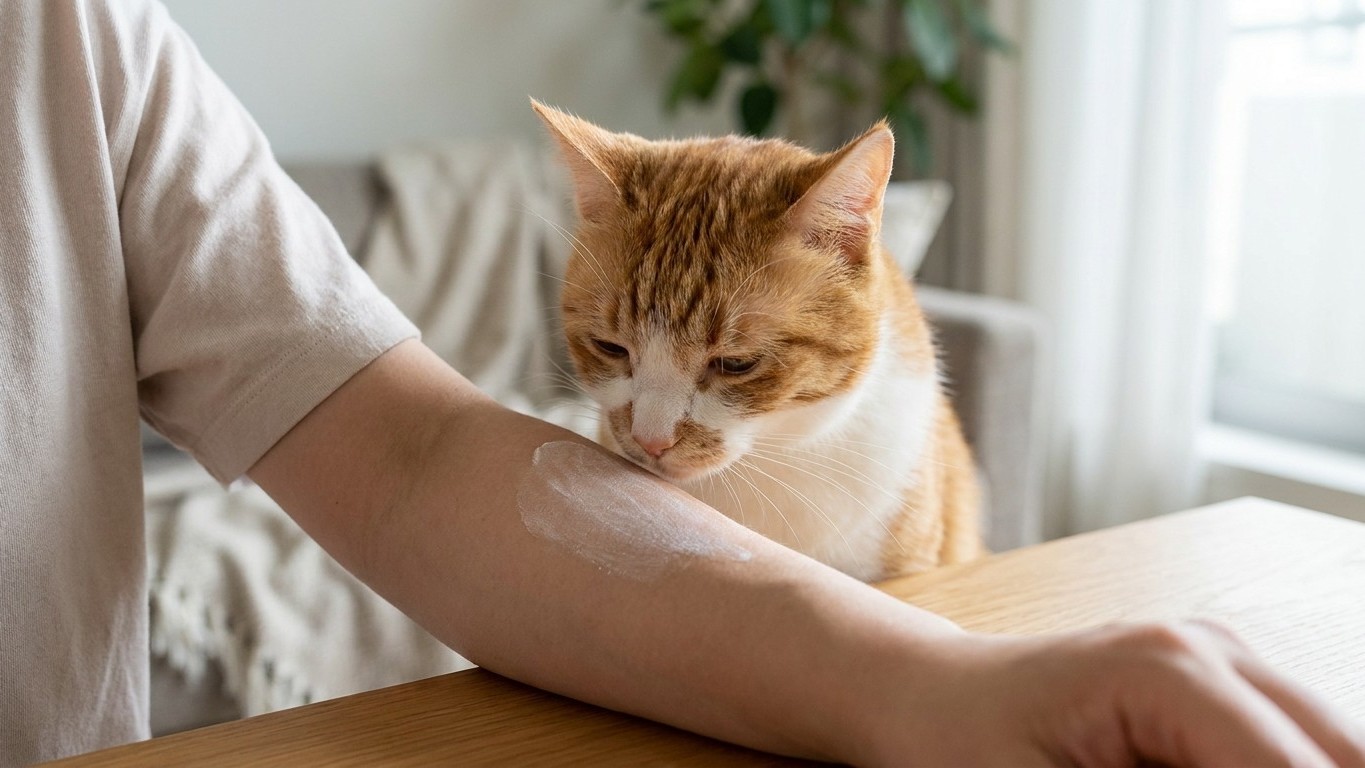
Rub sunscreen onto your nose and shoulders before a sunny walk, then let your cat curl up against your arm for a nap, and you’ve just handed them a lick of something that can quietly poison their blood. Zinc oxide, the thick white paste found in sun cream and nappy rash ointment, sits on the “harmless” shelf in most households. For cats, repeated exposure to it is anything but.
The chemistry is straightforward once you know it. With repeated exposure to zinc oxide on the skin, pets can develop zinc toxicity, which can damage the red blood cells. That’s not a one-off tummy upset from a single lick, it’s cumulative harm building with every grooming session where a cat cleans zinc oxide residue off its own fur or off your skin. A single accidental taste is unlikely to cause serious trouble, but a cat that repeatedly grooms cream off your arms, or off its own paws after wandering across a freshly applied patch, is a different story.
Key takeaways
- That ‘harmless’ sunscreen on your arms could be slowly poisoning your cat through repeated grooming sessions
- Zinc oxide doesn’t just upset the stomach—it attacks red blood cells and damages organs when it accumulates in the bloodstream
- Dark urine and lethargy are silent alarm bells that zinc toxicity has already begun
Why a lick becomes a genuine emergency
Once zinc reaches a cat’s bloodstream, it doesn’t stay put. According to veterinary toxicology resources, it initially binds to alpha-2-macroglobulin and plasma albumin before being transported to the liver, kidney, muscles, and pancreas where it is deposited. The mineral has a nasty habit of interfering with the body’s own machinery. As the MSD Veterinary Manual puts it, “zinc salts have direct irritant and corrosive effects on tissue, interfere with the metabolism of other ions such as copper, calcium, and iron, and inhibit erythrocyte production and function.” In plain terms, zinc doesn’t just irritate the stomach on the way in. It attacks red blood cells themselves, causing a form of anaemia that can leave a cat dangerously short of oxygen-carrying capacity.
Vets grading the severity of exposure generally agree that dose matters enormously. A one-time ingestion of zinc oxide cream typically only causes stomach upset. However, repeated ingestion of these ointments over days to weeks can cause poisoning, especially with more concentrated products. That distinction is exactly why the “it’s just sunscreen” mindset is so dangerous. Owners who reapply cream daily throughout a heatwave, with a cat happily grooming their arms every evening, are unwittingly running a slow-drip experiment in zinc accumulation.
Poison control organisations that field these calls every summer are candid about the risk profile. The two main ingredients of concern for pets are forms of acetylsalicylic acid and zinc oxide. Zinc oxide, on the other hand, is known to cause mild gastrointestinal signs, such as vomiting and diarrhea, which are typically self-limiting, and zinc poisoning is not common with ingestion of zinc oxide. Reassuring, up to a point, but that reassurance applies to isolated exposure, not the daily habit many households don’t even realise they’ve formed.
Sunscreen isn’t the only culprit lurking in the bathroom cabinet
Sun cream tends to grab the headlines because summer is when the calls spike, but it’s far from the only source. Zinc is commonly found in metal objects, including nuts, bolts, zippers, jewellery, galvanised metal, nails, and board game pieces, and ointments such as diaper rash creams and sunscreen may contain large amounts of zinc. Add to that list the small change in your pocket. Pennies made after 1982 are made with a zinc core covered in copper plating, and ingestion of these pennies is one of the most common causes of zinc poisoning in pets. A curious cat batting a dropped coin under the sofa, then mouthing it days later, faces a far more acute risk than one grooming cream off its paws, because a swallowed coin sits in the stomach leaching zinc continuously.
Vets also point to a broader household inventory worth knowing. Topical creams and ointments containing zinc oxide, such as diaper rash creams and deodorants, along with products containing zinc sulfate, gluconate, or acetate, and zinc-containing paints, fertilisers, antiseptics, and shampoos, all carry the same risk. None of this means every zinc-containing item needs banishing from the house. It does mean cat owners should think twice about where sun cream tubes get left, and keep a mental note of anything metallic and shiny that ends up on the floor.
Spotting trouble and knowing when to phone the vet
Cats are frustratingly good at hiding illness, but zinc toxicity does leave clues if you know what to watch for. Symptoms typically appear within hours of ingestion and include vomiting, diarrhoea, lethargy, and loss of appetite, while more severe signs like pale gums and dark urine may develop within 24 to 48 hours. Dark, tea-coloured urine is a particularly telling sign, since it points to red blood cells breaking down and being flushed out through the kidneys.
The encouraging news is that outcomes are generally good with prompt care. Outside of pennies as a source of exposure, ingestion of items or products with a lower concentration of zinc carry a much better prognosis, and most cats recover within 3-4 days of diagnosis and treatment. Left untreated, though, the picture darkens considerably, with the mineral’s grip on red blood cell production and organ function becoming harder to reverse the longer it goes unaddressed.
If you suspect exposure, don’t wait for a full-blown crisis to develop. Ring your vet or a poison control helpline straight away, describe exactly what your cat may have licked or swallowed, and let a professional judge whether bloodwork is needed. Vets typically confirm suspected cases with a complete blood count looking for the tell-tale signs of red blood cell damage, alongside imaging if a swallowed object such as a coin is suspected.
Sensible prevention doesn’t require paranoia, just a change in habit. Apply sun cream well before letting a cat near your arms, wash it in thoroughly, and store the tube somewhere paws can’t reach; the same goes for nappy cream if there’s a baby in the house too. If you fancy protecting a pale-eared or thin-coated cat from sunburn directly, skip anything containing zinc oxide and ask your vet which pet-specific products are actually safe, since not everything marketed for animals has been properly assessed. One habit worth adopting this summer: check the ingredients label on your own sunscreen before your cat gets anywhere near your skin, because the “harmless” one you’ve used for years might be exactly the product your vet would tell you to bin.
Sources : wagwalking.com | wagwalking.com