
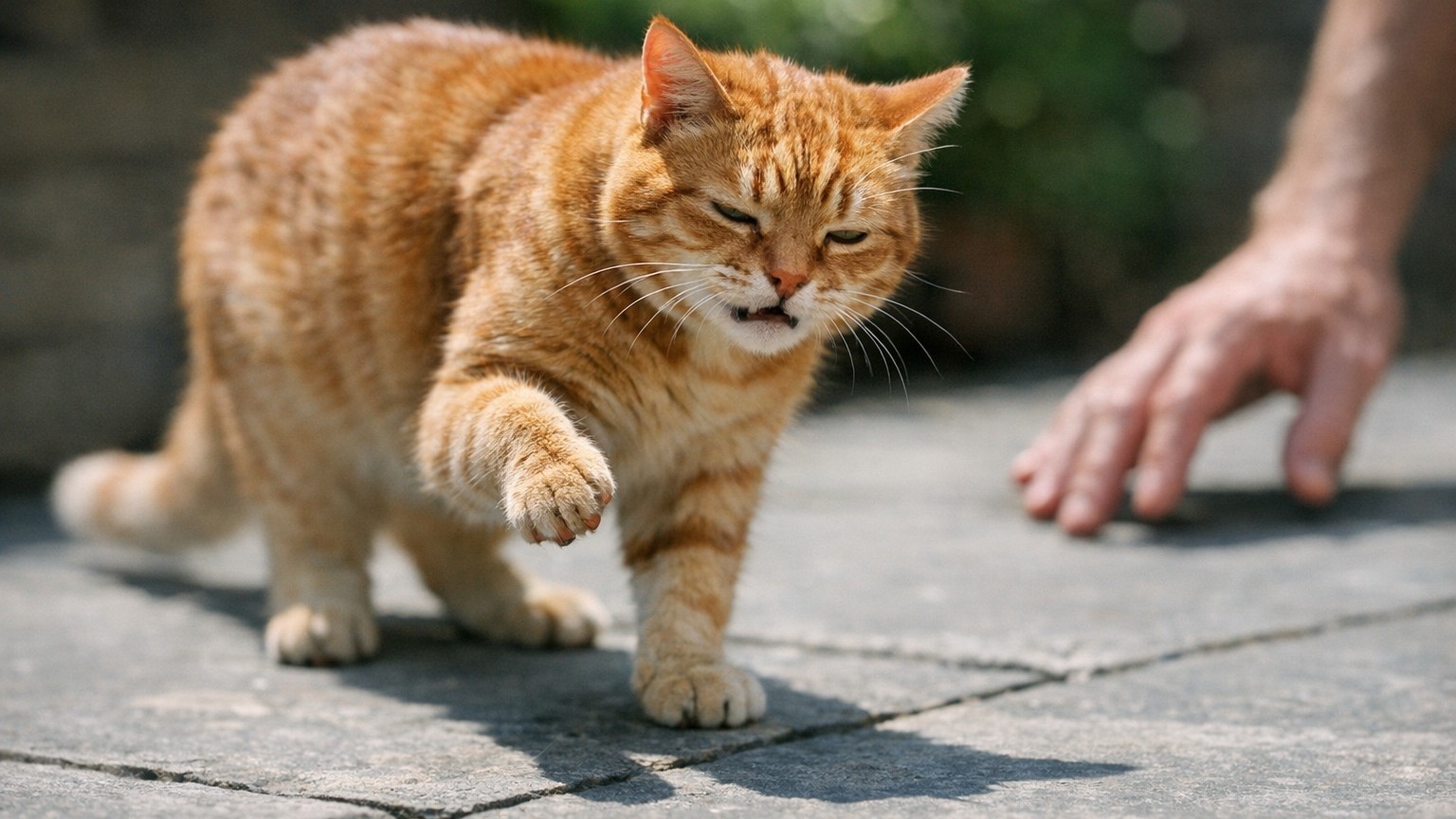
Every June, cat owners across the UK notice the same puzzling ballet: their cat steps onto the patio, lifts one paw, then another, almost like a child crossing a hot beach. It looks vaguely comical. The moment you press your own palm flat against those stone slabs at midday and hold it for five seconds, the comedy evaporates entirely. The surface that felt pleasantly sun-warmed at 9am has, by noon, turned into something genuinely punishing underfoot.
Key takeaways
- Stone patios can reach 71°C on a sunny day—hot enough to burn cat paws in under a minute
- A cat’s paws are their cooling system; burning them causes pain AND impairs temperature regulation
- Burn damage can take up to 3 days to fully develop, making early detection critical
A surface far hotter than the air above it
Surface temperatures can run significantly higher, up to 40 to 60 degrees more, than the surrounding air temperature, particularly on materials like asphalt, concrete, sand, and metal. Stone paving is no different. Darker stone, like midnight black granite, loves to absorb heat, with surface temperatures potentially reaching up to 71°C when baking under a noon sun. Even lighter-coloured slabs offer limited protection: on a sunny day with an air temperature of around 30°C, hard outdoor surfaces can reach temperatures high enough to burn a pet’s paws in 60 seconds.
The type of material genuinely matters here. Brick, clay pavers, and poured concrete can all run hotter than a light composite board, and the picture shifts considerably with darker or glossy stone. Lighter-coloured natural stones such as sandstone are well known for their ability to reflect sunlight rather than absorb it, which helps them stay cooler in prolonged hot spells. So that charcoal slate terrace so popular in British gardens? On a bright June afternoon, it may well be the worst place your cat could choose to stroll across.
There is a simple test any owner can run before letting their cat outside: place the back of your hand on the paving surface. If you cannot hold it there for 7 seconds, it is too hot for your pet’s paws. This test costs nothing and takes moments. Most of us simply never think to do it.
Why a cat’s paws are so vulnerable
The soft pads of a cat’s paw are sensitive, similar to the soles of our own feet. But there is more going on beneath that rubbery surface than most owners realise. Cat paw pads play a role in thermoregulation through eccrine sweat glands located within them. These glands allow cats to perspire, helping to dissipate heat, particularly when they are warm or stressed. your cat’s paws are not just feet, they are part of the body’s cooling system. Pressing them onto a scorching slab is a double problem: it damages the tissue and simultaneously undermines the cat’s ability to regulate its own temperature.
Research published on PubMed found that both warm and cool temperature discriminations in cats are mediated by receptors located in or near the footpads, and the paw of the cat appears to be more sensitive to temperature changes than was previously believed, with a temperature sensitivity comparable to that of the human hand. Your cat’s paw-lifting on a hot terrace is therefore not quirky behaviour. It is a direct, conscious pain response, a thermometer reading they are sharing with you, if you know how to interpret it.
The soft pads of cat paws are sensitive to pressure, pain, and temperature, and outdoor cats’ paws can suffer bad burns and even nerve damage from overly hot pavement or other surfaces. That detail about nerve damage is important. A burn that looks superficial may, by the following day, have extended deeper than the eye first suggested. The full extent of burn injuries may take up to three days to develop, during which time tissue damage can continue to progress.
Spotting the signs and acting quickly
Like many animals, cats are very good at hiding their pain, but there are some signs that your cat is suffering from a burned paw pad. Also look for subtle changes in behaviour, since it can take a day or two for burn damage to become visible. Watch for limping or reluctance to walk, excessive licking or chewing at the paws, paw pad discoloration where burned pads may appear darker or redder than usual, and blisters or intense redness in severe cases. A cat that suddenly becomes withdrawn, stops jumping up, or refuses to play may not be “tired”, they may be in real pain.
If you suspect your cat has burned their paws, the first move is to get them off the hot surface immediately and into a cool space. Do not apply creams or ointments to the burn. Cool any burnt skin with cool water for at least 10 to 20 minutes, being careful not to make your pet too cold. Do not use ice. Ice can cause frostbite and further damage the tissue. Then, and this part is non-negotiable, contact your vet. Always call your vet if your pet has been burnt, no matter what the size of the burn. The PDSA, one of the UK’s leading animal welfare charities, is clear on this point. While a burn may not look severe initially, it can take several days to fully develop.
Making your terrace safer for summer
The most practical change is behavioural: timing. Avoid letting your cat out at midday when the paving has been heating up for several hours. Instead, let your cat out in the early morning or late evening when the ground is cooler. This single habit shift costs nothing and removes most of the risk at a stroke.
If you have any say in the choice of patio surface, whether for a renovation or a new garden, material selection matters enormously for pets. Among the best paving materials for reducing heat are limestone and sandstone, which are typically used in hotter climates because their light colour reflects heat, making them comfortable to walk on regardless of how strongly the sun shines. Grass stays cooler and is gentler on paws than any hard surface, so ensuring your cat has access to a shaded lawn patch during hot spells matters just as much as what the terrace is made of.
For cats that routinely spend time on hard surfaces, moisturising your cat’s feet regularly can help prevent injuries like cuts, cracking, or peeling of the pads, which can make paws more susceptible to burns. Use only a product specifically approved for pets. Most outdoor cats will have paw pads that are more resilient than an indoor cat’s, but resilience has limits, and on a dark-stoned terrace at noon in a British heatwave, those limits are reached faster than most owners expect.
One thing worth knowing: cats do not sweat the same way humans do because their sweat glands are limited to specific areas of the body, located mainly on the paws, which means the paws have a major role in the body’s cooling system. Burning the paws in summer therefore hits twice: it causes a painful local injury and simultaneously impairs your cat’s only real mechanism for sweating. That June paw-lifting isn’t just a quirk. It is your cat telling you, as plainly as they can, that something is wrong beneath them.
Sources : gardeningetc.com | countryoaksanimalhospital.com