
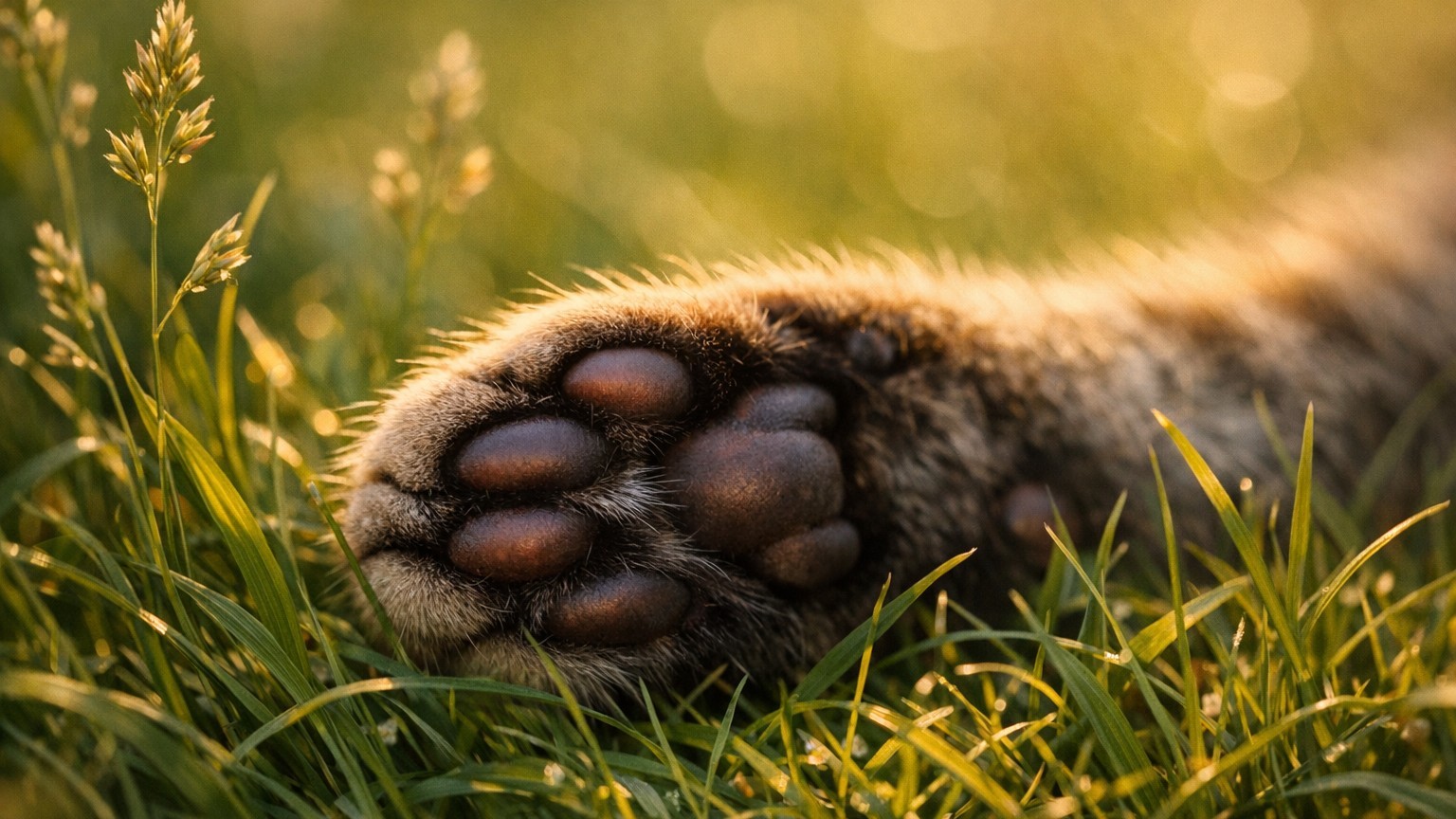
Every June, the British garden transforms. The lawn goes lush and long, meadow grasses sway along the fence line, and a cat’s instinct to roll, stalk, and sprawl in all of it is almost impossible to resist. For most summers, nothing bad happens. Then one day, a small, firm swelling appears between the toes, and a vet visit reveals something that has been quietly on the move under the skin for days.
Grass seeds, also called grass awns, are the real culprit here, and they are considerably more sinister than they look. They are the sharp bristles or awns at the top of long grasses, and they anchor in your cat’s hair as the animal brushes by or walks over the grass, working their way under the skin or eyelids. From June through late August, these seeds are at their most dangerous. The timing is not coincidental: in late spring and early summer, mature grass seeds harden and start to fall off, becoming tiny biological harpoons ready to embed themselves into anything warm that passes by.
Key takeaways
- Grass seeds have backward-pointing barbs that prevent them from backing out—they only move deeper
- A tiny lump between your cat’s toes could indicate a seed that’s already traveled days into the tissue
- These seeds are invisible on X-rays, making veterinary detection a game of following inflammation trails
A seed built to go in one direction only
The design of a grass awn is, from a purely botanical standpoint, a masterpiece of engineering. Grass seeds are shaped a bit like arrows or fishing hooks, with pointy tips at one end and ‘ears’ or barbs at the other. Grass awns have backward-pointing barbs that prevent retrograde movement, which makes normal clearing mechanisms ineffective, and means they will migrate deeper with normal motion. Every step your cat takes, every scratch, every grooming session nudges the seed further inward. Unlike a splinter that stays in place, these awns are built to migrate — every step, scratch, or head shake pushes them forward, often carrying bacteria along with them.
The paws are a classic entry point. The soft, warm skin between the pads is exactly the kind of tissue a hardened awn tip can penetrate with almost no resistance. Patients may have an interdigital swelling or a draining tract when the paw is affected, and that firm little lump, the one that seems to appear from nowhere, is in fact the body’s inflammatory response to a foreign object that has already started travelling. The longer a seed remains in place, the harder it is to remove and the greater the damage, a seed in the paw may start as a limp but can eventually burrow upward into the leg, creating multiple draining tracts.
Infections can be difficult to treat especially if the seed has travelled far into the tissue, and grass seeds are not visible using X-ray. This is the detail that catches many owners off guard. You cannot simply scan for it. Retrieval of grass seeds can be facilitated enormously with ultrasound, though even that requires a skilled and patient operator. In some cases, the vet must essentially follow the trail of inflammation to find where the awn has ended up.
The warning signs you should never ignore in summer
Cats are stoic creatures, which makes catching grass seed problems early harder than it sounds. The signs tend to be subtle at first. Look out for limping, excessive licking of paws, and swelling between the toes. A cat obsessively attending to one spot on its body, especially a paw, is telling you something is wrong. Excessive licking of a specific area may indicate the presence of a foreign body.
The paws are not the only risk. Seeds can work their way under the skin or eyelids, and sometimes lodge in the throat or airways. Additional signs can include scratching, head shaking, or discharge from the eyes or nose, or potentially coughing if a grass seed is inhaled. In severe cases, grass awns can reach vital organs, leading to life-threatening conditions such as peritonitis or pleuritis. That last scenario is rare, but it is real, and it always starts with the kind of thing that looks trivial on a Tuesday afternoon in the garden.
Animals with an infected grass awn penetration will show signs typical of an infection: lethargy, anorexia, pain, or signs of drainage. If your cat is off its food, quieter than usual, and has been spending time outdoors in long grass, a grass seed should be on your radar, even if you cannot see a wound.
What the vet actually does about it
Treatment depends entirely on how far the seed has travelled and where it has ended up. Treatment means removing the grass seed as promptly and completely as possible, your cat will usually have sedation and pain relief to keep them relaxed and comfortable, or a full general anaesthetic so they sleep through the whole procedure. For a paw, a small surgical procedure is needed to open up the swelling in order to find and remove the seed — and sometimes the vet will put a poultice on the paw for 24 hours before the procedure to help draw the swelling.
Grass seeds carry bacteria which can cause an infection or abscess where they penetrate the skin; an untreated infection may spread, or the seed can cause severe internal damage as it travels through the body, and if the seed breaches the skin, surgery is often required to find it, along with antibiotics and sometimes antifungals for treatment. Always go to your vet promptly rather than waiting to see if it resolves on its own. If a seed is embedded in the skin, do not attempt to remove it yourself — this can push the awn deeper.
Protecting your cat through the grass seed season
You cannot keep a cat out of the garden, and frankly, why would you want to. What You Can Do is make post-outdoor checks a habit that takes thirty seconds and costs nothing. Always check your cat’s coat and paws for grass seeds when they have been outdoors in summertime, prompt removal reduces the risk of problems later on. Run your fingers through the fur around the paws, between each toe, around the face and under the chin — anywhere that touches the ground during a low stalk through tall grass. Grass seeds are small, arrow-shaped seeds that can easily become lodged in a pet’s fur, skin, ears, eyes, nose, and paws, their shape allows them to move in only one direction, making them particularly dangerous as they can burrow deeper into the body over time.
Regular grooming can help identify grass seeds early, and keeping long-haired pets clipped, especially around their paws and ears, can help prevent grass seeds getting caught in the first place. If you spot a seed sitting on the surface of the fur, you can carefully remove it with tweezers. If it is embedded in the skin, do not attempt to remove it yourself, this can push the awn deeper. That is the moment to call your vet, not tomorrow, today.
One last thing worth knowing: grass seeds are found on common wild grasses in parks, fields, and even your back garden, so the risk is not limited to countryside walks or rural settings. The unmown strip along a garden fence, a patch of meadow grass left to grow for pollinators, the verge between the pavement and the road, all of it can harbour awns from June onwards. A cat does not need to go far to encounter one. It just needs to be a cat.
Sources : berwickvet.com.au | wellnessanimalhospital.com