
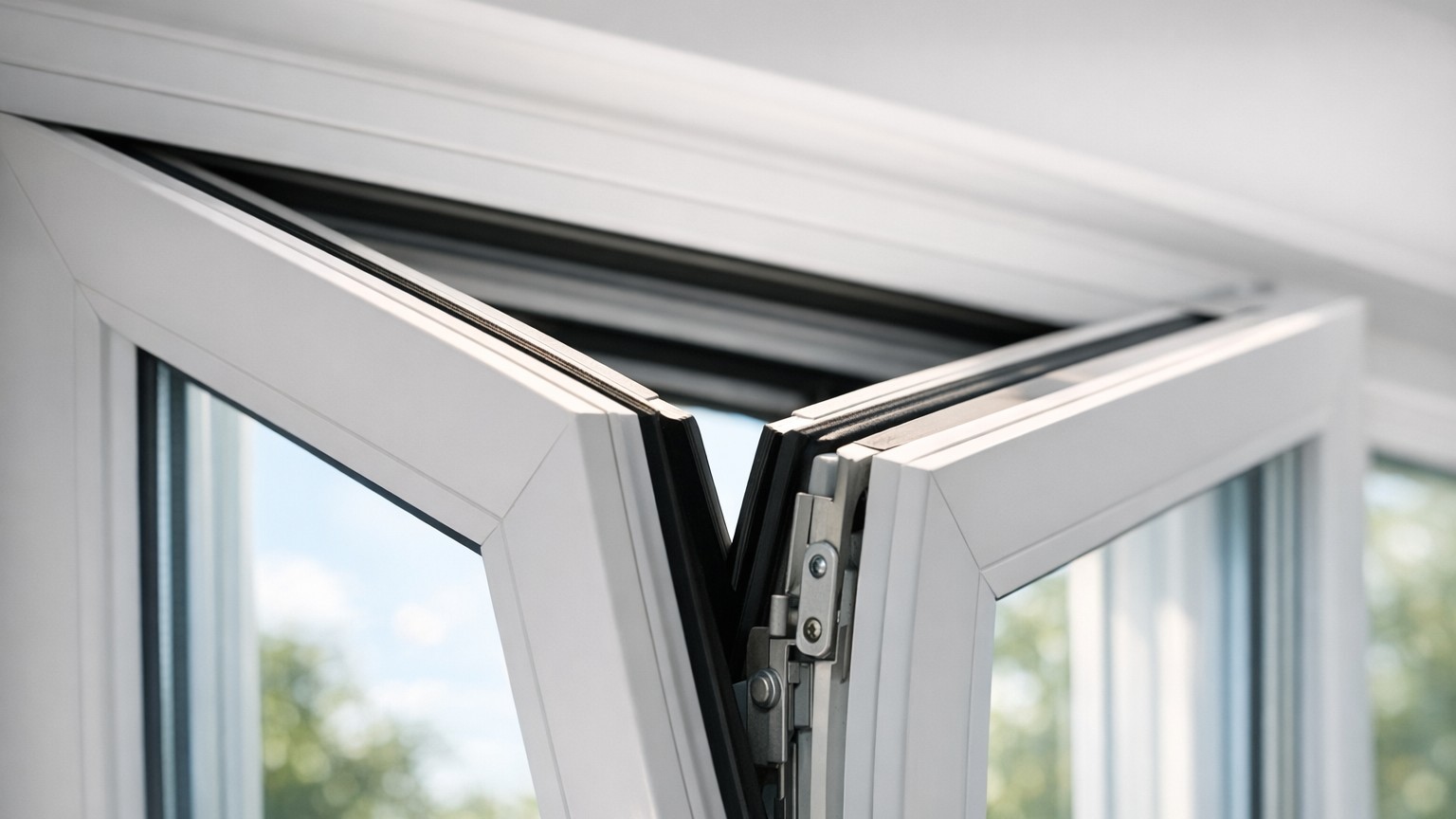
A tilt-and-turn window cracked open on a warm June afternoon feels like responsible pet ownership. Fresh air without a wide-open gap. Ventilation without an escape route. Completely harmless, right? Wrong. That small V-shaped opening at the top is one of the most deceptively dangerous things in a home with cats, and the tragedies associated with it have a clinical name: tilt window syndrome.
Key takeaways
- A small V-shaped gap in a tilted window can fatally trap a cat within seconds
- June through August are peak danger months when hunting instincts meet open windows
- Cats can suffer paralysis, internal bleeding, and death from compression injuries
What Actually Happens When a Cat Gets Stuck
Cats try to climb outside through tilting windows, and in many cases they lose grip because of the smooth frame, then fall into the gap of the tilted window. The geometry of it is cruelly simple. In most cases, cats manage to squeeze their head and upper body through the window but then get stuck with their hindquarters in the slanted gap. And here’s the truly sinister part: trying to get free only makes things worse. Attempts to free themselves cause the cat to slide further down into the gap and become even more trapped.
The abdominal aorta, the main artery located below the spine, is often squeezed so severely that it causes circulatory problems in the parts of the body behind it. This is why cats rescued from tilt windows frequently present with what looks, at first glance, like sudden paralysis. Typically, cats rescued from a tilted window end up with numb hind legs because of their blood vessels getting “trapped” by the position. In the worst cases, many cats have already died in a tilting window or have suffered such severe damage to their spine or hind legs that they have become paralysed or had to undergo leg amputation.
The condition has a German name, Kippfenster Syndrom, coined because tilt-and-turn windows are common in Germany and Central Europe, and vets there began seeing a pattern that was too consistent to ignore. Kippfenster syndrome occurs when cats get trapped in tilted windows, causing severe injuries including nerve damage, circulation problems, and potentially fatal complications. The fact it now has a formal name tells you everything about how frequently it happens.
June Is the Worst Month to Leave a Tilted Window Unattended
A study by the Clinical Unit of Small Animal Surgery at Vetmeduni Vienna found that statistically June, July and August are the most dangerous months. Cats have a very strong hunting instinct, and flying birds or insects outside an apartment can provoke a leap out of the window or balcony. On a warm British summer day, windows are open, insects are buzzing, and a pigeon landing on the window ledge is basically an engraved invitation for your cat to do something catastrophically stupid.
The stories from UK owners are hard to read. A family in Fife came home to find their cat Clover had died after becoming trapped in a first-floor tilt window while they were both at work. “We were unaware of how dangerous tilting windows are for cats,” the family said, sharing the story to spread awareness and prevent the deaths of more cats. On Mumsnet, another owner described finding her cat “hanging by her neck with her eyes bulging,” saved only because she happened to be leaving for work at that exact moment. These dramatic situations often happen in the summer months, as cats slip into the window gap while trying to reach the outside.
The anatomy of a cat makes them particularly vulnerable to this type of trap. Their flexible bodies allow them to squeeze into surprisingly small spaces, but once wedged in a tilt window, their positioning makes it impossible to back out safely. That combination of feline flexibility and the narrowing V-shape of the tilted frame is what turns a moment’s curiosity into a life-threatening emergency.
If You Come Home to Find Your Cat Trapped
Staying calm is genuinely difficult in this situation, but panic is the enemy. Never attempt to pull a trapped cat free forcefully, as this can worsen injuries. Instead, try to gently support their body weight while carefully manoeuvring them to safety. If the cat is wedged in a tilt window, you may need to adjust the window position slightly to create more space, but do this gradually to avoid causing additional trauma. Wear thick gloves if you can reach them, as a panicking cat will scratch instinctively.
The vet visit afterwards is non-negotiable, even if your cat seems fine. Immediate veterinary care is crucial after any trapping incident, even if injuries aren’t immediately apparent. Cats are masters at hiding pain and distress, and internal injuries may not become obvious for hours or even days after an accident. An X-ray examination should always be performed on cats that have been trapped in a tilting window to identify or rule out internal injuries or broken bones, and ultrasound examinations provide further important information about possible organ damage.
How to Make a Tilt Window Safe Without Giving Up the Fresh Air
The simplest rule is: if you’re not in the room, the tilted window stays closed. Full stop. But for those genuinely hot days when that feels impossible, there are proper solutions. Prevention requires specialised protection devices such as safety grills, window stoppers, or blocks that prevent dangerous narrow openings when windows are tilted. These mesh fences, designed specifically for tilt-and-turn frames, close off the V-shaped gap entirely and are designed so cats cannot climb up them. They can be screwed or taped directly onto the window frame, and many can be removed without permanent alteration, which matters if you’re renting.
A lower-tech stopgap (literally) is to use a thick towel or wedge-shaped doorstop packed into both sides of the gap, to prevent the cat from getting stuck in the narrowest part of the window. This doesn’t allow the same ventilation as a full tilt, but it keeps curious paws from testing their luck. Anyone watching over the house during a holiday should also be explicitly told never to open the tilting window without protection in place. House-sitters often don’t know what they don’t know.
One thing worth understanding: a cat that has been trapped and successfully freed may develop anxiety around that area of the house, or alternatively, show no behavioural change at all and attempt the same thing a week later. Cats that experience trapping incidents may develop anxiety or behavioural changes related to their traumatic experience, but cats being cats, there’s no guarantee. The window protection, not the cat’s presumed lesson-learning, is what needs to do the work here. Trust the mesh, not the memory.
Sources : mumsnet.com | petsci.co.uk