
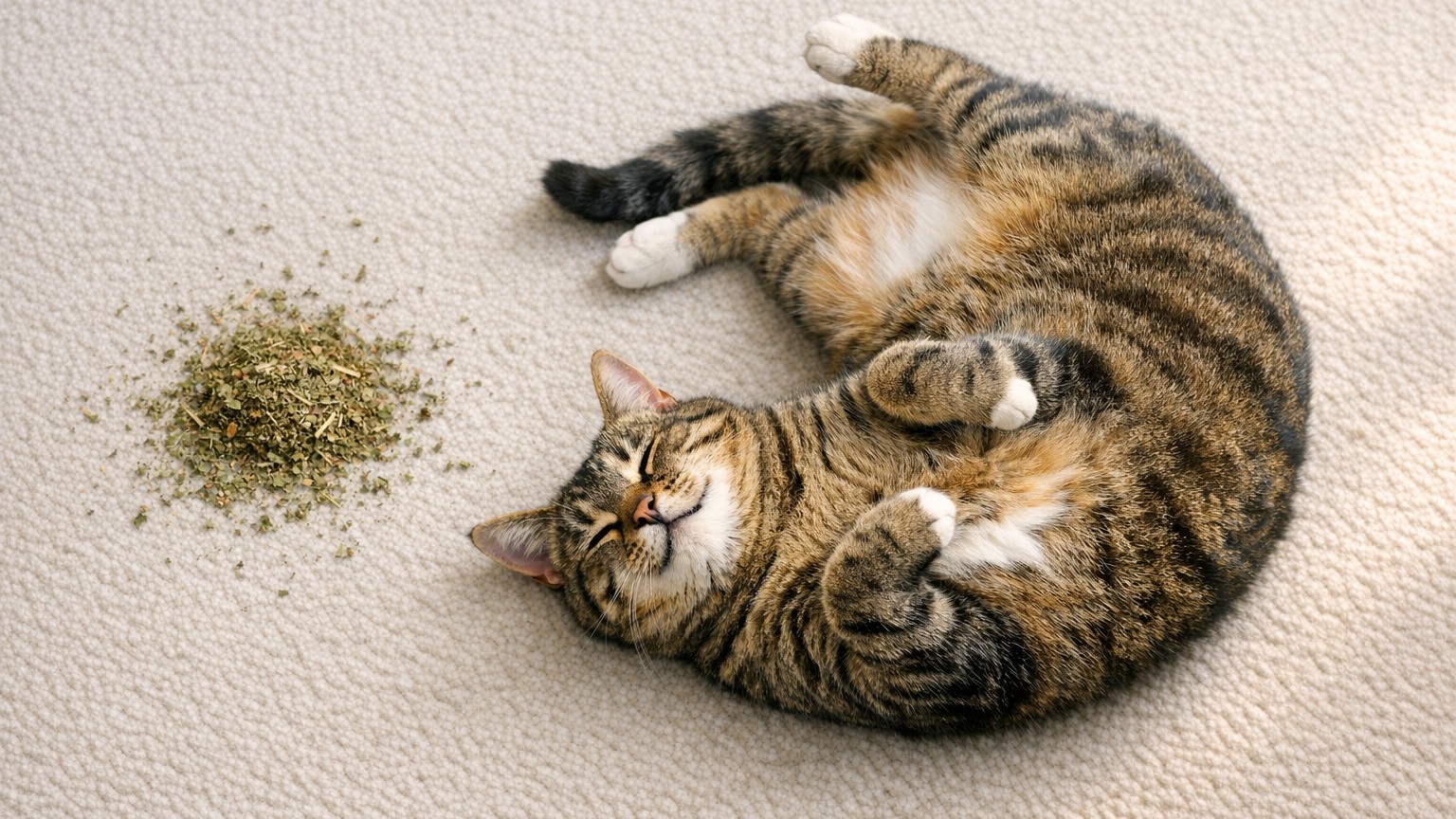
Every cat owner who has ever dangled a sachet of dried catnip in front of their tabby knows the magic: the rolling, the drooling, the wild-eyed bliss that lasts precisely long enough to make you laugh out loud. So when your cat suddenly stares at the stuff like it’s a pile of dried grass, which, admittedly, it is, the disappointment is real. Daily catnip use is one of the most common mistakes owners make, and once you understand why it stops working, you can never unknow it.
Key takeaways
- The compound nepetalactone triggers euphoria in cats by mimicking sex pheromones—but daily exposure causes the brain to stop responding
- Most cat owners unknowingly create tolerance by offering catnip too frequently, turning magic into mundane
- A strategic reset period plus rotation with silvervine can restore your cat’s catnip sensitivity
The Chemical That Turns Your Cat Into a Tiny Maniac
Catnip, scientifically known as Nepeta cataria, is a popular herb in the mint family known for its often hilarious and highly entertaining effects on cats. The secret weapon inside every leaf and stem is a compound called nepetalactone. When a cat sniffs catnip, nepetalactone binds to receptors in the nasal lining and stimulates the olfactory sensory neurons, triggering a cascade of signals that activate the brain’s reward and pleasure pathways. The result, in scientific terms, is a temporary neurological firework show. In practical terms, your cat becomes a floor-rolling goblin for about ten minutes.
The olfactory bulb, responsible for processing smells, then signals other regions of the brain, including the amygdala, responsible for emotional responses, and the hypothalamus, responsible for behavioural responses. This results in the observed response in cats, a response that is actually similar to their reaction to natural sex pheromones. Put another way, your cat isn’t just playing, they’re having what amounts to a pheromone-triggered episode of pure euphoria. The effect typically lasts between 5 and 15 minutes, after which the cat becomes temporarily immune to it. A refractory period of roughly 30 minutes follows before the same response can be triggered again.
One thing that often surprises people: eating catnip usually produces a calming effect rather than the energetic response triggered by sniffing. So if your cat is the type to hoover it up rather than sniff, don’t be alarmed by the sudden nap, it’s a different pathway entirely.
Approximately 50–70% of cats are responsive to catnip, and kittens below 6 months usually show little to no reaction. That genetic lottery means roughly a third of cats are simply unmoved by the whole business, no matter how much you wave it under their noses.
Why Daily Use Quietly Kills the Magic
Here’s where most well-meaning owners go wrong. Overexposure to catnip leads to desensitisation, the responses become weaker and shorter until eventually the cat doesn’t react at all. Think of it like playing the same song on repeat until you can’t actually hear it anymore. The stimulus is there, but the brain has simply learned to tune it out.
Cats cannot experience opioid withdrawals from repeat or even frequent exposure to catnip, as endorphins are tightly regulated in their release, but cats can develop a mild tolerance over time. This is an important distinction from true addiction, there’s no harm being done, no withdrawal to worry about. The mechanism is simpler and more frustrating: the brain’s receptors become temporarily less responsive, and the whole spectacular reaction just fades away.
Fresh catnip contains higher concentrations of nepetalactone, the compound that triggers the cat’s response. This potency often leads to a more intense reaction. Dried catnip, the kind found stuffed into toys that have been sitting on a shelf for months, loses potency over time. Fresh dried catnip keeps its smell and potency better when stored in a sealed container to maintain quality. Stale catnip plus a desensitised cat equals the bored sniff you’ve been getting lately.
Offering catnip once or twice a week is generally safe. Daily use isn’t recommended as it can lead to decreased sensitivity over time. Most vets and animal behaviour experts land on the same recommendation: to keep catnip effective, limit sessions to two or three times per week at most. The break allows the receptors to reset, and the next session feels genuinely new again. As always, if you have specific concerns about your cat’s health or behaviour, consult your vet before making any changes.
Reclaiming the Buzz: Practical Steps That Actually Work
The fix, in most cases, is simply stopping. Give it a week or two with no catnip at all, store what you have in an airtight container away from light, and then reintroduce it in a small, deliberate way. Most cats do well with half a teaspoon to one tablespoon of dried catnip per session, offered once or twice a week. The key shift is treating it as an occasional treat, something with novelty and scarcity, rather than part of the daily routine.
The form matters too. Sprinkling dried catnip in areas you want your cat to be interested in, like a new cat bed, or spraying liquid catnip on a favourite toy, can be effective ways to use it. Rotating where and how you offer it keeps the experience fresh. It is estimated that cats can smell catnip at a ratio of 1 part per billion in the air, it doesn’t take much to stimulate their senses. A small pinch is genuinely enough.
You can also use catnip more strategically. Encouraging cats to claw at scratching posts instead of furniture by sprinkling catnip on the post is one of the most practical applications. It can also help a reluctant cat warm up to a new carrier, a cat tree, or even a vet visit. Used with intention rather than habit, it becomes a proper tool rather than a daily ritual that’s lost its point.
When Catnip Simply Stops Working : Try This Instead
If your cat has been overexposed for months, the reset period might need to be longer than a fortnight. In that case, silvervine is worth considering. In a 2017 study, almost 80% of cats were responsive to silvervine versus 68% of cats that responded to catnip. Approximately 75% of the cats that were unresponsive to catnip were responsive to silvervine. That’s a striking gap, and it makes silvervine particularly useful for cats who seem immune to catnip, whether through genetics or habituation.
Typical behaviours associated with smelling silvervine include sedation, hyperactivity, rolling, and licking, much the same as catnip, but often more pronounced. Silvervine contains active compounds like actinidine and dihydroactinidiolide, which are responsible for its unique effects on feline behaviour. Rotating between catnip and silvervine can help maintain your pet’s interest and prevent them from becoming desensitised to either. That rotation approach is probably the smartest long-term strategy for keeping any cat enrichment tool actually enriching.
One genuinely unexpected fact about catnip: its real evolutionary purpose has nothing to do with cats at all. While nepetalactone drives the majority of cats into a state of excitement, likely by mimicking sex pheromones, its real purpose is protecting catnip from pests. Nepetalactone belongs to a class of chemicals called iridoids, which can repel insects as effectively as DEET. Your cat’s beloved herb is, at its core, a natural bug repellent, and cats are just a spectacular side effect of the plant’s chemical defence system.
Sources : petscare.com | compoundchem.com