
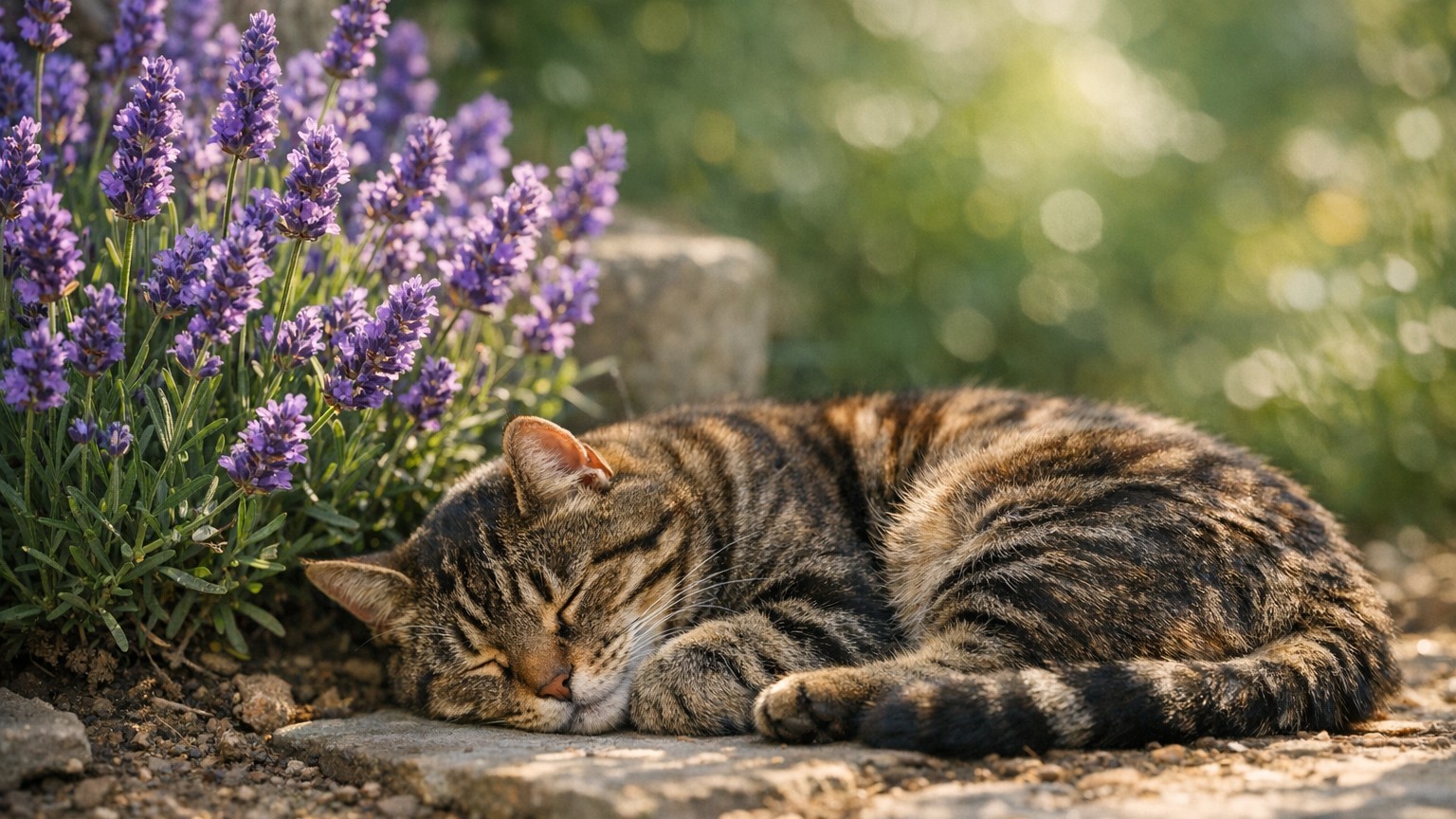
A sunny patch in the garden, a cat napping contentedly among a clump of fresh-looking herbs, a well-meaning owner convinced they’ve solved two problems at once. It’s a scenario playing out in back gardens across the UK every summer. The bloodwork results that follow can be genuinely alarming, and understanding why requires looking at What’s Actually Growing next to your cat’s favourite nap spot.
Key takeaways
- Popular mosquito herbs like lavender and pennyroyal accumulate in cats’ systems through grooming and inhalation, not just eating
- Cats lack a crucial liver enzyme that allows other mammals to eliminate toxic plant compounds quickly—their detox takes twice as long
- Bloodwork shows liver damage in apparently healthy cats after weeks of quiet exposure to toxic plants in their favorite spots
The herbs that seem harmless but aren’t
The most popular mosquito-repelling herbs are almost universally recommended on gardening sites, and almost none of those sites mention what happens when a cat spends hours lying beside them, grooming herself, or occasionally nibbling a leaf out of curiosity. Citronella is one of the most popular mosquito repellents available, but the citronella plant is toxic to pets. The same goes for several herbs that feel positively domestic.
Lavender plants contain a compound called linalool that can be toxic to pets. Toxicity is uncommon since the plant has such small concentrations of this compound, and pets generally need to consume large quantities to suffer toxic effects. Symptoms include nausea, vomiting, diarrhea, and weakness. The problem is that “large quantities” is relative. A cat who dozes beside a lavender border on a hot August afternoon, then fastidiously grooms her paws and fur, is getting a slow, repeated dose. The delicate and thin skin of a cat rapidly absorbs essential oil molecules, which their liver will then attempt to metabolise. The molecules may also collect on the cat’s fur, leading to ingestion when your cat begins grooming.
Pennyroyal is the most dangerous on the list. A member of the mint family, it’s often sold as a natural flea and mosquito deterrent. The active poison in pennyroyal oil is a chemical known as pulegone, which is toxic to the liver and can cause severe liver damage. Even trace amounts can cause life-threatening liver damage, with symptoms including drooling, difficulty breathing, nose bleeding, vomiting, and seizures. A cat lounging beneath it on a warm afternoon, then licking herself clean, is precisely the exposure scenario that worries vets most.
Why cats are uniquely vulnerable
Dogs and humans brush off aromatic plant compounds with relative ease. Cats cannot. The reason sits deep in feline biochemistry. Cats have unique bodies that can’t easily be compared to other mammals. They lack a liver enzyme called glucuronyl transferase, and because of this, cats are not able to eliminate compounds through hepatic glucuronidation like most other mammals. In a very basic sense, the lack of this important detoxification mechanism results in a slower elimination of certain compounds, and without the necessary enzymes to break down certain substances and effectively excrete them, it ultimately leads to the buildup of toxins in their bodies.
This is not a quirk of individual cats or certain breeds. Metabolic vulnerability relates to species-level liver enzyme function, not breed. All domestic cats share the same glucuronidation limitation regardless of breed. There is a nuance worth knowing: cats can process these compounds, but they do it differently, through glucosidation rather than glucuronidation, and it takes them about twice as long to clear the same amount. That slower clearance rate is exactly what makes prolonged, low-level garden exposure so risky.
Add to this the fact that a cat’s sense of smell is 14 times better than humans. What we perceive as a pleasant waft of lavender is, to a cat’s olfactory system, an intense, concentrated signal. Repeated inhalation in a confined space, such as a sunny corner of a garden where the same cat naps every day, means consistent exposure.
So what does the vet actually find in the bloodwork? Blood tests reveal abnormalities consistent with liver damage, including elevated liver enzymes, such as alanine aminotransferase, alkaline phosphatase, and others, along with evidence of bleeding such as anaemia and prolonged clotting times. A cat with no obvious symptoms, eating normally and appearing well, can still show these markers after weeks of quiet exposure to toxic herbs in her favourite sleeping spot. That is the part that floors most owners.
The safer swap: herbs that repel mosquitoes without the risk
The good news is that some of the most effective mosquito-repelling plants are also genuinely cat-friendly. Safe mosquito-repelling options include basil, rosemary, and catnip instead of toxic varieties like lavender. Catnip is, for obvious reasons, the most satisfying option. The same compound that attracts cats to catnip, nepetalactone, has also been found to be effective in repelling mosquitoes, so planting catnip in your garden not only benefits your feline friends but can also keep pesky mosquitoes away. In a study at Iowa State University, catmint was found to be ten times more effective than DEET, the chemical used in most insect repellents. A plant your cat will roll in with abandon, that simultaneously keeps biting insects away. A rare win.
Rosemary is another multi-use plant that repels not only mosquitoes but, as a bonus for your cats and dogs, fleas as well. Most mosquito-repelling plants need to be bruised or crushed to work, but not basil. Its oils release passively into the air, especially varieties like lemon basil and cinnamon basil, which add a pleasant citrus or spice aroma while keeping biting insects at bay. Lemon balm is another understated option. Lemon balm repels mosquitoes and attracts bees and butterflies. Plant it in a pot rather than directly in the ground, because it is a fast-growing and drought-resistant but invasive plant that reseeds itself, so a pot helps avoid a lemon balm invasion of your garden.
Practical steps for a cat-safe outdoor space
Rethinking your herb borders doesn’t mean sacrificing effectiveness. To maximise the effectiveness of mosquito-repelling plants, strategically placing multiple varieties near seating areas, entryways, and patios helps create a more robust barrier against mosquitoes, as the combination of different scents works better together. If you’re committed to keeping lavender for aesthetic reasons, place it in a raised bed or hanging planter that a cat cannot realistically lie against or brush past repeatedly.
There are no veterinary-recommended products labelled as mosquito repellents that are safe for cats. The best way to protect cats is to establish environmental controls for mosquitoes and to keep them on monthly heartworm prevention. Mosquitoes are more than just a nuisance: they can spread harmful diseases like West Nile virus and heartworm to your pets. Heartworm prevention is extremely important, as there is no treatment for heartworms in cats. Any garden plan that doesn’t include a conversation with your vet about preventive medication is an incomplete one.
Toxic components in repellents and plants can enter your cat’s system through skin contact, grooming, or inhalation, which means even a cat who never visibly eats a plant is not necessarily in the clear. If your cat has been spending time near lavender, citronella, pennyroyal, lemongrass, or peppermint plants, and you’ve noticed any lethargy, digestive upset, or changes in behaviour, speak to your vet promptly and ask about a basic liver panel. The results may surprise you, and catching elevated enzymes early makes all the difference to the outcome.
One final fact worth filing away: the Canadian Veterinary Medical Association lists lemongrass among its toxic essential oils for cats, yet lemongrass is widely sold in UK garden centres with no warning labels whatsoever. Lemongrass contains the same insect-repelling compound found in citronella candles, making it effective against mosquitoes but troublesome near a cat who uses the border as a bed. The gap between what garden centres sell and what vets know is, in this case, rather wide.
Sources : sowrightseeds.com | espoma.com