
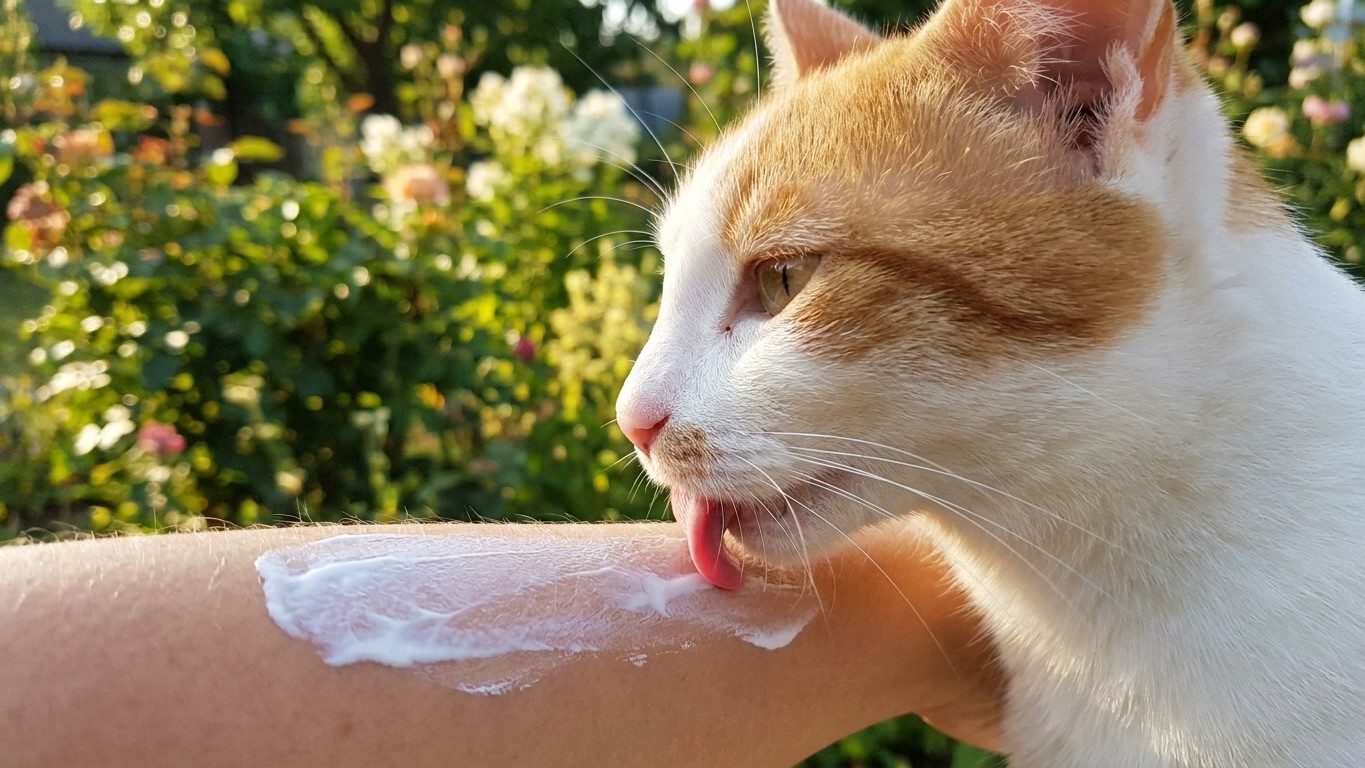
Every summer, millions of pet owners in the UK slather on sunscreen before heading into the garden, blissfully unaware that their cat is about to turn their arm into a licking post. It feels harmless, almost sweet. But the moment a cat laps up that white mineral residue, they’re ingesting something their body really isn’t built to handle. Zinc oxide, one of the most common active ingredients in mineral sunscreens, can cause a chain of internal reactions in cats that ranges from unpleasant to genuinely dangerous, depending on how much they swallow and how often it happens.
Key takeaways
- Zinc oxide in sunscreen causes gastrointestinal damage and can progress to dangerous anaemia in cats
- One lick might seem harmless, but repeated summer licking sessions create cumulative toxicity
- Salicylates in UV filters carry aspirin-like risks that cats are particularly vulnerable to
What zinc oxide actually does inside a cat’s body
Sunscreen generally contains two primary ingredients you should know about: salicylates and zinc oxide. The zinc oxide angle is the one most people are surprised by, because it sounds innocuous, it’s the same chalky mineral that’s been on lifeguard’s noses for decades and that turns up in nappy rash creams. But cats aren’t small humans. Their digestive systems metabolise compounds very differently, and zinc oxide sits firmly in the “do not ingest” category for felines.
Zinc initially causes irritation of the gastrointestinal tract, and most pets with zinc poisoning develop stomach upset, depression, stomach ulcers, and lack of appetite. After the initial signs, zinc poisoning causes a low red blood cell count (anaemia) by damaging the red blood cells. This results in weakness, pale gums, increased heart rate, respiratory rate and effort, yellow discolouration of the eyes or skin, and red or dark yellow/orange discolouration of the urine. That progression, from vomiting to anaemia to potential organ failure, is precisely why the garden licking habit deserves more than a casual shrug.
The good news, and there is some, is that a single, small exposure is rarely catastrophic. A one-time ingestion of zinc oxide cream typically only causes stomach upset. However, repeated ingestion of these ointments over days to weeks can cause poisoning, especially with more concentrated products. This is the bit that catches most owners off guard. It’s not one lazy lick that causes the problem. It’s the cat doing it every single sunny afternoon, all summer long, while you assume that because nothing dramatic has happened, nothing will.
The salicylate problem that doesn’t get enough attention
Zinc oxide isn’t the only threat lurking in your SPF 50. The two main ingredients of concern for pets are forms of acetylsalicylic acid and zinc oxide. Of the two, types of acetylsalicylic acid (octyl salicylate, homosalate, trolamine salicylate, among others) can cause serious health concerns for pets. It can lead to vomiting, fever, breathing difficulties, gastrointestinal ulceration, and anorexia. Salicylates are essentially cousins of aspirin, a drug that is notoriously toxic to cats at almost any dose. So while zinc oxide gets most of the attention, the chemical UV filters in many high-street sunscreens carry their own risks that shouldn’t be dismissed.
Salicylates have several effects in the body that may result in respiratory alkalosis and compensatory metabolic acidosis. On rare occasions, pets may experience hepatotoxicity, hyperthermia, and seizures. Gastric ulcerations are also possible with exposure to salicylates. These are not common outcomes from a small lick of sunscreen, but they are real ones, and the threshold for toxicity in cats is lower than it is for dogs. Cats are particularly at risk from some of the chemical components of human sunscreens, and even some sunscreens that are considered safe for dogs may not be safe for cats. That distinction matters enormously when people assume that “pet-safe” means across the board.
Recognising the warning signs and what to do
For pets, ingestion of sunscreen can be harmful, leading to symptoms like vomiting, diarrhoea, excessive drooling, and lethargy. None of those are signs you’d immediately link to a sunscreen lick, which is why the connection so often gets missed. A cat who vomits once on a Tuesday afternoon in July probably isn’t raising alarm bells, but if you’ve been letting them groom your forearm after every gardening session, it’s worth joining those dots.
The most common sign reported is vomiting, and because it often occurs soon after exposure due to the irritating nature of zinc oxide, pets may decontaminate themselves this way. On rare occasions, allergic reactions are reported with ingestion of zinc oxide — typically manifesting in facial swelling and pruritis. If you notice any of these symptoms and suspect sunscreen ingestion, the advice from animal poison specialists is unambiguous: contact your vet straight away. As with all poisoning cases, early intervention is key to successful treatment. Do not attempt to make your cat vomit at home, this can make things worse and should only be performed by a vet.
The ASPCA Animal Poison Control Center handles a significant volume of calls about sunscreen every warm season, which tells you this situation is far more common than most owners realise. Sunscreen is one of those items that ASPCA Poison Control regularly gets calls about during warm weather. UK cat owners should keep the number for the Animal Poison Line (01202 509000) handy during the summer months.
Keeping your cat safe while staying sun-protected yourself
The practical fix is simple, if slightly less indulgent for everyone involved. After applying sunscreen, don’t let your cat lick your arms, legs, or hands until the product has fully absorbed into the skin, at minimum, wait 15 to 20 minutes. Better still, keep a small towel nearby to wipe the application area if your cat is particularly persistent. Store your sunscreen tube somewhere completely out of reach; sometimes the biggest concern regarding sunscreen exposure is not the active ingredients but the actual tube itself. Foreign body obstruction is a concern if a pet ingests a large portion of the tube.
If your own cat needs UV protection, and some do, particularly pale or white-coated breeds whose ears and nose are genuinely at risk of squamous cell carcinoma — the answer is not your SPF 30. You shouldn’t use human sunscreen on your cat, in case the ingredients aren’t safe and your cat licks it off. You should always use a pet-safe sunscreen. There are some veterinarian-approved sunscreens formulated just for pets, free of harmful ingredients like zinc oxide or PABA. Your vet can advise on which products are genuinely appropriate for your cat’s skin type and coat colour.
One thing that often surprises people: don’t forget about indoor pets. Cats and dogs who love sunbathing by the window are still at risk from UV rays. UV-filtering window film or blinds can help block harmful rays without spoiling their favourite nap spot. Regular glass does filter some UV, but not enough to fully protect a pale cat who spends four hours daily stretched out on a south-facing windowsill. For sun-obsessed indoor cats, that’s a detail worth knowing.
Sources : aspcapro.org | quora.com