
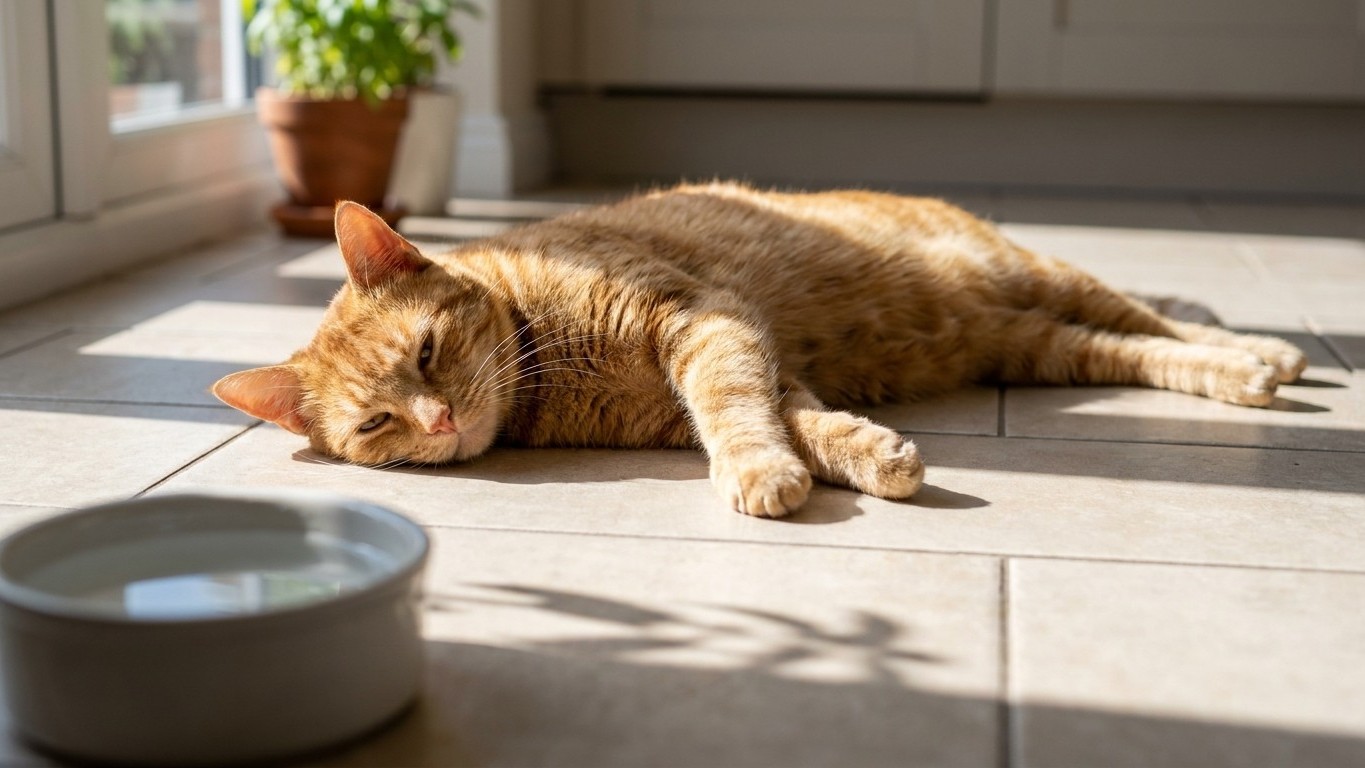
Every summer, the same well-meaning scene plays out across Britain. The thermometer nudges 28°C, the cat flops dramatically across the kitchen floor, and the owner opens the fridge looking for something cool and kind to offer. A saucer of milk, a sliver of leftover BBQ chicken, perhaps a few grapes from the fruit bowl. The impulse is genuinely loving. The result, however, can be genuinely harmful.
Cats behave differently in the heat, and so should we. During hot summer months, it is not uncommon for cats to change their eating and activity habits. They may drink more and eat less as their bodies work to regulate internal temperature. That shift is normal. What is not normal is reaching for human foods as a remedy, especially the ones that most owners assume are harmless.
Key takeaways
- The iconic saucer of milk isn’t the refreshing treat you think it is—and most cats can’t digest it
- That seasoned BBQ chicken contains hidden ingredients that can cause life-threatening anemia in minutes
- A single grape or raisin could trigger kidney failure within hours—but there’s a simple solution
The milk myth that refuses to die
Ask any child to draw a cat and there will almost certainly be a saucer of milk beside it. The image is culturally ingrained. The biology, however, tells a different story. The effects of dairy products depend on whether a particular cat is lactose intolerant. Once kittens have been weaned, they no longer produce an enzyme called lactase, which breaks down the lactose in their mother’s milk. That means most adult cats simply cannot process the stuff.
Most adult cats are lactose intolerant, meaning they lack sufficient lactase enzyme to digest milk sugar properly. While dairy products are not typically toxic in the classic sense, repeated exposure can lead to vomiting, diarrhoea, abdominal discomfort, and chronic gastrointestinal upset. Milk, cheese, and cream may also contribute unnecessary fat and calories, which can worsen digestive sensitivity over time. In summer, when a cat is already dealing with the physiological stress of heat, adding a digestive upset on top is the last thing they need. The “cool refreshing bowl of milk” achieves nothing a bowl of fresh water would not do better.
The same logic applies to ice cream, increasingly shared as a supposedly fun summer treat. Human ice cream contains dairy, added sugar, and often xylitol (a sweetener used in some low-fat or “diet” varieties). Xylitol is extremely toxic to pets. It causes a rapid drop in blood sugar and can lead to liver failure. Always check labels before any food goes near your cat’s bowl.
Summer BBQ leftovers: the hidden danger on the plate
Bank holidays bring barbecues, and barbecues bring scraps. Chicken, sausages, grilled corn, all of it ends up on plates that curious cats will investigate. The problem is rarely the meat itself. It is Everything around it.
Garlic and onions, along with leeks, shallots, and chives, are members of the Allium genus of plants. These foods all contain a compound that gives them their signature strong aroma, but it can also damage red blood cells in cats who eat these ingredients, in any form, whether raw, cooked, or even powdered. This can cause life-threatening anaemia. The terrifying part? Onion or garlic powder is hidden in almost every marinade, seasoning rub, and ready-made sauce that goes on a British BBQ. That grilled chicken drumstick, rubbed with a shop-bought spice mix, could contain enough garlic powder to cause serious harm. Symptoms of toxicity include pale gums, discoloration of urine, vomiting, and weakness.
High-fat foods like fried snacks or fatty meats can put your cat at risk of pancreatitis, a potentially life-threatening condition characterised by inflammation of the pancreas. The fatty end of a sausage or a piece of crackling might look like a generous treat, but a cat’s digestive system is not built to handle the fat levels that humans consume without a second thought. If you want to share something from the grill, plain cooked chicken or fish with no seasoning whatsoever is the only option worth considering.
Grapes, raisins, and the fruit bowl problem
Summer fruit is everywhere. Grapes on the cheese board at garden parties, raisins in the scones at afternoon tea, fruity drinks on the patio. Ingestion of even a small amount of either fresh grapes or dried raisins can cause Kidney Failure in Cats within 12 hours. If they do not receive immediate emergency intervention, eating grapes or raisins can be fatal. Cats are generally less prone to seeking these out than dogs, but that does not reduce the risk if a grape rolls onto the floor unnoticed.
Avocado, currently popular in human diets, is also harmful to cats. The persin it contains can cause shortness of breath and oedema, and damage the heart muscle. With avocado appearing in Everything from summer salads to toast toppings, it has gone from exotic rarity to everyday kitchen staple, and the risk has quietly grown with it. Keep the fruit bowl out of reach, full stop.
What actually helps your cat in the heat
Here is the thing owners often underestimate: the single most effective thing you can do for a cat in summer costs nothing. Water, fresh, clean, room temperature, changed daily, ideally in multiple locations around the home. As a rule of thumb, cats should consume 50ml of water per kilogram of body weight. An average cat thus drinks about 200ml of water per day. On hot days, that need increases.
Many cats prefer to drink from running water, similar to their ancestors who only drank from moving water in the wild. Providing a running water fountain can encourage cats to drink more throughout the day. Avoid offering water that is too cold, as this can irritate the stomach. Room temperature or lightly chilled is the sweet spot.
On the food side, incorporating moisture-rich foods during warmer weather helps your cat stay hydrated and reduces the risk of heatstroke, especially when temperatures soar. A wet food meal, whether a complete pouch or a small portion of pâté, contributes meaningfully to daily fluid intake. Wet food can contain up to 80% water, so cats eating it regularly may drink less from their bowl but still meet their daily requirements.
Activity levels in cats are lower than usual in summer, so it is advisable to adjust food intake accordingly. Cats generally need less food in hot temperatures as they consume fewer calories. Offering food in several smaller portions throughout the day supports both metabolism and circulation. Be especially careful with wet food left in the bowl. At high temperatures it can spoil quickly and attract flies. Small, fresh portions are far safer than a full bowl left out all day.
One detail that genuinely surprises most cat owners: cats can only sweat through their paw pads, making their cooling options far more limited than ours. Panting in a cat, unlike a dog, is a sign of real distress, not normal thermoregulation. If you notice persistent symptoms like panting, drooling, or weakness, contact your vet straight away. When in doubt about any food or health concern, always speak to your vet before experimenting with summer “treats”, however well-intentioned they might be.
Sources : supertails.com | chewy.com