
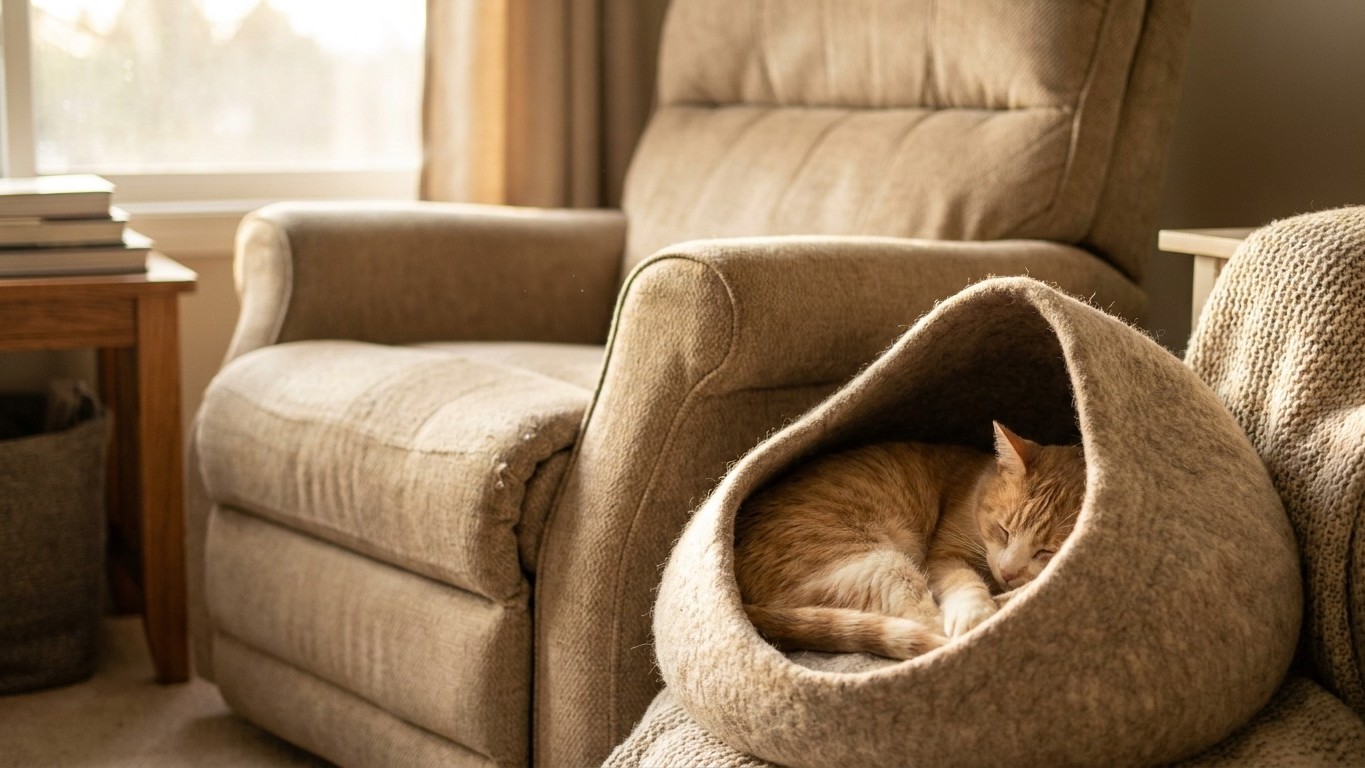
The recliner. That single piece of furniture, so ordinary, so innocuous in a living room, is the hiding spot cat owners almost never think to check. While you’re peering under the bed, opening wardrobe doors and lifting sofa cushions, your cat could be tucked inside the mechanical cavity of a reclining chair, thoroughly unbothered and utterly invisible. It happens constantly. It’s also genuinely dangerous.
Key takeaways
- Cats are mysteriously drawn to one piece of furniture nobody ever checks during a missing cat search
- The same comfort that makes this spot irresistible to cats creates a crushing hazard most owners never anticipate
- One simple solution transforms your recliner from danger zone to cat-proof zone in minutes
The cat who vanishes: why hiding is hardwired
Hiding is part of a cat’s normal behaviour, whether that’s finding a safe place to sleep, lying in wait to pounce on a toy, or simply because they feel safer hidden away. But the reasons go deeper than mere preference. To understand modern feline behaviour, we have to look at the ancestors of domestic cats. The wild progenitor of today’s house cat, the African wildcat (Felis lybica), inhabited arid regions where shelter from predators and extreme temperatures was essential. In such environments, small, enclosed spaces offered protection from threats and insulation against heat loss.
That ancient wiring hasn’t gone anywhere. More than half of cats sleep between 12 and 18 hours a day, and nearly 40% of cats sleep more than 18 hours per day. All that rest requires a safe place to do it. Your cat may feel vulnerable while sleeping, so their natural instincts will tell them to sleep somewhere hidden and safe where they won’t be disturbed. A recliner, with its dark internal recess, low rumble of nearby humans, and warm mechanical cavity, ticks every box on a cat’s checklist for the ideal nap spot.
The size of the space matters, too. Too large, and it loses its protective quality; too small, and it becomes uncomfortable. The ideal enclosure fits snugly, just big enough for the cat to turn around and settle. Recliners, with their padded internal voids, sit in that sweet spot perfectly. Cats love snug spaces, and the rigid sides of a structure mimic the feeling of a secure cave. Their flexible spines and unique anatomy let them squeeze into even the smallest spaces, making them the perfect napping spot.
The recliner: the hiding spot nobody checks
The recess inside reclining chairs can be very attractive to a cat, all dark and cosy. Make sure you check your cat is not in there before you sit down to relax or when you put the chair back in its full upright position. This sounds straightforward. In practice, it’s the rule most households forget entirely, especially when visitors sit down without being told.
The truth is recliner chairs can pose some potential dangers to our furry companions. From getting trapped or squished under the seat to getting injured by moving parts, there are several hazards that cat owners need to be aware of. The mechanism that makes recliners comfortable for humans, a footrest that extends and a backrest that drops, creates a crushing pinch point. Cats might crawl into the small spaces between the seat and footrest or under the chair, where they can easily get stuck. If someone unknowingly sits on and reclines the chair, the cat can get trapped or squished, causing severe injuries or even death.
The stories that circulate in cat-owner communities are sobering. A cat was found hiding in a donated recliner at a Colorado thrift store. The family who dropped off the recliner had no idea their beloved cat was inside. Fortunately, they were eventually reunited with their furry friend. That one had a happy ending. Not all do. Without caution, something as simple as kicking your feet up in your favourite recliner can cause a dangerous situation for pets. Recliners can cause harm to your cats and dogs, so much so that you might want to reconsider getting one if you have pets in the house.
The box spring mattress deserves a mention here too, another piece of furniture nobody thinks to look inside. Your cat may be hiding inside your bed’s box spring. This is unsafe. If your cat rests under the bed, they can easily run out if the bed is in danger of falling or breaking. Cats cannot exit a box spring as quickly and risk injury if the bed supports break. Cats scratch through the thin cambric lining on the underside and disappear into the springs — completely invisible from any angle.
Normal napping or a sign something is wrong?
Pay attention to your cat’s body language when they hide. Your cat will appear relaxed if they are just looking for some cosy alone time, they may sprawl across the floor or seem uninterested in anything going on around them. If your cat is hiding because they are stressed or afraid, they may appear more tense. Dilated pupils, flattened ears, and a tightly tucked body with a closely wrapped tail are all potential signs of stress.
Cats who become sick are prone to hiding. This is an instinctive move; in the wild, a sick cat would need to hide to avoid predators who might take advantage of the sickness. Although your house cat doesn’t have to worry about predators, this habit is still common in most domestic pet cats. The difficulty is that a cat who has crawled into a recliner or a box spring is genuinely difficult to monitor. It’s easy to Understand why noticing signs of your cat being sick or otherwise uncomfortable can be difficult when they are hiding from you all day. Take note of any other behaviours that may accompany hiding, such as lethargy, loss of appetite, vomiting, sleeping more than usual, and bathroom accidents.
If your cat all of a sudden decides to start hiding for long periods of time or changes their hiding behaviour, you will want to make a trip to the veterinarian to make sure Everything/”>Everything is okay. Any sudden change in hiding habits is worth taking seriously, always consult your vet if you’re concerned.
Making your home safe and your cat happier
When it’s time to get up from a recliner, check underneath and inside the chair first. You’ll probably need another person to get a good look while you’re in the chair, so you may want to avoid reclining if you’re home alone. Some cat owners develop a ritual: call the cat’s name before pressing any lever. Others block access entirely using foam draught excluders or tightly fitted fabric barriers around the chair’s base.
The most practical solution, though, is to give your cat a hiding spot that’s genuinely better. Enclosed spaces give cats a sense of security and a place to find refuge, especially in new environments. In a shelter environment, animals are under a lot of stress due to a new environment, new sounds, and new routines. Just like in humans, high stress levels can lead to severe consequences for an animal’s overall health. A study on Dutch shelter cats found that when cats are given boxes, their stress levels decrease significantly faster than cats not given boxes. The principle translates directly to your living room.
Set up designated safe spaces throughout your home that offer the same security benefits. Cat caves, covered beds, or even cardboard boxes placed in quiet corners can become appealing alternatives. The trick is making these spaces more attractive than the furniture your cat currently prefers. Position one near your recliner, your cat wants to be close to you while you watch television. Give them a safe way to do it.
One tip worth trying: adding a catnip-sprinkled blanket or towel inside a dedicated box can transform a simple cardboard hideout into a far more appealing retreat than the inside of your armchair. Most cats, given a genuinely cosy alternative, will take it. The recliner becomes less tempting once there’s something better on offer nearby. If your cat regularly hides, they probably have a favourite spot, or their hiding is patterned, like settling near the water heater or clothes dryer in the colder months. Learning those patterns is how you stay one step ahead.
Sources : quora.com | alibaba.com