
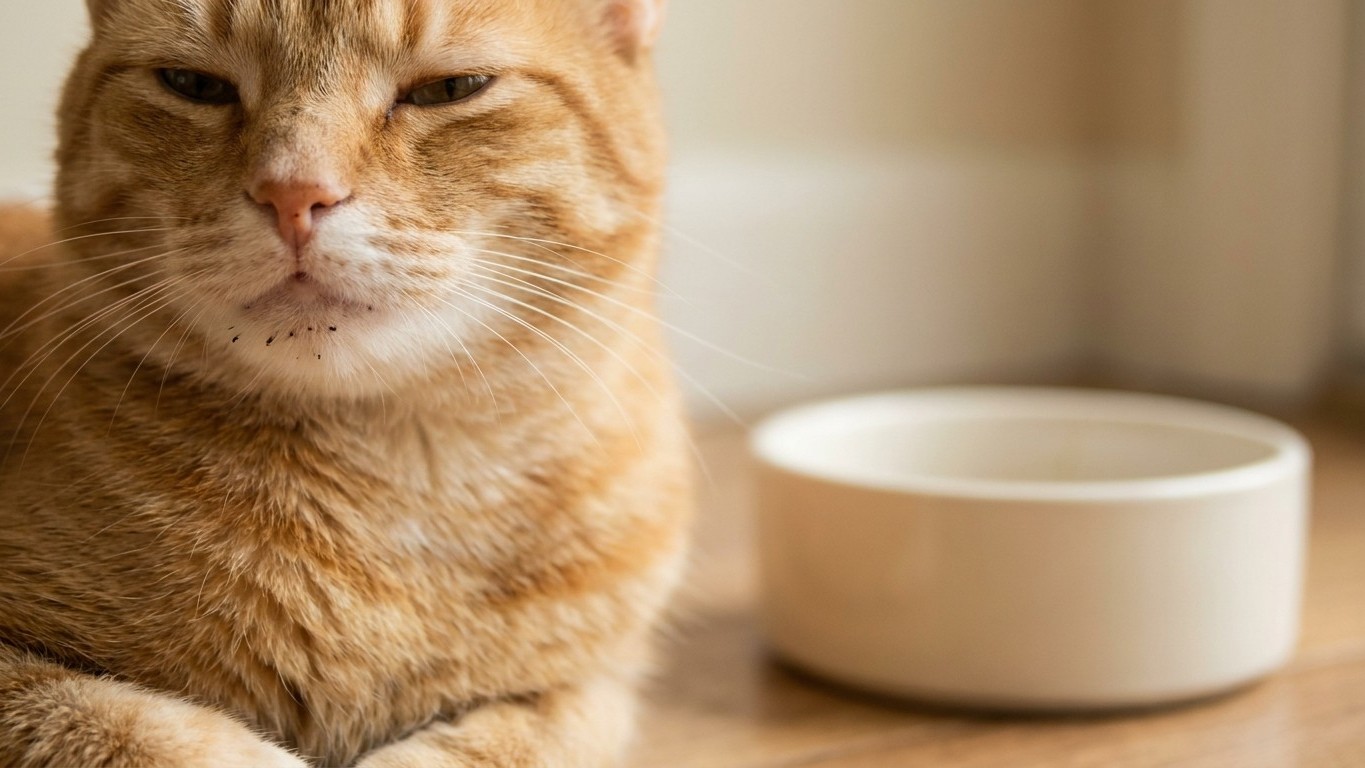
Tiny black specks under your cat’s chin, a grubby-looking jaw that won’t wash clean, the odd swollen lump that makes them flinch when you stroke their face. Feline chin acne is one of those conditions that quietly drives cat owners to distraction, and what makes it genuinely maddening is how simple the fix often turns out to be. One plastic bowl, sitting innocuously next to the kitchen cooker, may well be the thing that’s been causing your cat’s skin grief for months or years.
Key takeaways
- A common kitchen item has been quietly feeding your cat’s chin acne for months or years without you realizing it
- The condition looks deceptively like dirt, which is why most owners don’t recognize the real culprit until it’s too late
- One simple swap could eliminate the problem entirely—but most cat owners have never heard of this connection
What is feline chin acne, exactly?
Chin acne in cats is a disorder of follicular keratinisation, essentially an overproduction of keratin that becomes trapped in the hair follicles, forming comedones (blackheads). Pustules can then form if bacteria infect those blocked follicles. The result, in everyday terms, looks a lot like a patch of stubborn dirt under the chin, which is precisely why so many owners mistake it for grime and scrub away fruitlessly for years.
On a cat’s skin, acne often looks more like dirt than pimples, which is why many owners don’t even notice the condition. Severe cases can lead to hair loss, redness, and even bleeding. Chronically affected cats may develop so many plugged follicles that they fuse together, forming swollen, painful crusts, and as the lesions get bigger, the follicles become more prone to rupture. Not quite the minor inconvenience it sounds.
One thing worth knowing: feline acne is not believed to be related to sex hormones, and it affects males and females of all breeds, as well as both neutered and unneutered cats. Cat chin acne is also not contagious to other cats or humans, it is a physiological reaction rather than a transmissible pathogen. So at least there’s that.
The plastic bowl connection, and why it matters
There is a recognised association between using plastic food and water dishes and chin acne, because the irregular surface or scratches in the plastic make it more prone to bacterial contamination. Think about what happens to a plastic bowl after a few months of daily washing: tiny scratches accumulate, invisible to the naked eye. Plastic develops those tiny scratches over time, which becomes a breeding ground for bacteria. Every time your cat lowers their chin to eat, it makes contact with that bacterial reservoir.
Feline chin acne develops when hair follicles on a cat’s chin become clogged with sebum, dead skin cells, and debris, creating an environment where bacteria, particularly Malassezia and Staphylococcus species, can proliferate, leading to inflammation, pustules, and sometimes infection. The plastic bowl doesn’t cause this process on its own, but it keeps feeding it. You can clean the chin, apply topical treatments, book follow-up vet appointments, but if the plastic bowl stays, the bacterial source stays too.
It’s also worth thinking beyond the food bowl. If you use a water fountain, the filters need to be changed regularly and the pump disassembled for cleaning, as slime buildup can be a common trigger. Many owners switch the food bowl to ceramic and forget entirely about the plastic water fountain that gets a half-hearted rinse once a fortnight.
What actually works: the bowl swap and beyond
Cat acne treatment begins with taking any plastic food or water bowls and changing them out immediately for stainless steel, and along with supportive care, this may be all that is needed to resolve the condition. Replacing plastic dishes with non-porous, smooth-surface dishes like glass or stainless steel may help to resolve chin acne in some cats, as well as daily washing of those dishes.
If you’re unsure which material to go for, it’s worth knowing that switching to stainless steel, glass, or sealed ceramic bowls is the recommendation, bowls made of plastic or unsealed ceramic are porous and can collect bacteria, which can lead to acne. Note that last detail: unsealed or chipped ceramic can present the same problem as plastic. The glaze matters. Even ceramic bowls should be replaced every one to two years, or sooner if chipped.
Daily bowl hygiene is non-negotiable alongside the switch. Washing used dishes in hot water and offering fresh water every day, plus helping your cat groom the mouth and chin area regularly to remove food particles, makes a real difference. Using a raised feeder can also help reduce chin-to-bowl contact. It’s a small change, but for a cat whose chin is essentially dipping into their dinner with every mouthful, shallow and wide beats deep and narrow every time.
If the acne is already established, a benzoyl peroxide product or shampoo may be used to cleanse the affected area and flush out the hair follicles, alongside other products such as antibacterial wipes containing chlorhexidine. However, and this is important, avoid human acne products containing high-strength salicylic acid or benzoyl peroxide, as these can be toxic or severely irritating to felines. Always check with your vet before applying anything to your cat’s skin.
When the bowl swap isn’t enough
The abnormal follicular keratinisation is thought to be related to a primary skin disorder such as excessive sebum production, but other factors that may play a role include stress, viral infection, immunosuppression, allergies, or poor grooming habits. So if you’ve already binned the plastic and scrubbed the stainless steel daily for eight weeks with no improvement, the bowl was probably not the sole culprit.
Allergies are another prime culprit. In pets, allergies are generally more evident in the skin compared to people. If a cat suffers from food or environmental allergies, they may have chin acne but you may also notice red or crusted areas on the lips, bald patches, and excessive licking or chewing. If food sensitivities are suspected, transitioning to a novel protein or hydrolysed diet may clear the skin within 8 to 12 weeks.
Oral antibiotics, corticosteroids to reduce inflammation, or isotretinoin may be used in more severe or chronic cases. Affected cats can also benefit from a fatty acid supplement, especially omega-3 fatty acids, which help support the skin barrier from the inside out. If the acne persists beyond two weeks, spreads, or causes significant discomfort or behavioural changes, consult a vet promptly, early intervention can prevent secondary bacterial infections and guide appropriate treatment.
One thing to resist, no matter how tempting: never attempt to “pop” or pick at your cat’s acne, as this forces bacteria deeper into the skin and can cause scarring. Instead, a warm compress for 5 to 10 minutes can naturally help loosen the debris. Far gentler, and your cat will probably tolerate it much better than having their chin prodded.
The bowl swap is genuinely one of those rare cases where a two-pound piece of stainless steel from a supermarket shelf can resolve something that months of topical treatments could not. The reason it takes so long for many owners to discover this is that feline acne looks so unremarkable, and plastic bowls look so harmless. Cat acne can be a one-and-done experience for some cats, or a long-standing, chronic problem lasting months or years for others — and the difference sometimes really does come down to what sits next to the kitchen sink.
Sources : quora.com | justanswer.com