
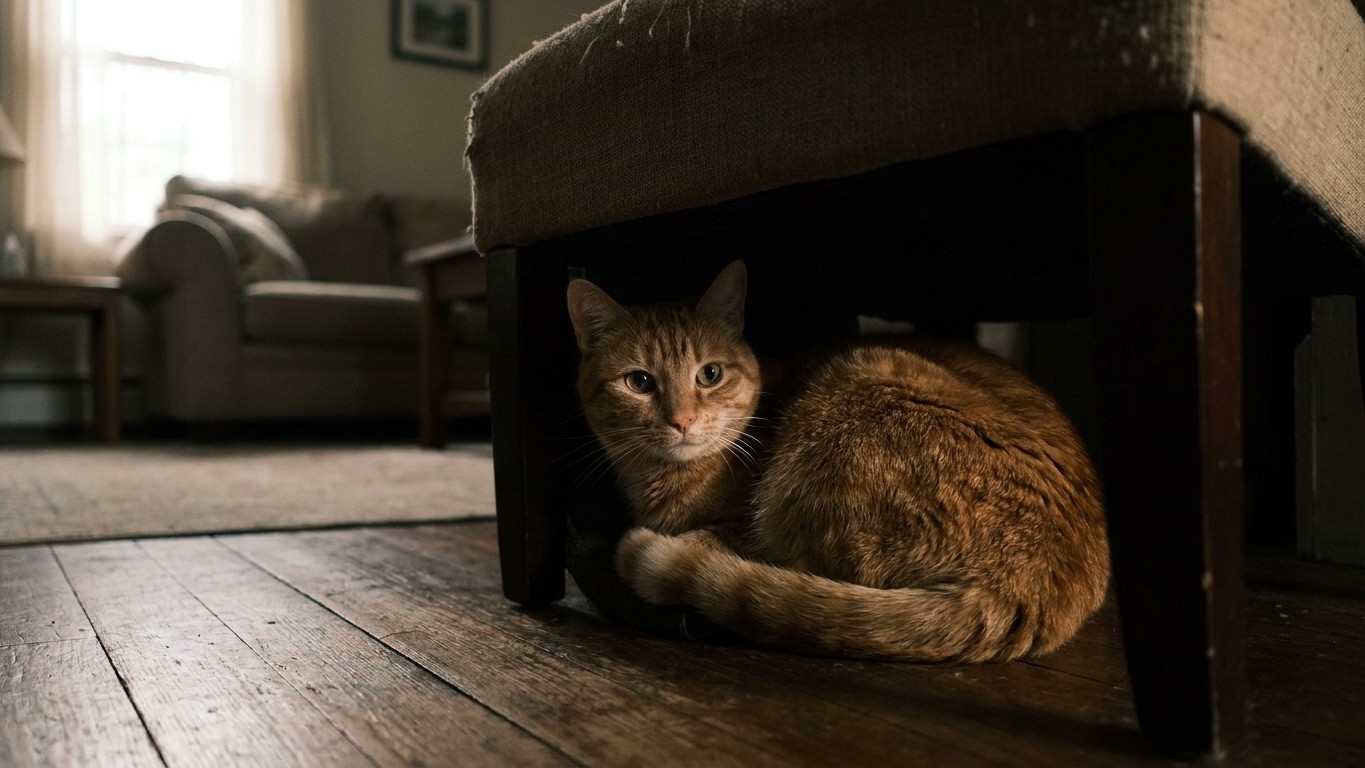
Your cat has slept on the same corner of the sofa for three years. Then, one morning, you notice they’ve relocated to the back of the wardrobe or are tucked under the bed. No drama, no obvious cause. Just a quiet shift. That single change, easy to dismiss as feline whimsy, can be one of the earliest signals your cat sends when something isn’t right physically or emotionally.
Key takeaways
- Cats are masters at hiding illness—and their sleeping habits might be the only honest signal you get
- Over 60% of cats over six have arthritis, but owners mistake the pain-driven behavior changes for normal aging
- A new sleeping spot alone isn’t alarming, but combined with other subtle signs, it demands immediate veterinary attention
The biology behind why cats change where they sleep
While cats do have preferred sleeping spots, they naturally like to vary where they rest. This behaviour is a feline survival instinct developed in the wild that has carried forward to life as domesticated house cats. Wild cats regularly moved their nests and colonies to avoid detection from predators, and cats also sleep in different locations to claim territory, enjoy privacy, moderate their body temperature, or react to stressful experiences.
A survey published in Applied Animal Behavior Science of 1,177 cats found that most felines had five preferred sleeping areas, so a degree of rotation is entirely normal. Temperature is a major driver too. Cats are particularly sensitive to temperature changes and will often select sleeping spots based on their thermal comfort. During colder months, you might find your cat curled up near radiators or electronic devices, and in warmer weather, they may prefer cool tile floors or breezy windowsills.
The problem is context. A cat moving from one sunny spot to another is different from a cat retreating behind the washing machine for two days straight. Cats are masters at hiding illness, it’s an instinctive behaviour that would protect them from predators in the wild, and this natural tendency means subtle changes in their behaviour or physical condition can signal significant health issues. The sleeping spot, can be the most honest thing your cat tells you all week.
When the shift is a warning sign
Cats hide when they’re sick because instinct tells them to. In the wild, showing weakness attracts predators, and even though your cat lives safely indoors, that survival wiring still runs the show. A cat with dental pain may stop lounging in their favourite spot by the window and retreat quietly to a corner where no one will touch their sore mouth. A cat with a urinary tract issue may hide in a bathroom or laundry room because the space feels quiet and contained while they feel vulnerable.
Some cats love solitude, that’s their baseline. But illness-driven hiding usually shows up as a change, not a lifelong trait. A normally affectionate cat that stops sleeping on your bed and starts hiding behind furniture likely needs medical attention.
Pain is one of the most common reasons behind a sudden relocation. If your cat has a chronic health condition such as arthritis, switching up where they snooze may help them find relief from their pain. If their usual sleeping spot is up high or in a hard-to-reach spot, their pain may make getting there difficult. Instead, they may seek a soft bed that’s easy to get into or cuddle up near a direct heat source. The trouble is, cats hide pain well and, unlike dogs, do not usually vocalise or limp. Studies show that more than 60% of cats over the age of six show signs of arthritis, and that figure jumps to over 90% in cats over 12. Many owners attribute the change to ageing rather than a treatable condition.
Kidney disease follows a similarly insidious pattern. Chronic kidney disease (CKD) causes fatigue, muscle weakness, and generally makes cats feel unwell. You might notice your cat hiding or sleeping more often, being less social, or not jumping up to surfaces they used to be able to reach. CKD is the most common metabolic disease of domesticated cats, affecting up to 40% of cats over 10 years old and 80% of cats over 15 years old. Catching it early genuinely changes the prognosis. Because cats’ kidneys have ways to compensate for functional loss and because changes can happen very gradually, CKD is often caught too late to be treated effectively. Regular veterinary visits with blood work and urinalysis are critical to early diagnosis.
Reading the full picture: what to look for alongside the move
Sudden changes in sleeping habits can sometimes indicate an underlying health issue, but it’s the combination of signals that tells the real story. A new sleeping spot on its own is not cause for panic. A new sleeping spot combined with any of the following warrants a call to your vet without delay.
Cats that are not feeling well do not tend to groom themselves well. You will usually see a messy or greasy coat, mats of fur, or clumps of loose hair. Sick cats may eat less or more than usual, and they may drink less or more than usual, so any change in appetite or thirst may be of concern. With some diseases, especially hyperthyroidism, your cat’s energy level may seem to increase to the point of hyperactivity. Cats with hyperthyroidism are often restless at night and may suddenly begin howling or waking family members up. That’s a particularly easy one to miss, owners often assume their cat has simply become more vocal with age.
A cat who is hiding and not eating, showing reduced energy, vomiting, experiencing diarrhoea, or having changes in litter box habits should be evaluated. Weight loss, changes in grooming, or a noticeable shift in personality are also important clues. Gradual weight loss is especially easy to miss in fluffy cats.
What to do, and what not to do
The first instinct is often to coax your cat out and offer reassurance. Resist it. Never attempt to coax them out of hiding if they’re determined to stay in their chosen spot. Forcing interactions can increase stress, which might worsen their symptoms. Instead, keep watch quietly. If your cat is hiding more than usual, avoid forcing them out of their space. Monitor their eating, drinking, and litter box habits while maintaining a calm environment.
The single most important thing you can do for your cat’s health is establish a baseline. Know what’s normal for your cat, their usual energy level, appetite, litter box habits, and favourite spots. When something shifts, even subtly, pay attention. This is good advice for any cat owner, but it becomes especially valuable as your cat ages. For cats over 10, consider twice-yearly check-ups with bloodwork. These visits can catch kidney disease, thyroid problems, and diabetes before they become emergencies.
Err on the side of caution and make an appointment for a veterinary examination as soon as possible if your cat does not seem right to you, because signs of illness can be very subtle. A sleeping spot is not a diagnosis. But it is data. And in a species that communicates almost entirely through behaviour, it may be the clearest message your cat is able to give you.
One thing worth knowing: cats don’t just purr when they’re happy, but may also make the sound when they’re in pain. If your cat is in seclusion and purring persistently, an injury or illness may be the reason. It’s one of feline biology’s cruellest tricks, the sound we associate most with contentment can, in the wrong context, mean the opposite entirely.
Sources : dialavet.com | tractive.com