
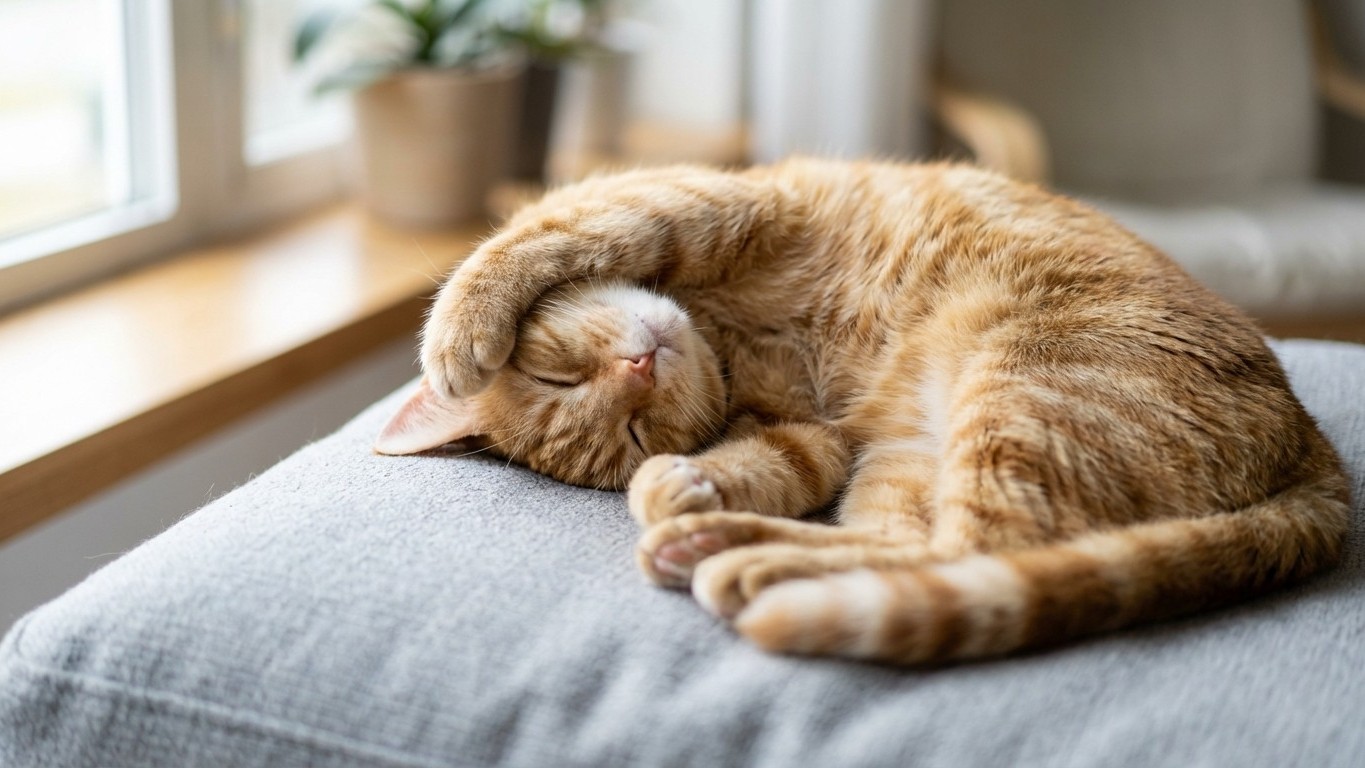
You’re scrolling through your phone, glance up, and there it is: your cat, curled into a Perfect comma shape, one or both paws pressed firmly over their eyes as if the whole world has been politely muted. It stops you in your tracks every time. But that little pose is doing a lot more than melting hearts. According to animal behaviour experts, the paws-over-eyes Position is a small but genuinely revealing window into your cat’s inner world, and their physical wellbeing, too.
Key takeaways
- Cats use their paws as a sleep mask for light-blocking and temperature regulation, but the reasons go much deeper than comfort
- This position is linked to deeper, more restorative sleep stages—your cat isn’t just posing, they’re genuinely in a recovery state
- While usually harmless, sudden changes in this behavior combined with other symptoms might signal something worth investigating with your vet
More Than a Photo Opportunity
Cats covering their eyes when they sleep is normal behaviour, even if they only do it occasionally. Still, the reasons behind it are surprisingly layered. The most obvious explanation is light. Cats are crepuscular animals, Meaning they are most active during dawn and dusk, and their eyes are incredibly sensitive to light, allowing them to hunt effectively in low-light conditions. So when your cat stretches out in a sunny patch on the sofa, because of course they do, a cat’s paws can act like a sleeping mask, blocking out harsh light or even dust or pollen. This behaviour is especially prevalent in indoor cats, where light levels may be inconsistent throughout the day.
Then there’s warmth. Cats are, at their core, efficiency machines. Cats are masters of energy conservation. Their small size and high metabolism mean they need to be efficient at regulating their body temperature, and covering their faces with their paws can help trap heat and prevent it from escaping, particularly during colder months. If it’s chilly while your cat is napping, they might use their paws to cover their face to warm up, covering their face can keep their nose warm, which in turn helps them retain their body heat. This is worth knowing if you have an older cat: it is especially important for senior cats or those with health conditions that affect their ability to regulate temperature.
The whisker angle surprises most people. “Cats are extremely adept in using their whiskers. They often use them to give them clues about the environment around them and objects they are touching, and they can also be used for communication. Because their whiskers are so sensitive, it’s possible that cats cover their faces to block things from touching them and causing sensory overload as they are trying to sleep.” Cats also rely on their whiskers to help them navigate and hunt, so the whiskers are very sensitive, covering them with their paws while they sleep helps them to relax and feel safe.
The “Do Not Disturb” Signal
Here’s the bit that might make you feel quietly smug as a cat owner: as one certified cat behaviourist describes it, “cats covering their eyes is like a functional ‘do not disturb’ sign.” The position “gives a sense of security. And it’s comfortable!” he adds. When cats are in this position, they’re usually curled up and compact, so the paws on the face make them feel even more comfy and content.
Cats are naturally furtive creatures, and their instinct to cover their face while sleeping might be a remnant of their survival strategies in the wild. By shielding their face, they may feel as though they are protecting one of their most vulnerable areas from potential threats. Even your pampered indoor cat, who has never had to worry about a predator in their life, carries that ancient wiring. As one cat behaviourist puts it, “cats are both predators and prey, and for that reason they need to protect themselves. Cats cover their eyes to protect this very vulnerable part of the body not just from a sneak attack but also from dust and other irritants.”
There’s also the simple, underappreciated reason of pure comfort. Some cats cover their faces when they sleep just for comfort, it’s like when we wrap our arms around a throw pillow or tuck blankets between our legs for extra comfort during a nap. Not all cats find covering their faces a comfortable sleeping position, but those that do are likely to cover their faces often. Essentially, your cat has found their version of the perfect sleeping position and they’re sticking with it.
What’s Actually Happening in That Little Cat Brain
Cats actually spend an average of 16 hours a day catnapping, that’s two-thirds of their life asleep, and they do this to conserve energy. Just like humans, felines experience REM (rapid eye movement) and non-REM phases of sleep. Like humans, cats experience atonia while in the REM phases of sleep, a form of reduced muscle tone that causes temporary paralysis while they are dreaming. This is when you might spot your cat’s whiskers, ears, or tail twitching, or hear a few vocalizations.
A tucked or paw-covered face is often associated with a deeper, more relaxed sleep stage. So when you spot those paws pressed over the eyes, your cat isn’t just posing for Instagram. They’re genuinely in a restorative, deep sleep, the feline equivalent of a Sunday lie-in. Covering the face with their paws helps them to prolong the cycle of deep sleep, get more rest, and conserve more energy. Think of it as their version of pulling the duvet over their head.
A paw over the eyes or face tucked into the body can also be a sign of self-soothing, it helps block out light and keep the nose warm. If your cat buries its whole face, it might just want uninterrupted rest and solitude. This is common when they’re tired or overstimulated. Busy households with children, other pets, or just a lot of background noise can push cats toward deeper concealment during sleep, which is perfectly healthy behaviour.
When to Stop Admiring and Start Paying Attention
Regardless of why your cat covers their face when they sleep, there is no reason to worry about their health or behaviour, cats covering their eyes when they sleep is normal behaviour, even if they only do it occasionally. That said, context matters enormously.
Should you be worried if your cat suddenly starts sleeping with paws over their face when they never used to? Not necessarily, it could simply mean that your cat’s environment has changed (more light, different temperature). However, if it’s accompanied by other symptoms like lethargy or appetite loss, consult your vet to rule out any underlying medical issues. Pay attention if the cat shows other signs of illness such as reduced appetite, lethargy, hiding, or changes in litter box use. If breathing sounds abnormal, or the cat persistently paws at the face as if in discomfort, or the behaviour is new and accompanies weight loss, discharge from eyes or nose, or mobility changes — those are red flags worth investigating. Always consult your vet if you’re unsure.
The way your cat sleeps can give you subtle clues about their comfort, health, and emotional state. Exploring your cat’s sleeping positions helps you understand their needs and notice any changes in behaviour early. Recognising shifts from relaxed, exposed poses to tightly curled ones, for example, can sometimes alert you to stress or discomfort. A cat who regularly sleeps openly, stretches after waking, and rotates between positions is almost certainly a happy, well-adjusted cat. One who suddenly hides, stays rigid, or stops moving between spots is worth a closer look.
So next time your cat arranges themselves into that impossibly cute paws-over-eyes pose, you can appreciate it for exactly what it is: a creature so comfortable in your home, so trusting of their environment, that they’ve decided the outside world can wait. The light is too bright, the whiskers need a rest, and they are, for now, magnificently, contentedly unavailable.