
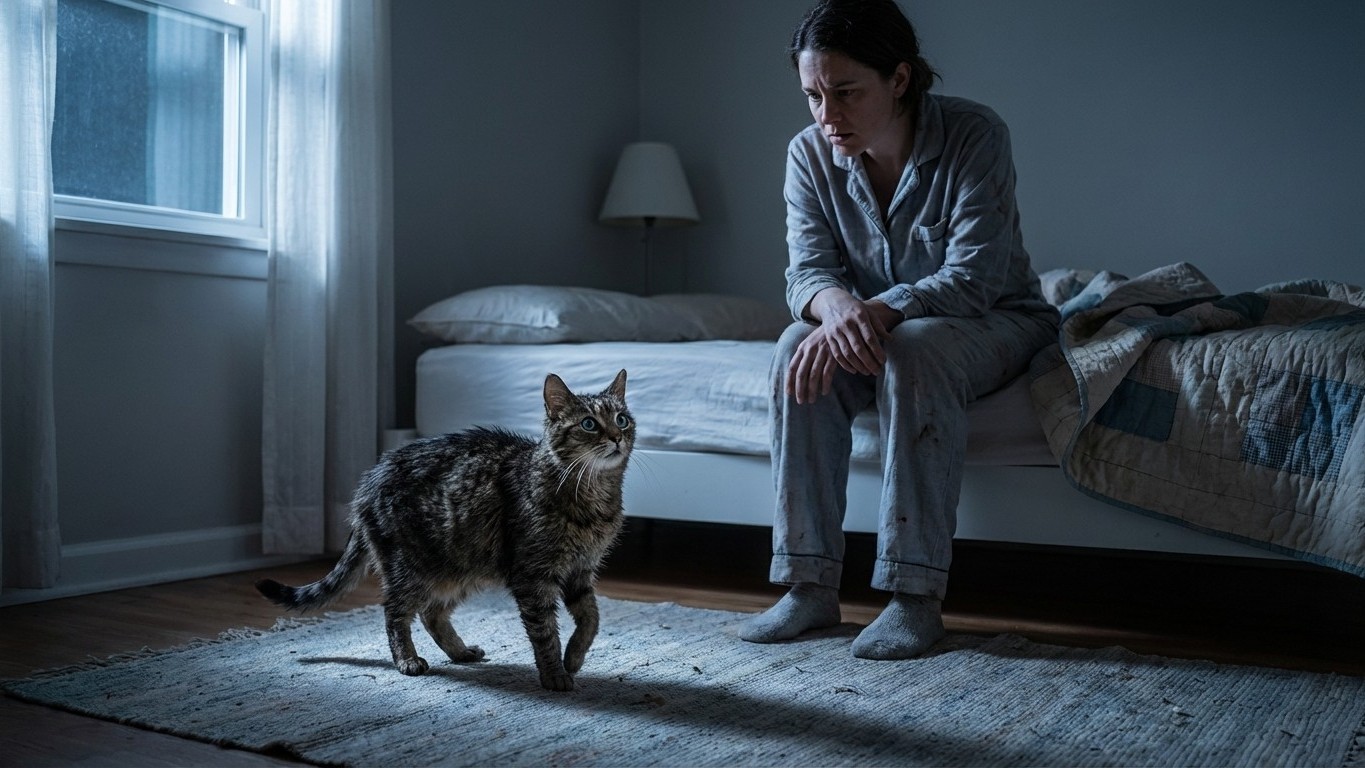
That 3am yowling. The frantic pacing up and down the hallway. The sudden obsession with knocking things off shelves at an hour when every sensible creature should be asleep. Most cat owners chalk these up to classic feline eccentricity, and honestly, sometimes they are. But certain patterns of nighttime behaviour can be your cat’s way of telling you something is genuinely wrong, and Knowing the difference could matter enormously.
Key takeaways
- Sudden changes in nighttime behavior in cats who once slept peacefully may indicate cognitive decline, hormonal issues, or pain
- Cats hide discomfort exceptionally well during the day—nighttime restlessness often reveals what daylight conceals
- Vision loss, hearing decline, and organ disease like kidney failure frequently announce themselves through disrupted nighttime patterns
When “Crazy Cat at Night” Isn’t Funny Anymore
Cats are naturally crepuscular, meaning their instincts pull them toward activity at dawn and dusk rather than the dead of night. Indoor cats, though, often adapt their rhythms around their owners’ schedules over time. So when a cat who has slept peacefully through the night for years Suddenly starts vocalising, wandering restlessly, or acting confused in the dark, that shift is worth taking seriously.
Persistent nighttime vocalisation, particularly the kind of loud, repetitive, almost mournful yowling that sounds less like play and more like distress — is one of the clearest behavioural red flags. In older cats especially, this can be a sign of feline cognitive dysfunction syndrome, sometimes described as a form of dementia in cats. The disorientation is genuinely frightening for the animal; they may not recognise familiar surroundings in low light, and the vocalisation is essentially a distress call. If your 13-year-old tabby has started doing this, please don’t just put a pillow over your head. Book a vet appointment.
Hyperthyroidism is another condition that frequently announces itself through nighttime restlessness. The thyroid gland, when overactive, essentially runs the cat’s entire system too fast, increased heart rate, heightened appetite, and a nervous energy that doesn’t switch off at bedtime. Affected cats often seem almost manic at night, pacing, vocalising, and demanding food at odd hours. It’s a condition that’s very manageable once diagnosed, but it does need a vet’s input and proper bloodwork to confirm.
Pain, Anxiety, and the Things We Miss in Daylight
Cats are extraordinarily good at hiding pain during their waking hours, it’s a survival instinct baked in over millennia. But at night, when the house is quiet and the usual distractions vanish, discomfort becomes harder to suppress. A cat with arthritis, dental pain, or an internal issue may become more restless after dark simply because there’s nothing left to distract them from how they feel.
Watch for subtle Changes alongside the nighttime activity: is your cat less willing to jump up to their usual sleeping spot? Are they grooming a specific area repeatedly? Do they seem to settle, then immediately get up again, as though they can’t find a comfortable position? These small details, combined with disrupted sleep patterns, paint a picture that your vet will find genuinely useful.
Anxiety is also worth considering, and it’s more common in cats than many people realise. Changes to the household, a new baby or pet, building work nearby, or even seasonal shifts in outdoor sounds can all tip a sensitive cat into a state of low-level panic that becomes most visible at night. Anxious cats may also over-groom, hide, or become clingy in ways that feel out of character. This isn’t something to dismiss as “just stress”, chronic anxiety in cats has real physical health implications and there are genuinely effective interventions, both behavioural and veterinary.
The Sensory Decline Nobody Talks About
Hearing loss and vision deterioration in cats tend to creep up gradually, and owners often don’t notice until the deficit is quite advanced. A cat who is losing their sight may navigate perfectly well in familiar, well-lit surroundings during the day, only to become confused and distressed when the lights go off. Bumping into furniture, appearing startled when touched, or refusing to move from one spot in the dark are all potential indicators.
Hearing loss brings its own set of nighttime complications. A deaf or partially deaf cat may vocalise more loudly simply because they can’t gauge their own volume. They may also be more easily startled, leading to erratic nighttime behaviour that looks dramatic but is Actually rooted in something quite straightforward. A simple test, crinkle a treat bag outside their line of sight, won’t replace a proper veterinary assessment, but it can give you useful information to share with your vet.
Kidney disease, which is unfortunately common in older cats, can cause increased thirst and the need to urinate more frequently. If your cat has started waking you up to use the litter tray, or you’re finding litter tray use has increased overnight, that’s a pattern worth flagging. The same applies to diabetes, which similarly disrupts normal thirst and urination rhythms.
What to Actually Do
Keep a simple log for a week or two. Note what time the behaviour occurs, how long it lasts, whether your cat seems distressed or alert, and any other changes you’ve noticed, weight, appetite, litter tray habits, drinking. This kind of information transforms a vet consultation from “my cat has been acting weird at night” into something a clinician can Actually work with.
In the meantime, ensure your cat has access to fresh water, a clean litter tray, and a warm, easily accessible sleeping area. For older cats, a small nightlight can make a real difference if vision or cognitive issues are at play. And if you’re using any plug-in air fresheners or essential oil diffusers, know that many are genuinely harmful to cats, remove them entirely.
There’s something quietly telling about the fact that our cats often choose the stillness of the night to show us what they’ve been holding back. They’re not trying to make your life difficult. They’re communicating in the only language available to them, and how we respond to that, especially as they age, says quite a lot about us too.