
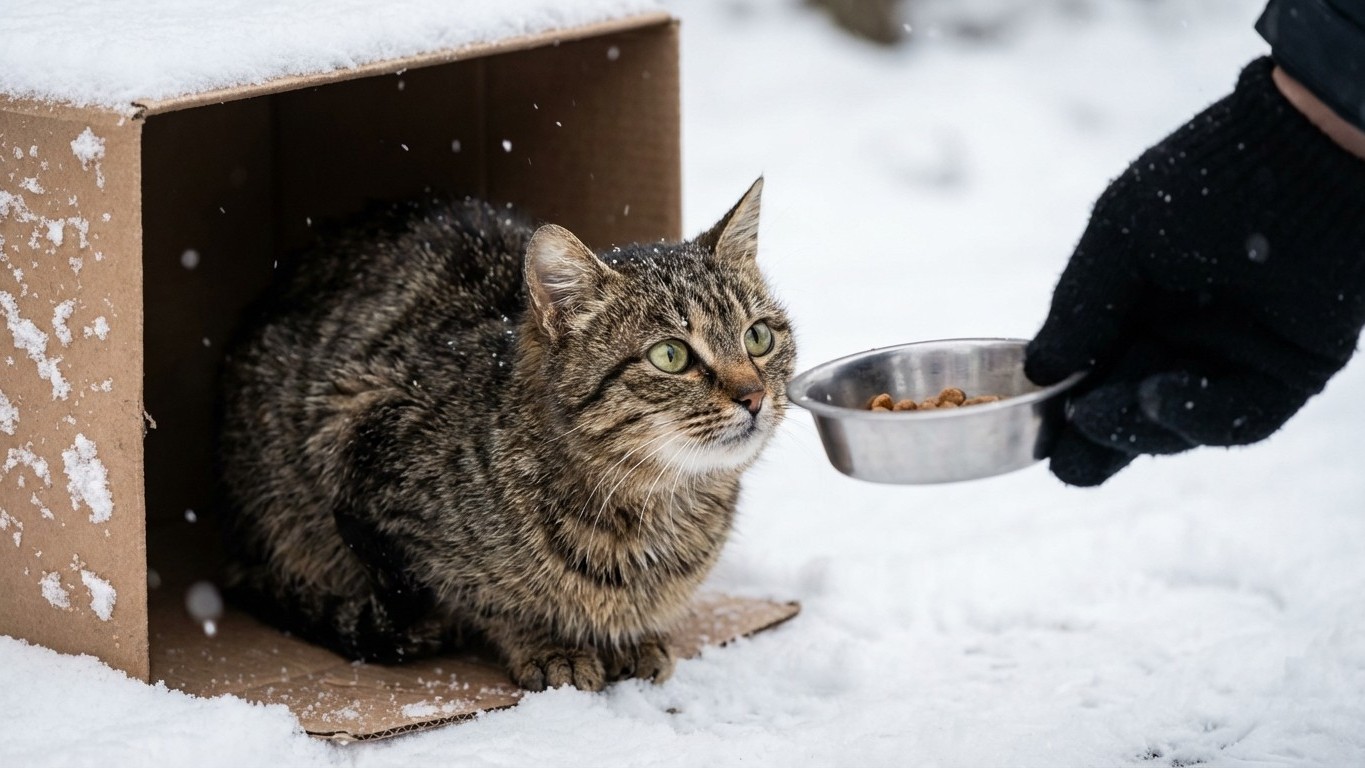
That scruffy tabby has been lurking around your garden shed for weeks, and with temperatures dropping, your heart is winning the battle against your head. Rescuing a stray cat during winter feels like the right thing to do, but good intentions can quickly turn into costly Mistakes if you rush the process. The difference between a successful rescue and a disaster often lies in those crucial first 48 hours.
Stray cats aren’t just hungry house cats having an adventure. Many have spent months or years outdoors, developing survival instincts that make them wary of human contact. Their immune systems may be compromised, they could be carrying diseases, and their stress levels will be through the roof when confined indoors. Understanding this transforms how you approach every aspect of their care.
Key takeaways
- Why that cozy spare bedroom might actually stress your new rescue cat more than help them
- What hidden dangers your vet will discover that you’d never spot yourself
- How feeding a hungry stray the ‘right way’ could actually poison them
The Quarantine Room Reality Check
Your first instinct might be to let your new rescue explore the house immediately. Don’t. Even if you don’t have other pets, a stray needs a dedicated quarantine space for at least two weeks. This isn’t just about potential diseases (though that’s serious enough), it’s about giving a terrified animal time to decompress without overwhelming stimuli.
Choose a quiet room, ideally with a window, where the cat can hide behind furniture if needed. A bathroom works well because it’s easily cleaned and contained. Set up everything they need in this single space: food, water, litter box, and hiding spots. Many new rescuers make the mistake of using their largest spare room, thinking bigger is better. Actually, cats feel more secure in smaller spaces initially.
During quarantine, resist the urge to handle the cat unnecessarily. Let them come to you. Some strays take weeks to trust human touch, and forcing interaction can set back progress significantly. Instead, sit quietly in the room, perhaps reading aloud so they become familiar with your voice.
The Vet Visit That Can’t Wait
Here’s where many well-meaning rescuers stumble: they assume the cat is healthy because it’s walking around and eating. Stray cats are masters at hiding illness, an evolutionary trait that kept them alive on the streets. What looks like a slightly thin but otherwise normal cat might be harboring parasites, respiratory infections, or worse.
Book a veterinary appointment within 48 hours of bringing the cat home. Yes, this might mean an emergency or weekend consultation fee, but consider it essential insurance. The vet will check for microchips (this “stray” might be someone’s beloved pet), test for diseases like FIV and FeLV, and assess overall health. They’ll also advise on vaccination schedules and spaying or neutering.
Don’t attempt to treat obvious problems yourself with over-the-counter remedies. Eye infections, ear mites, and skin conditions need proper diagnosis. What appears to be simple conjunctivitis might actually indicate a respiratory virus requiring specific treatment.
Feeding Mistakes That Backfire
Stray cats often appear desperately hungry, triggering our instinct to provide unlimited food immediately. This kindness can literally make them sick. Cats who’ve been surviving on minimal rations can develop refeeding syndrome if given too much too quickly, causing dangerous shifts in their body chemistry.
Start with small, frequent meals of high-quality wet food. Offer about a quarter of what a normal house cat might eat, four times daily, gradually increasing portions over the first week. Avoid milk (despite popular belief, most cats are lactose intolerant) and rich foods that might upset a sensitive stomach.
Monitor their eating habits closely. Some strays will gorge themselves and vomit, while others remain too stressed to eat normally. If a cat hasn’t eaten for more than 24 hours, contact your vet immediately. Cats can develop serious liver problems if they don’t eat regularly.
The Trust-Building Marathon
Perhaps the biggest mistake new rescuers make is expecting gratitude. Stray cats don’t understand that you’re helping them. From their perspective, they’ve been captured by a potential predator and confined in an unfamiliar space. Some may never become lap cats, and that’s perfectly normal.
Progress happens in tiny increments. A cat who initially hides under the bed might eventually sit where they can see you. Later, they might approach your outstretched hand. Weeks or months down the line, they might allow brief pets. Pushing too hard too fast can reset this entire process.
Create positive associations by talking softly during feeding times, playing gentle music, and moving slowly around their space. Avoid direct eye contact initially, as cats perceive this as threatening. Instead, try slow blinking when you catch their gaze, a cat signal for “I’m not a threat.”
Some strays arrive with behavioral quirks developed during their outdoor life. They might prefer to eat from elevated surfaces, react strongly to sudden movements, or show fear around certain objects. These aren’t problems to be fixed immediately but rather adaptations to understand and work with gradually.
Winter rescues require extra patience because the cat’s stress is compounded by the jarring transition from cold outdoor survival mode to warm indoor safety. But watching a frightened stray gradually transform into a trusting companion remains one of the most rewarding experiences any animal lover can have. The question isn’t whether you’re ready for a perfect pet, but whether you’re prepared for the beautiful, messy reality of giving a vulnerable creature a second chance.