
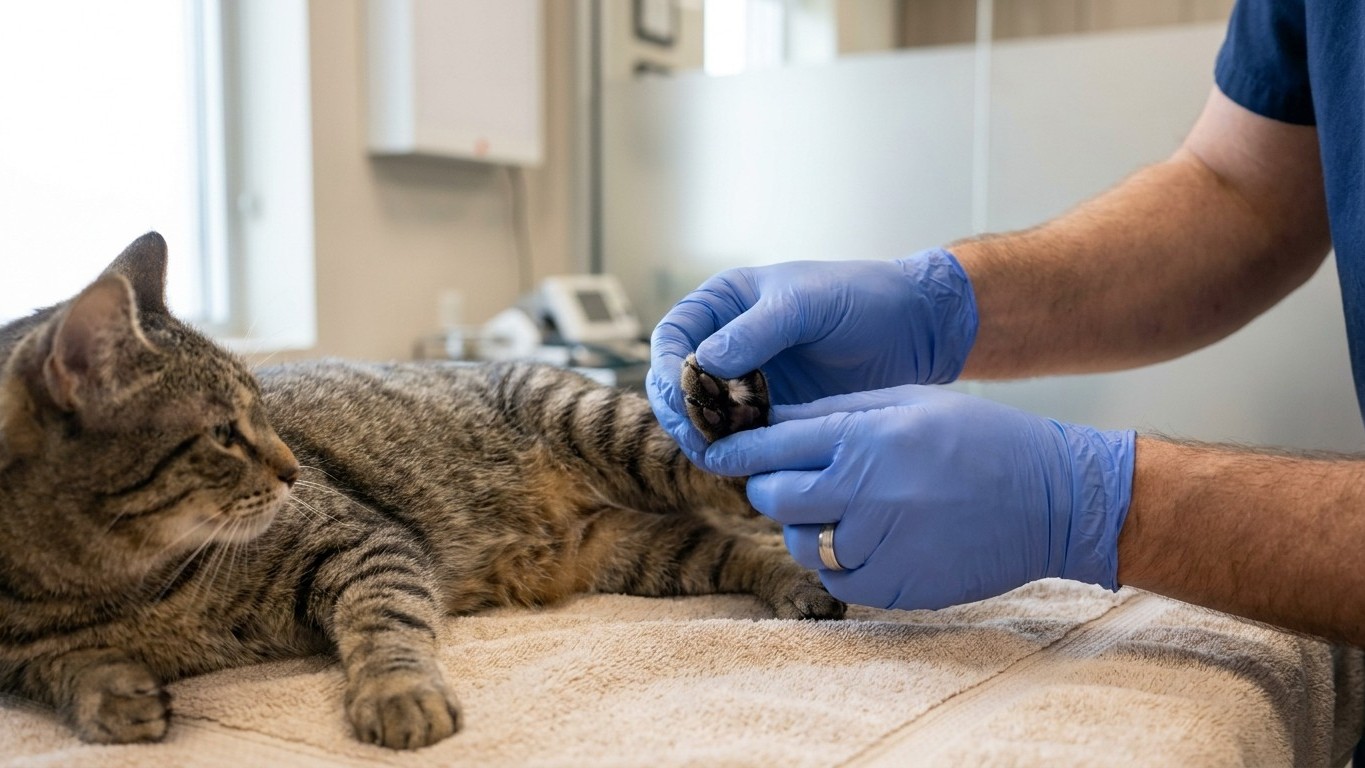
Run your fingers through the fur, then gently splay each toe apart and peer into the gap. That small, thirty-second check is exactly what a vet does first when a cat comes in limping after wandering through a harvested field or a patch of dry, seeding grass. It sounds almost too simple to matter, but this single habit catches the single most common late-summer injury in outdoor cats: a grass seed or awn wedged between the pads.
Stubble fields, dried-out meadows and unmown verges are covered in tiny, dagger-shaped seed heads once the grass has gone to seed and dried in the August heat. These aren’t ordinary seeds drifting on the wind. They are spikey and dart-shaped, and once they penetrate the outer skin barrier they travel further in due to gravity, with some resembling tiny arrowheads or fish hooks whose sharp tip allows them to easily break through skin and burrow into the body. A cat’s paw, with its warm, slightly damp gaps between the toes, is practically designed to trap them.
Key takeaways
- A tiny grass seed lodged between your cat’s toes can trigger an expensive emergency surgery costing hundreds or thousands of pounds
- These barbed seeds keep burrowing deeper with every step, and vets often can’t see them once they’re under the skin
- One specific daily habit during grass season takes 30 seconds and could prevent your cat’s next limp from becoming a crisis
Why the space between the toes is ground zero
Vets check this spot first because it’s anatomically the perfect trap. The most common symptom is swelling on the top of the paw between the toes, and you may notice your cat limping or excessively licking their paws. Once a seed has worked its way under the skin, the barbs that helped it burrow into soil do the same job in tissue, and there’s no going back. Once inside, their barbs prevent them from backing out, so instead every movement drives them deeper. That’s the grim irony of grass awns: a seed built by evolution to bury itself is just as good at burying itself in a cat.
What makes this genuinely tricky, even for experienced vets, is that the seed often disappears from view within hours of entering the skin. Even grass seeds between toes become ‘invisible’ once they get through the skin. A vet can’t just glance at a paw and spot the culprit; they’re often working from indirect clues; a small red pinprick wound, a firm swelling, or a track mark showing where the seed went in. This is precisely why the toe-spreading check happens at the very start of any consultation for a limping outdoor cat, before anything else. It’s the fastest way to rule the obvious cause in or out.
The tell-tale signs owners can spot at home
You don’t need to wait for a limp to become obvious before checking. Cats are typically fastidious groomers and will often deal with a seed caught in their fur before it becomes a problem, but a seed embedded in a paw pad is a different matter entirely; no amount of grooming will shift that. Watch for a few specific things after any walk near stubble, hay fields or overgrown paths:
- Constant licking or nibbling at one particular toe or pad
- Swelling, redness or a small firm lump between the toes
- Sudden limping that appears out of nowhere
- A tiny discharge or weeping spot on the skin
Constant licking of a paw, swelling or a lump, redness, or chewing and scratching at a specific spot are the classic early warning signs. Left unchecked, things escalate. If untreated, a grass seed injury might lead to symptoms such as becoming extremely quiet or restless, loss of appetite, breathing difficulties, or head tilting and loss of balance as the seed migrates well beyond the original entry point. That last part genuinely surprises most owners: a seed that went into a paw can, in rare but documented cases, end up causing problems nowhere near the foot at all, because those barbs just keep pushing forward through soft tissue.
What actually happens once you’re at the vet
Don’t attempt DIY extraction with tweezers unless the seed is clearly protruding and easy to grip at its base; a partially embedded seed can snap, leaving the barbed tip buried deeper than before. If in doubt, get it checked. Vets generally need more than a torch and a magnifying glass to find a seed that has already tunnelled under the skin. The vet will have to find out exactly where the grass seed is located, which could mean your cat requires pain relief and either sedation or general anaesthetic, using special equipment like an otoscope or endoscope to locate it for removal. For paw cases specifically, that sometimes means a short surgical procedure rather than a simple pluck. A small surgical procedure may be needed to open up a swelling in order to find and remove the seed, and vets will sometimes apply a poultice to the paw for 24 hours beforehand to draw out fluid and make the seed easier to find.
None of this is cheap. Because grass seed removal can involve anaesthetic, exploratory surgery and follow-up antibiotics, grass seed removal may cost from hundreds to thousands of pounds, depending on where they lodge and how hard they are to find. That price tag is a strong argument for the thirty-second check becoming a genuine daily habit during grass seed season, roughly late spring through to early autumn in the UK, rather than something you only think about once your cat is already limping.
Longer-haired cats carry extra risk simply because feathery fur around the paws acts like a funnel for seeds drifting through the air. If your cat has a longer coat, carefully trim any feathery hairs around their ears, eyes, and paws to stop grass seeds from attaching to them. Combine that with a quick paw-spread check after every outdoor excursion near farmland or overgrown grass, and you’ll catch the vast majority of seeds before they ever get the chance to burrow. It’s a habit that costs nothing and takes less time than filling their food bowl, which makes it one of the better returns on effort in cat ownership.
Sources : pdinsurance.co.nz | heckingood.co.uk