
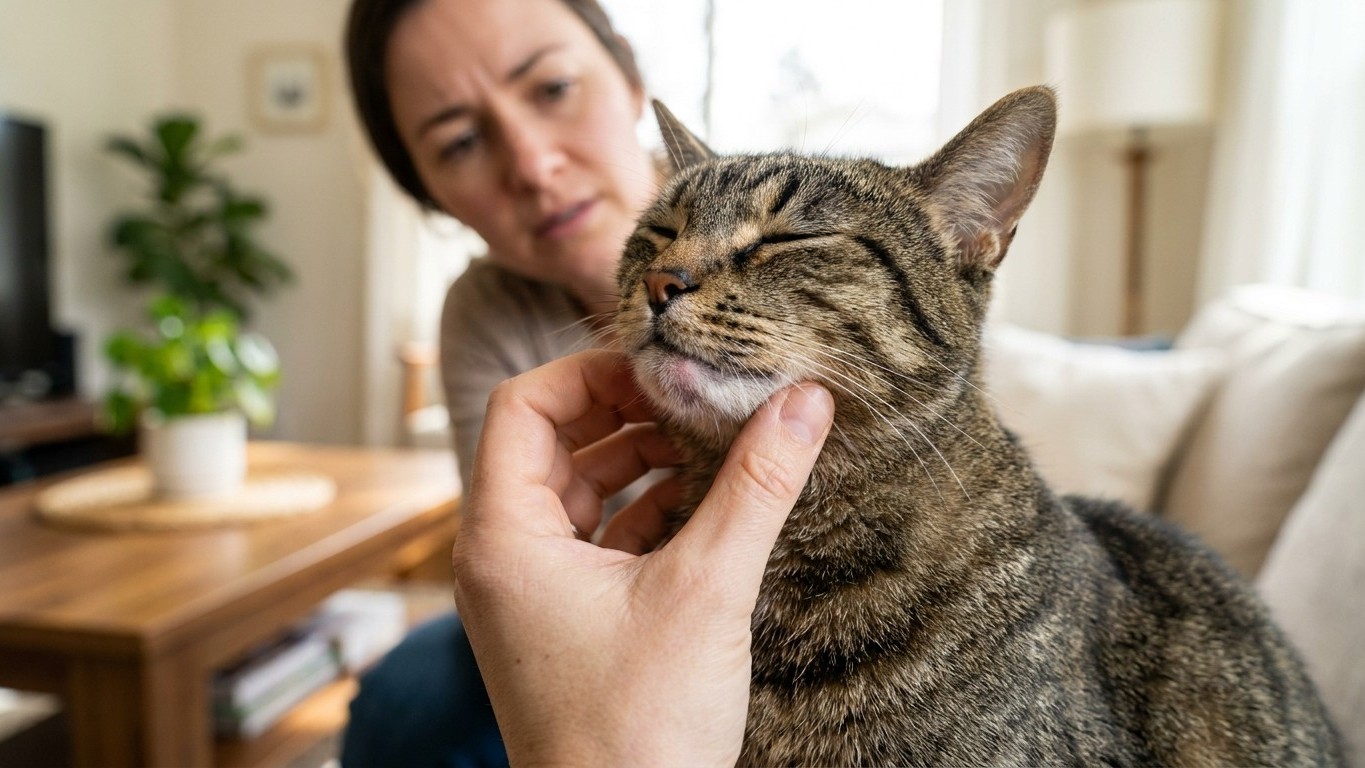
Those lumps were almost certainly not a coincidence. Between 2018 and 2019, veterinary teams across England and Scotland traced a cluster of feline tuberculosis cases back to one specific culprit: raw venison cat food. Researchers described an outbreak of Mycobacterium bovis in pet cats across England and Scotland associated with feeding a commercial raw food diet, with forty-seven cats presenting with granulomatous lesions, swollen lymph nodes, and lung or gut disease over a single year. Every single one of them had eaten the same brand of raw venison. Freezing the mince hadn’t saved them.
This is precisely why a cat developing lumps under the skin after months of raw venison mince deserves urgent veterinary attention, not a wait-and-see approach. What looks like a harmless abscess or insect bite reaction can, in rare but documented cases, be the first visible sign of bovine tuberculosis working its way through lymph nodes and soft tissue.
Key takeaways
- A mysterious outbreak of tuberculosis in indoor cats across two countries pointed to a single culprit—but it took weeks to identify
- Freezing raw meat doesn’t eliminate dangerous bacteria or parasites, despite what raw feeding advocates claim
- By the time visible symptoms appeared, 83 additional asymptomatic cats were already silently infected
The bacteria that survived the freezer
Mycobacterium bovis is the bug behind bovine TB, and it doesn’t care how cold your chest freezer gets. Deer, like cattle, can carry it without showing obvious symptoms, and if infected meat goes into pet food without proper inspection, the organism can travel straight into a cat’s bowl. Investigators found that all the affected cats were indoor-only, at negligible risk from wildlife or rodents, of different breeds, and mostly young, with the only common feature being a commercial raw food diet, and it later emerged that some ingredients had not been meat-inspected in line with EU requirements. That single gap in the supply chain was enough to sicken dozens of animals.
The clinical picture in these cats was often distressing and fast-moving. Symptoms ranged from lesions on the face, a lump under the jaw and limping, to coughing and weight loss. Among affected cats, the progression of the disease was often rapid, and the animals needed extensive surgery or had to be euthanised. That’s the grim reality behind a “lump” that seems minor at first glance, particularly when it appears alongside lethargy, reduced appetite, or a swelling that keeps growing rather than settling down.
What makes this outbreak so chilling for anyone still raw feeding is the scale eventually uncovered once vets started actively screening. Asymptomatic at-risk cats were screened using an interferon-gamma release assay, identifying a further 83 infected cats who hadn’t yet shown any outward signs at all. Lumps are sometimes just the tip of a much bigger, silent problem.
Freezing isn’t the safety net owners think it is
There’s a persistent myth in raw feeding circles that a few days in the freezer sterilises meat. It doesn’t. Home freezing is not reliable enough to eliminate parasites from meat, and sub-zero freezing can only destroy certain parasites under very strict government-supervised conditions. Bacteria fare no better in the cold. Freezing raw food does not kill all germs, so it still needs to be handled with care to protect your family.
Venison and other game meats bring their own extra baggage beyond TB. Dutch researchers testing commercial frozen raw diets found genuine parasite contamination sitting in freezer-ready products. Four products (11 per cent) contained Sarcocystis cruzi, another four (11 per cent) contained S tenella, and in two products (6 per cent) Toxoplasma gondii was found. None of that had been neutralised by the cold chain. Add in the usual suspects, Salmonella, Listeria, Campylobacter and E. coli, and you start to see why vets rarely recommend raw diets without serious caveats. Nearly 25% of raw food samples tested positive for harmful bacteria including Salmonella spp. and Listeria monocytogenes, alongside other concerns such as Campylobacter, Clostridium species, E. coli and Yersinia enterocolitica.
Cats themselves are surprisingly well armed against low-level contamination, thanks to a short gut and fiercely acidic stomach that shifts through food fast and destroys plenty of bacteria along the way. But a short digestive tract only buys you so much protection against a genotype of tuberculosis bacteria hiding in muscle tissue, or a Toxoplasma cyst that survived the mincing machine. Good biology isn’t a substitute for good food safety.
What actually happened to that “Wild Venison” product
Once the pattern became undeniable, the story moved quickly. The company confirmed it was working with Britain’s Food Standards Agency as part of a related investigation into its now-discontinued “Wild Venison” product. The reformulated line never returned to shelves in its original form, and the case became a genuine watershed moment in UK pet food regulation, prompting closer scrutiny of meat sourcing and inspection standards across the raw pet food sector. Public health officials were quick to reassure worried owners about their own risk, though the story clearly still matters for households. Public health agencies in the UK previously assessed the risk to immunocompetent owners from M. bovis-infected pets and concluded there is a “very low” risk of zoonotic transmission. Cold comfort if your cat is the one facing surgery, but genuinely reassuring for the rest of the household.
If your cat has unexplained lumps
Any new swelling under a cat’s skin, particularly around the jaw, neck, or limbs, warrants a same-week vet visit rather than a “let’s watch it” approach, especially if your cat eats raw meat of any kind. Mention the diet specifically when you book the appointment; it changes what your vet will test for. A fine needle aspirate or biopsy can rule out the rarer, nastier causes long before things progress to the point where surgery is the only option.
If raw feeding still appeals to you despite all this, source meat only from suppliers who explicitly state their products meet UK meat-inspection standards for pet consumption, not just human-grade sourcing claims. Cooking venison mince to a safe internal temperature removes the TB risk entirely along with most bacterial threats, and frankly, a well-formulated cooked or commercial complete diet gives your cat everything raw feeding promises without gambling on what survived the abattoir, the mincer, and the freezer. Your vet can point you towards a nutritionally complete option that won’t leave you checking for lumps every evening.
Sources : onlinelibrary.wiley.com | researchgate.net