
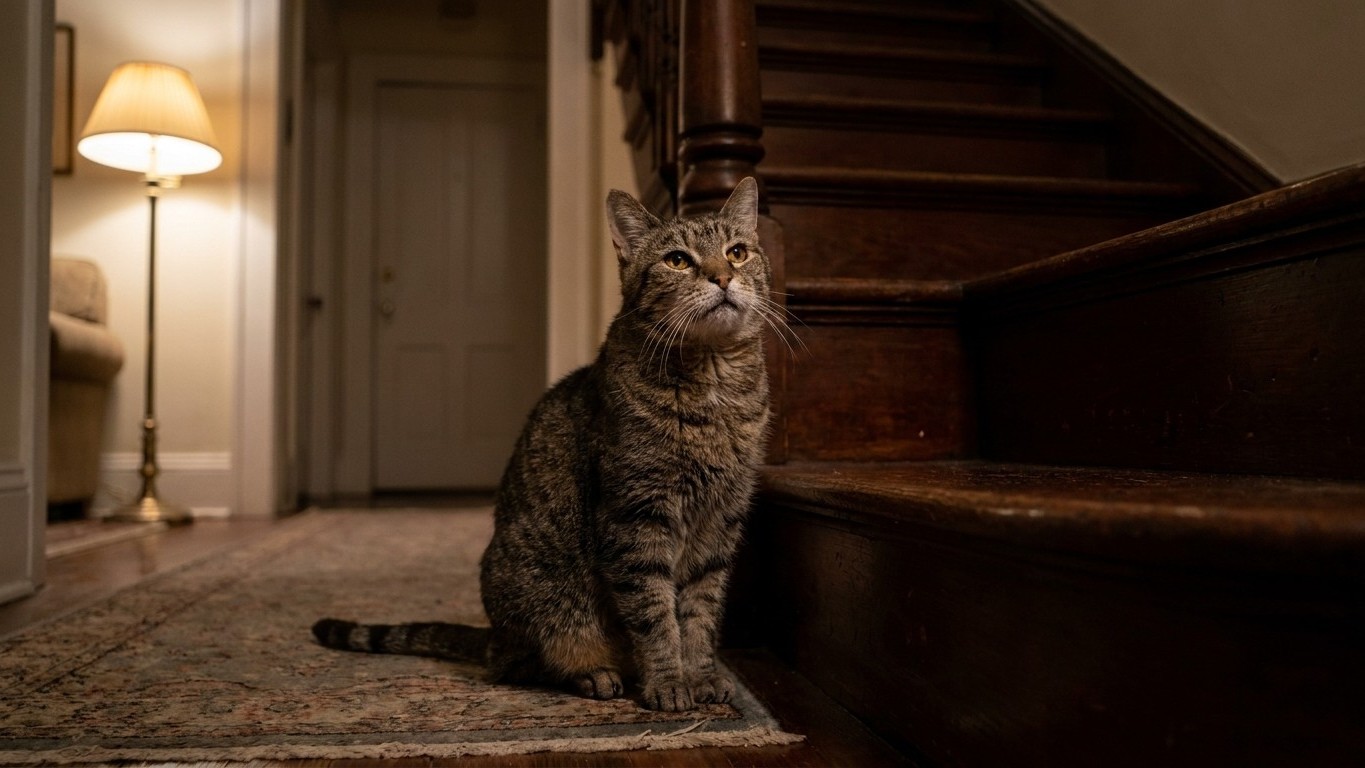
A year of nightly crying at the bottom of the stairs isn’t “just old age”: in cats over 12, that kind of vocalisation is very often the first visible sign of a treatable medical problem, and the two checks a vet asks for first are usually a blood pressure reading and a simple blood test for thyroid hormone. Get those two results back, and the mystery behind the crying frequently resolves itself.
It’s an easy trap to fall into. A cat reaches double digits, starts a strange new habit, and owners assume it’s simply the passage of time doing its quiet work. But in older cats it’s almost never just ‘old age.’ The most common medical cause is hyperthyroidism, an overactive thyroid gland that quietly rewires a cat’s whole body chemistry. It’s staggeringly common in the senior cat population, and it’s the most common hormonal disorder in older cats, typically caused by a benign thyroid tumour that leads to an overactive metabolism. The stairs themselves aren’t the point, incidentally. Cats often choose thresholds, hallways or the bottom of a staircase to cry because these are the “in-between” spaces of the house, and a disoriented or anxious cat gravitates towards them rather than a familiar bed.
Key takeaways
- One year of nightly crying at the same spot isn’t just aging—vets know to investigate immediately
- Two simple tests reveal surprising medical causes that are often completely treatable
- Even if tests come back normal, the solution might be simpler than you think
Why the vet reaches for the blood pressure cuff first
Hyperthyroidism and hypertension are close cousins in feline medicine, and a vet who’s heard “he cries every night” will almost always check both together. Several complications of hyperthyroidism can be significant, including hypertension, which develops due to the increased pumping pressure and elevated heart rate that occurs with hyperthyroidism. The overactive thyroid effectively puts the whole body into a low-grade state of panic, and that has consequences for behaviour as much as for the heart. Excessive thyroid hormone leads to an overactive metabolism, raised heart rate, often a raised blood pressure, and it is thought the excessive vocalisation created by this disease is due to overstimulation of the nervous system leading to signs of anxiety such as pacing, restlessness, overactivity and the classic yowl.
High blood pressure on its own is the more urgent thing to rule out, because it can silently damage the eyes. High blood pressure can cause headaches, confusion, anxiety, and vision changes in people, and in cats, we know it can cause behaviour changes and even blindness due to retinal detachment. A cat who suddenly can’t judge distances well in dim light, and who has always found the stairs perfectly navigable, may start crying out of pure disorientation rather than pain. That’s precisely why a vet checking a cat with a year-long history of night-time crying will want a blood pressure reading alongside bloodwork, not one or the other.
The thyroid side of things is diagnosed with a straightforward blood test, and it’s cheap in veterinary terms for how much it reveals. Even if symptoms are subtle, T4 testing is cheap and high-yield. If levels come back high, there’s genuine reason for optimism: many cats respond well to daily medication, surgery, or radioactive iodine treatment, and successful management of this condition often dramatically reduces or eliminates nighttime cat yowling. A year of disturbed nights, can sometimes be turned around within weeks of starting treatment.
When the two checks come back clear
Not every crying cat has a thyroid problem, and vets know this well, which is why a clean set of bloods and a normal blood pressure reading isn’t the end of the conversation, it’s the start of a different one. One veterinarian described ordering exactly this kind of work-up for a distressed 15-year-old patient who’d begun pacing the hallway and yowling after midnight; Dench ordered a full work-up for the distressed cat, including thyroid, renal, and blood pressure checks, and the results ruled out pain or systemic illness and pointed to a diagnosis: Feline Cognitive Dysfunction, sometimes referred to as feline dementia. Cognitive dysfunction is far more prevalent than most owners realise. One-third of cats aged 11 to 14, and half of all cats 15 and over, develop dementia, also called senile cognitive dysfunction, a common cause of nighttime yowling. The pattern tends to fit a cat crying in a specific spot, night after night, for months: a familiar house that suddenly feels unfamiliar in the dark.
Arthritis and dental pain deserve a mention too, because cats are notoriously stoic about discomfort during the day and far less able to mask it once the house goes quiet. Pain from arthritis or dental disease makes cats cry at night, when there’s little to distract them from their discomfort, so if pain medicine isn’t already part of the picture, it’s worth discussing pain management with the vet. Given that joint disease is thought to affect the vast majority of cats over 12, it’s often sitting alongside another diagnosis rather than instead of it.
What actually helps, once you know the cause
If bloodwork and blood pressure both point towards a genuine age-related decline rather than a single fixable disease, the good news is that environment does a huge amount of the heavy lifting. A nightlight near the stairs, a litter tray that isn’t three rooms and a flight of steps away, and keeping furniture in the same place all reduce the disorientation that fuels crying. Feeding puzzle toys or a bit of interactive play before bed can also settle a restless cat before the household goes quiet.
What’s worth remembering above everything else is the timeline itself. A year of nightly crying isn’t a quirk that simply needs weathering; it’s a full twelve months during which an underlying, often very treatable, condition may have been quietly progressing. Booking that blood pressure check and thyroid panel sooner rather than later isn’t overreacting, it’s exactly what a vet would ask for from the very first phone call.
Sources : figopetinsurance.com | moderncat.com