
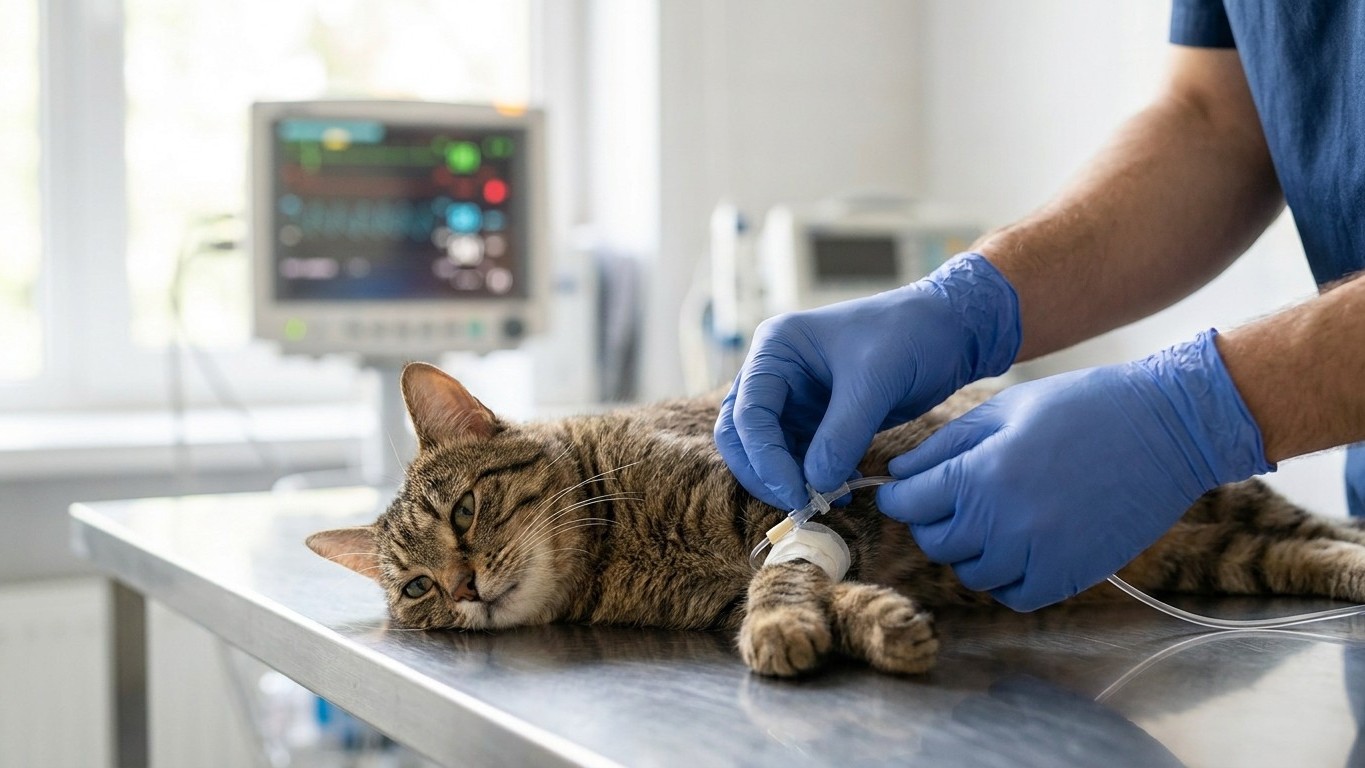
A domestic shorthair almost paid with his life for his owner’s good intentions. Desperate to save her collapsing tomcat, she offered up her other, perfectly healthy cat as a donor and asked the vet to run the blood straight from one pet to the other. The vet agreed to start, watched the line for two minutes, then stopped everything and delivered a warning that still makes rescue centres wince: cats don’t have a universal blood type, and what she’d nearly done could have triggered a fatal reaction in the very animal she was trying to save.
It sounds counterintuitive. Surely blood is blood? Not in cats. Unlike dogs, who can often receive a first transfusion without matching because reactions to a first exposure are rare, cats are born primed to attack the wrong blood group.
Key takeaways
- A well-meaning owner rigged a direct blood transfusion between two cats—and the vet caught a potentially fatal mistake just in time
- Cats aren’t like dogs: they’re born primed to reject incompatible blood, and one mismatch can be deadly within minutes
- The shocking truth about why ‘type B blood into a type B cat’ nearly killed the very animal she was trying to save
Why cat blood isn’t interchangeable
Feline blood comes in three groups within the AB system: A, B and the rare AB. Blood groups in cats are divided into a system of three types based on the presence of certain antigens on the surface of red blood cells, with type A the most common, though some pure breeds are more likely to have type B, and type AB is rare. Type A is dominant in most non-pedigree British cats, but certain breeds flip the odds entirely. Type B can be very prevalent, approaching 50% in some pedigree breeds, especially the British Shorthair, Ragdoll, Birman and Rex breeds, while Siamese cats are almost invariably type A.
The dangerous part isn’t the antigen itself, it’s the antibodies already circulating in a cat’s plasma before it has ever met a donor. There is no “universal” blood type in cats, because they have naturally occurring alloantibodies to the other blood groups even without prior transfusions. That single fact rewrites the whole rulebook compared to dogs, or even humans. Blood typing is of critical importance in cats due to the natural presence of alloantibodies in plasma that are produced in the first few months of life in Type A and B kittens, meaning no prior transfusion is necessary for felines to be sensitised, so blood must be type matched at every transfusion, including the first.
The severity depends on which way the mismatch runs. A type B cat receiving type A blood is walking into the worst-case scenario. 95% of type A cats show antibodies to type B antigen, and 35% of type B cats show antibodies to type A antigen, but it’s the type B recipients whose reaction to type A blood tends to be violent and near-immediate, sometimes within a minute of the drip starting. Type A cats typically have lower levels of naturally occurring anti-B antibodies whereas Type B cats typically have high levels of anti-A antibodies, so Type A cats must receive Type A blood products, and if a Type A cat receives Type B blood products the transfused blood is likely to have a shorter half life and can cause a more severe transfusion reaction. Geography matters too: the risk of inducing a potentially fatal transfusion reaction in type B recipients could be as high as 20% when transfusing unmatched blood, depending on breed and local blood type frequencies.
The two-minute window that changes everything
This is exactly why a competent vet never just opens the tap and walks away, even with two cats who happen to be housemates and best friends. Compatibility testing exists precisely because sibling status, shared litter trays and general affection mean absolutely nothing genetically. A crossmatch, mixing a sample of donor and recipient blood under controlled conditions before a single drop goes into the vein, is designed to catch dangerous pairings that a simple blood type test might miss. The Association of Veterinary Hematology and Transfusion Medicine’s 2021 consensus statement concluded that AB type-matching alone is insufficient to prevent hemolytic transfusion reactions in cats, so major crossmatch testing should be performed alongside type-matching prior to the first transfusion, with only crossmatch compatible products administered to reduce the risk of reactions.
Even once blood is confirmed compatible, transfusions are never simply run at full speed. At the onset, the rate of transfusion should be very slow, around 1-3 ml over 5 minutes, even with blood-typed or cross-matched blood, while the recipient cat is closely monitored for any sign of an adverse reaction triggered by incompatibility, and if there’s none, the rate is gradually increased. That slow start is the safety net. Vomiting, drooling, a spiking heart rate or sudden vocalising in the first couple of minutes can all signal a reaction beginning, which is exactly the kind of red flag that justifies clamping the line immediately and reassessing rather than hoping it settles.
What a genuinely safe donation looks like
None of this means healthy cats donating blood is a bad idea. Feline blood donors save lives every week in UK veterinary practices, since there’s currently no national blood bank collecting and storing feline blood the way there is for dogs. Currently there is no pet blood bank in the UK that will collect and store feline blood. That means most feline transfusions rely on in-house donor cats or a client’s own pet, which is precisely why the process needs to be so tightly controlled.
Proper donor cats go through a real screening process, not a five-minute decision made in a panic. Vets generally look for:
- Age and weight: typically weighing more than 4.5 kg (but should not be overweight) and aged between 1 and 8 years, ideally 1 to 5 years old.
- A clean medical history: donors should never have received a transfusion themselves, and must be free of current medication, up to date on vaccines and parasite treatment.
- Pre-donation health checks: including blood tests to check blood cell counts, liver and kidney function, infectious disease screening, plus an echocardiogram to check for underlying heart problems.
Even with a suitable donor, the vet withdraws blood carefully rather than letting it flow freely between two animals. A typical feline donation removes approximately 40-50mls under light sedation, with the donor monitored afterwards and offered fluids and food before going home. That controlled, measured approach is the opposite of a home-rigged line between two cats, however loving the intention behind it.
If your cat ever needs a transfusion, the kindest thing you can do is get to a vet fast and let them run the typing and crossmatch, even if it costs precious minutes that feel unbearable in an emergency. A slightly slower start beats a reaction you can’t reverse. And if you fancy volunteering your own cat as a donor one day, ask your local practice, they’re very often short of suitable candidates, particularly type B donors for breeds like Birmans and British Shorthairs, and a healthy, calm cat could genuinely be someone else’s lifeline.
Sources : ncbi.nlm.nih.gov | everycat.org