
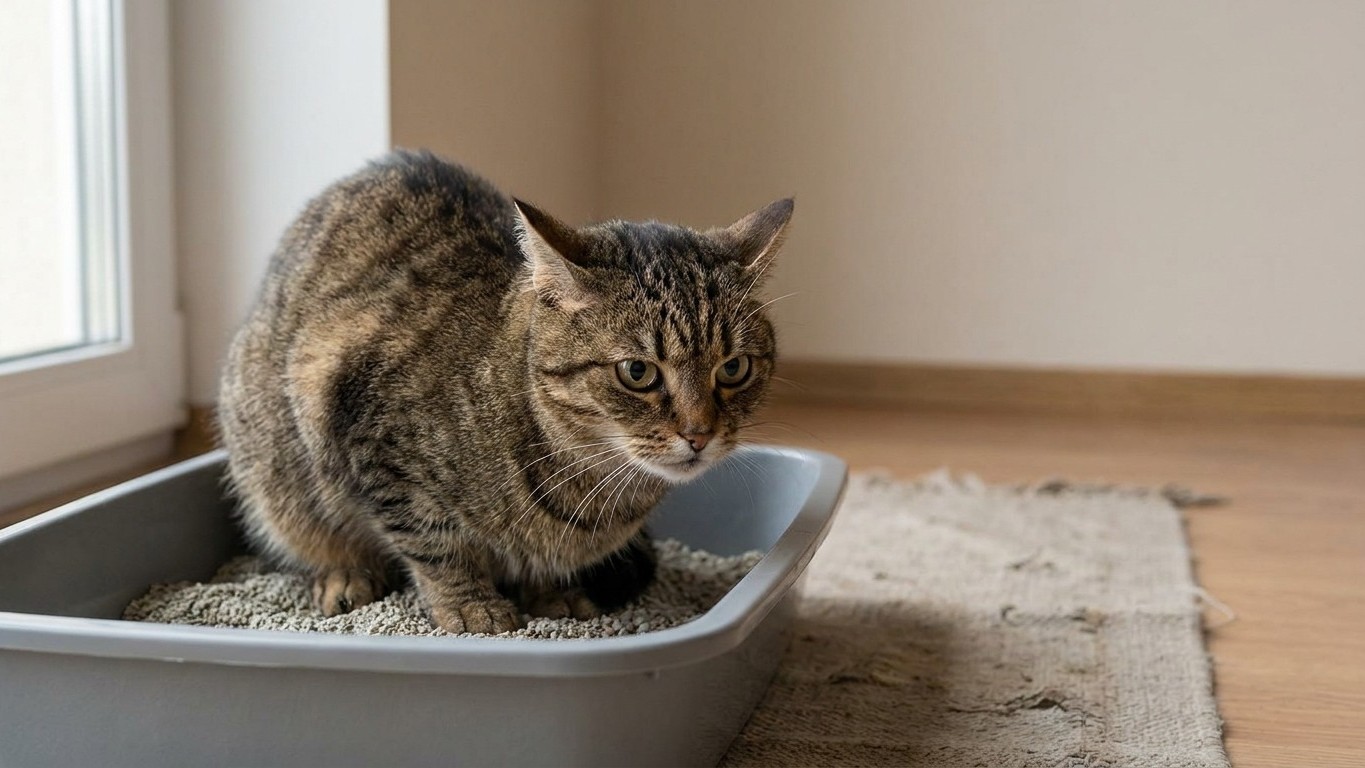
Blood in the litter tray, not once but across several visits: that’s what the cattery staff spotted on day three, and the reason for the phone call that made my stomach drop mid-meeting. My cat, an eight-year-old tabby called Bramble who’d never had so much as a sniffle, was straining to wee and passing urine tinged pink. The staff had done exactly what they should: they’d noticed, they’d checked, and they’d rung me before things got worse.
What they’d found had a name, and it’s far more common than most owners realise. Feline idiopathic cystitis, or FIC, is a broad category called Feline Lower Urinary Tract Disease, which includes conditions such as urinary stones, crystals, infections, and, most commonly and often most frustratingly, inflammation of the bladder without a specific, identifiable cause. The clinical picture matches exactly what the cattery described to me: frequent trips to the litter box, straining to urinate, passing only small amounts of urine, excessive licking, vocalising, urinating outside the litter box, and, in more severe cases, blood in the urine.
Key takeaways
- A routine cattery stay triggered a medical crisis that required emergency intervention
- Stress is the leading suspect behind a mysterious bladder condition vets still don’t fully understand
- Male cats carry a hidden danger that separates minor discomfort from genuine emergency
Why a cattery stay can trigger a bladder flare-up
Here’s the bit that surprised me most. Vets don’t fully understand what causes FIC, but the strongest thread running through the research is stress. The root cause of cystitis signs is stress, and while humans with chronic stress may suffer from gastrointestinal symptoms, headaches or irritability, the cat’s main “stress organ” is its bladder. Cats are creatures of routine, and a cattery, however lovely, throws that routine out of the window: new smells, unfamiliar sounds, other cats nearby, a different litter substrate, staff who aren’t the humans they know.
Experts believe that stress plays a role, as cats who experience sudden changes to their routine or environment and cats that live in multi-cat households are more likely to develop the condition. Boarding ticks both boxes at once. It’s worth knowing, too, that this isn’t a one-off risk factor tucked away in the small print. FIC occurs most often in young to middle-aged cats less than 10 years old, cats that are overweight are also at higher risk, and male cats are most prone to this problem, though females can develop it too. Bramble, at eight and carrying a couple of extra pounds after lockdown-era treats, ticked two of those boxes himself.
What makes this condition properly tricky is the diagnosis process. There’s no simple dipstick test that confirms FIC on the spot. There is no specific test for feline idiopathic cystitis; the diagnosis is reached by making sure there are no other conditions causing the symptoms, such as infections, bladder stones or urine crystals. That means a vet visit is genuinely non-negotiable, not because the cattery staff got it wrong, but because bloody urine can mean several different things, and only bloodwork, a urine sample and sometimes imaging can rule out the more dangerous culprits.
The emergency nobody wants to think about
I’ll be honest: the phone call terrified me because I’d read enough to know what can lurk behind those symptoms in male cats specifically. A blocked urethra is a genuine emergency, not a “wait and see” situation. In male cats with FIC, hematuria can also be related to urinary tract obstruction, which can be a medical emergency. The warning signs are specific and worth memorising: if your cat is trying and failing to urinate or straining and producing just spots of urine, they need to be seen urgently by your veterinary team.
Thankfully, Bramble was still producing urine, just less of it and more painfully than usual, which the cattery’s quick reporting helped catch early. They collected a sample as instructed, I authorised an emergency vet visit from the cattery’s on-call practice, and bloods and urinalysis ruled out stones, crystals and infection. The diagnosis came back as stress cystitis, exactly as the pattern suggested. Symptoms typically resolve in two to seven days, though about half of cats with FIC will experience another incidence within 12 months, so this wasn’t the last conversation Bramble and I would have about his bladder.
Choosing a cattery that actually watches the litter tray
This whole episode changed how I think about boarding. A good cattery isn’t just clean pens and a friendly welcome; it’s staff who genuinely check litter trays daily and know what abnormal looks like. Ask prospective catteries directly how they monitor toileting, how quickly they’d contact you or a vet if something seemed off, and whether they keep cats’ usual bedding or litter type to soften the transition. Reducing novelty matters more than owners often assume, since even small environmental disruptions can tip a susceptible cat into a flare.
Since bringing Bramble home, I’ve become one of those owners who actually looks in the tray rather than just scooping and moving on. It’s a habit worth building before any cat goes anywhere. Larger clumps may reflect increased water intake, while very small deposits can suggest urethral irritation or reduced bladder emptying, and pink, orange, or cloudy fluid deserves timely assessment. None of this replaces a vet, but it gives you the vocabulary to describe what you’re seeing when you call one.
What I’d tell any owner packing a cat carrier
Pack familiar bedding, a worn t-shirt with your scent on it, and if your cat already uses a specific litter brand, take a bag of it along rather than assuming the cattery’s will do. Feed your cat’s usual diet if you can supply it, since digestive upset piles stress on top of stress. And genuinely interrogate any cattery about their daily health-check routine before you sign the booking form, not after.
One detail from Bramble’s case sticks with me more than any of the medical jargon: FIC is often a chronic condition with periods of flare-ups, rather than a one-time event. He’s fine now, back to his usual demanding self, but every future cattery stay comes with a small mental note to ask staff to keep half an eye on that litter tray, just in case.
Sources : ncbi.nlm.nih.gov | cats.com