
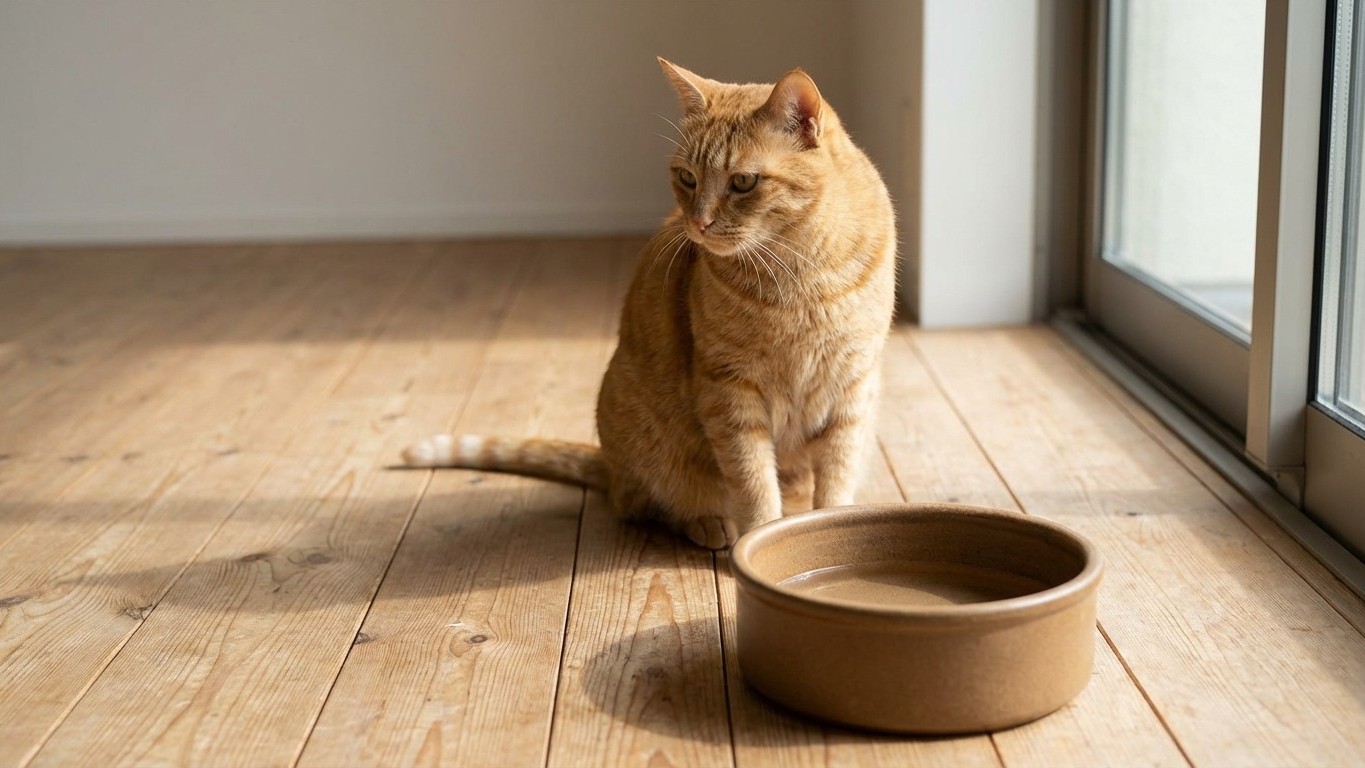
You fill the bowl every morning, yet by evening it looks untouched. Your cat strolls past it with regal indifference, and somewhere in the back of your mind a small alarm starts ringing. That alarm is right to go off. A cat refusing water for more than a day or two is not simply being fussy, it could be quietly doing serious damage to the one organ that is most vulnerable to dehydration: the kidneys.
Key takeaways
- A cat refusing water for just 24-72 hours can suffer organ damage—but most owners don’t realize the danger
- Vets use a simple 30-second skin test at home that reveals dehydration before serious damage occurs
- Chronic kidney disease affects 40% of cats over 10 and 80% over 15—and hydration is your most powerful defense
Why cats and water have always had a complicated relationship
Cats are prone to a low thirst drive as their instinct is to derive adequate water from eating live prey. Wild cats get most of their moisture from the bodies of small animals, so the concept of Drinking from a static bowl is, evolutionarily speaking, a fairly recent human imposition. Domestic cats haven’t quite caught up. The result? Many house cats are mildly dehydrated and not drinking enough to support good health.
The stakes are higher than most owners realise. Proper water intake supports stomach, intestine, kidney, and urinary tract health, while poor hydration can contribute to kidney disease, bladder stones, and urinary problems. And the timeline is sobering: dehydration in cats will be fatal within three to four days, as the body needs water to survive. Signs of dehydration usually occur within 24 hours of when they stop Drinking and consuming any other moisture. After 72 hours, organ failure can develop and may be fatal.
Kidney disease, in particular, sits at the heart of this issue. Chronic kidney disease, or CKD, is one of the most prevalent diseases in older cats, affecting up to 40% of cats over the age of 10 and 80% of cats over the age of 15. That is a staggering figure, and hydration is one of the most powerful levers owners have to protect against it, or slow its progression once it begins.
The 30-second skin test you can do right now
Before you panic, there’s a quick check you can perform at home. It’s the same one vets use as a first-pass assessment, and it takes less than half a minute.
Physical indicators of dehydration include dry or tacky mucous membranes and decreased skin turgor. Skin turgor can be tested by gently lifting the skin over the shoulders and determining how long it takes to “snap back” to its original position. In normally hydrated cats, this should occur almost immediately, while in dehydrated cats, this may take much longer, and in some cases the skin may remain “tented”. If you notice that delay, treat it as a red flag.
You can also check the gums. Try pressing your index finger gently into your cat’s gums and watch them turn from white back to a normal pink colour. This should happen in less than two seconds. If the gums are cherry red, your finger sticks to the gums, they are very dry, or the refill time is longer than two seconds, your cat may be significantly dehydrated.
The critical rule here: do NOT force water on your cat or try to use a dropper to give your cat water. Even if you get a little in their mouth, it likely won’t be enough water to help them feel better, and it can create an aversion to drinking water. If your cat is showing obvious signs of dehydration, skip the home remedies and call your vet immediately.
What dehydration actually does to your cat’s kidneys
Dehydration can speed up damage to the kidneys and cause clinical signs to worsen. This isn’t just a gentle nudge in the wrong direction, the physiology involved is genuinely alarming. Dehydration is a common complication of chronic kidney disease and can lead to inappetence, lethargy, weakness, constipation and increased susceptibility to uremic crisis. Several physiologic mechanisms are triggered when the body senses dehydration, and chronic subclinical dehydration may result in compensatory effects that ultimately have a negative effect on the kidneys.
There’s also a cruel paradox that trips up many owners. With CKD, a cat is simply unable to drink enough water to make up for the kidney disease. A cat with CKD is constantly dehydrated, which leads them to drink more and more frequently. So if your older cat seems to be suddenly guzzling water, that’s not reassurance, that’s a symptom. You should always monitor your cat’s drinking and elimination habits. If you notice excessive thirst and urination, contact your vet right away.
Cats will often show no obvious clinical signs in the early stages of CKD, but early diagnosis gives the best chance for a longer and healthier life. Regular blood tests, measuring markers like creatinine, BUN, and SDMA, are the only reliable way to catch it early. This underscores the importance of regular veterinary exams and monitoring bloodwork for all senior and geriatric cats.
Practical ways to get your cat drinking again
The good news is that several genuinely effective strategies exist, and most cost nothing or next to nothing. The key is understanding your cat’s evolutionary stubbornness and working with it rather than against it.
Start with food. Cats that eat wet food, which can contain up to 80% water, may drink less, and cats that eat dry food usually take more of their daily water requirement in by drinking. Switching even partially to wet food is one of the simplest and most impactful changes you can make. Vets recommend feeding canned food instead of dry, or adding water to food, and providing fresh, accessible water.
Bowl placement matters more than you might expect. Cats can be prompted to increase their water intake by always having fresh water available in places they can easily access, and by assuring that there are no conflicts among cats or other pets that may result in a particular cat being “banned” from the water bowl. Keep the water bowl well away from the litter tray, cats find the proximity deeply off-putting, and who can blame them?
Temperature and flavour can be the deciding factor for a picky drinker. Cats are sensitive to water temperature. Lukewarm water, close to body temperature, enhances aroma and is often more palatable. Try offering warm water first thing in the morning or after meals for greater effect. If warmth alone doesn’t work, adding a small amount of water from a can of tuna or low-sodium chicken broth can prompt a cat to drink more.
Then there’s the running water trick, which taps directly into feline instinct. Many cats prefer to drink from water fountains, and having clean bowls with fresh water in several locations in the home will encourage cats to drink more. A circulating fountain mimics the moving streams cats evolved alongside, and plenty of owners report a dramatic improvement once they make the switch.
For cats already diagnosed with kidney disease, if your cat continues to struggle with hydration despite all efforts, your vet may recommend subcutaneous fluids. Even at stage 2 CKD, fluids can provide significant support. This is a procedure your vet can often teach you to administer at home, turning what sounds intimidating into a manageable part of the weekly routine.
One final thought: renal failure in cats can progress from subtle Changes to a life-threatening emergency in a matter of days. A cat ignoring its water bowl is not always cause for immediate panic, but it is always worth paying attention to. The 30-second skin test costs nothing. A phone call to your vet costs nothing. And catching a kidney problem six months earlier than you otherwise would? That could give your cat years.