
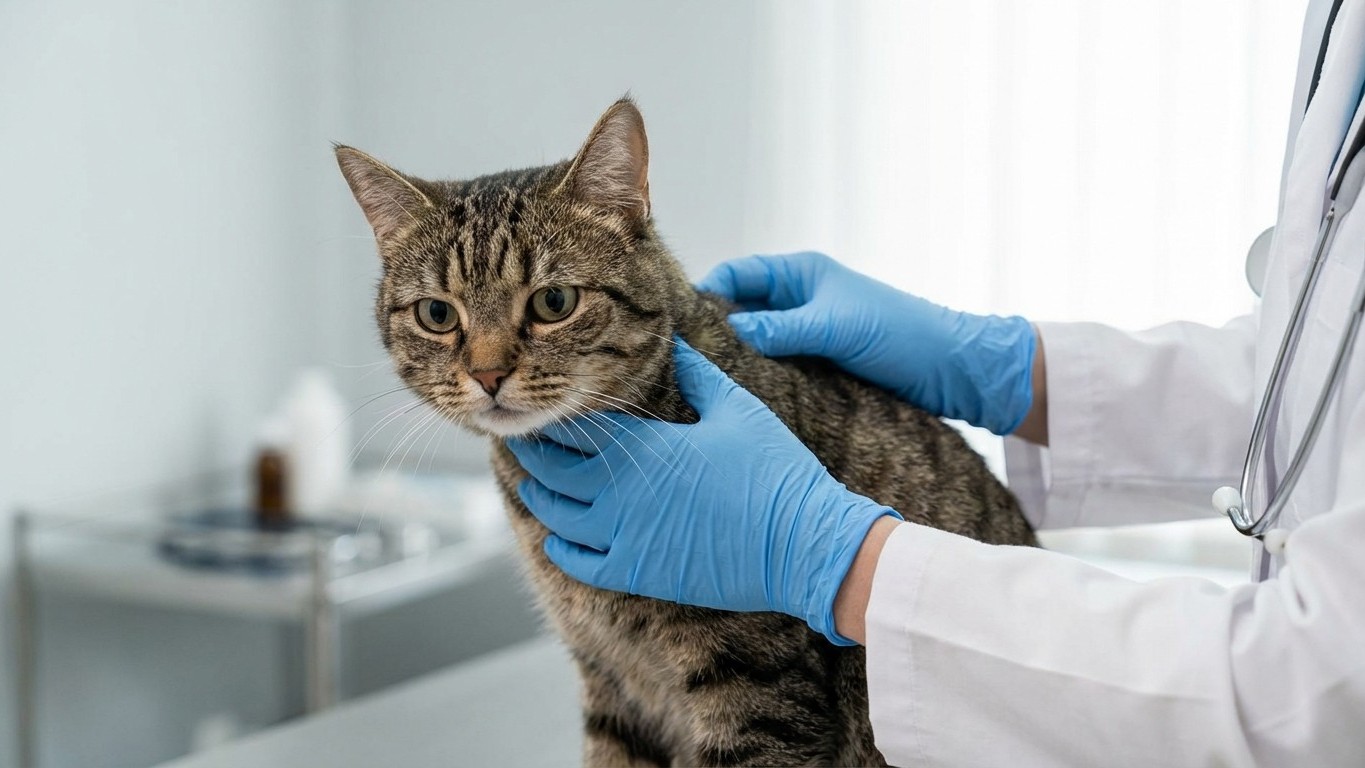
Every spring, cat owners across the UK reach for lavender oil, lemon sprays, and garlic remedies with the best of intentions. Natural. Gentle. Safe. The problem is that for cats specifically, many of these popular home remedies are neither safe nor effective, and in some cases, they’re actively dangerous. The very act of trying to protect your cat may be putting it at risk.
Key takeaways
- That calming lavender oil you’re using? It’s toxic to cats and they ingest it while grooming themselves
- 95-99% of fleas in your home aren’t on your cat—they’re in bedding and carpets, and natural oils only target the 1-5% of adults
- Garlic, apple cider vinegar, and diatomaceous earth either don’t work or cause serious organ damage in felines
Why cats are uniquely vulnerable to “natural” ingredients
Cats are not small dogs, and they’re certainly not small humans. Their liver is the key issue here. Cats are unable to metabolize many essential oils, which can lead to serious health problems. This metabolic difference is not a minor quirk; it’s a fundamental biological constraint that makes substances perfectly harmless to us acutely toxic to them. Cats lack certain liver enzymes that are crucial for breaking down many compounds found in essential oils. This metabolic difference means that substances that are relatively harmless to humans and dogs can be extremely dangerous for feline friends.
The oils that top the danger list? Tea tree, peppermint, citrus oils, eucalyptus, pennyroyal, and clove oil are especially toxic to cats and should never be used around them. However, all essential oils should be considered potentially dangerous for cats. Lavender is another one that catches people out. It smells calming, it’s everywhere in wellness culture, and it’s frequently recommended in online forums for cat flea prevention. Lavender is toxic to cats and can cause gastrointestinal upset.
The route of exposure matters less than people think. Essential oils can be ingested, inhaled, or absorbed into a cat’s skin. Cats groom themselves constantly, which means anything rubbed onto their fur will eventually end up in their mouths. And because they groom so methodically, even a product applied to bedding or a collar isn’t out of reach. Not only will this home remedy for fleas not work, but because your pets lick themselves, anything that you spray on them or on their bedding will eventually be ingested.
The signs of toxicity range from uncomfortable to genuinely alarming: cats’ livers lack the enzymes required to metabolize certain compounds found in essential oils, which can lead to organ damage. Inhalation of essential oil fumes in enclosed spaces can irritate a cat’s respiratory system, leading to coughing, wheezing, and difficulty breathing. Some essential oils can lead to neurological symptoms, including tremors, disorientation, excessive drooling, muscle weakness, and even seizures.
The remedies people reach for most, and the truth about each one
Garlic is a perennial favourite. The theory goes that feeding your cat garlic makes their blood less palatable to fleas, which sounds plausible enough. But it doesn’t hold up to scrutiny on either front. It has been suggested that feeding your cat garlic may make your pet less “palatable” to fleas, but cats are highly susceptible to the toxic effects of garlic. Therefore, garlic will not kill fleas on your cat, and you should never give garlic to cats, even topically. The Allium family, to which garlic belongs, is dangerous for cats: according to the Merck Veterinary Manual, garlic is three to five times more toxic than onion, and cats are the species most susceptible to developing toxicosis from ingesting large amounts.
Apple cider vinegar is another one doing the rounds on social media. It’s acidic, cheap, and feels satisfyingly wholesome. Using apple cider vinegar to kill fleas is not recommended because it is unsafe and doesn’t work. Forcing your pet to drink vinegar will do nothing to keep away fleas and ticks, and apple cider vinegar is not safe for your pet to consume. At best, it might briefly repel a few adult fleas. It won’t kill them, and it won’t touch the eggs or larvae.
Lemon spray follows the same pattern. While lemon juice can deter fleas, it’s not recommended for use on or near cats. Lemons contain essential oils and psoralens that are toxic. Coconut oil, meanwhile, is often marketed for its supposed flea-fighting properties. The reality? Coconut oil does nothing to repel fleas and ticks. Oil applied to your pet’s skin will only be effective at getting your floor and furniture greasy. The thin layer of coconut oil on their skin does not provide an effective barrier for these tenacious parasites.
Even diatomaceous earth, which at least does physically damage adult flea exoskeletons when applied to floors and carpets, becomes a problem when applied directly to cats. While diatomaceous earth can be used in the environment to kill adult fleas, do not apply it directly to your pet. It’s not effective for flea control when used in this manner, and it could potentially result in lung damage if inhaled. It can also cause gastrointestinal upset if ingested by dogs or cats.
Why even “repelling” isn’t enough, the flea life cycle problem
Here’s the part that trips up even the most well-meaning cat owner. Most natural remedies, on the rare occasions they do anything at all, only affect adult fleas. That’s a much smaller part of the problem than people realise. It is estimated that the fleas an owner sees on the pet represent only 1 to 5% of the fleas in the environment. That means that 95 to 99% of the fleas in a home are not on the pet, but in the carpeting, bedding, and upholstery.
“People forget that there are four life stages to a flea: the egg, larva, pupa, and adult. You need a medication that controls the entire life cycle,” says one vet. “Even if what you use kills the adult fleas, that isn’t control.” The flea life cycle is frankly impressive in its resilience. Flea pupae can lie waiting in their cocoon for up to two years. In the right conditions, the whole life cycle can be completed in as little as 15 days, which is why it’s so important to tackle all parts of the life cycle as quickly as possible.
Essential oils only repel adult fleas, leaving developmental stages like eggs, larvae, and pupae intact. A successful flea solution must target fleas of all life stages and disrupt their life cycle. Essential oils do not break the flea life cycle on their own, and therefore they are considered ineffective. In practice, this means that squirting lavender oil onto your cat every few days while feeling virtuous is, at best, doing nothing, and at worst, exposing your cat to toxic compounds while the infestation continues unchecked.
Many alternative remedies will not have been through the rigorous safety and efficacy evaluation required for veterinary-licensed products. Some of these compounds are potentially toxic to cats, and none are likely to be anywhere near as effective as a licensed product from your vet.
What actually works, and what you can do right now
The message from vets is consistent: prescription and over-the-counter flea treatments remain the most effective way to kill and prevent fleas on dogs and cats. That said, if you’re set on incorporating non-chemical elements into your approach, a few things can genuinely help. A flea comb, used daily, physically removes adult fleas and eggs from the coat. Flea combs let you easily catch adult fleas, flea dirt, and eggs in your cat’s coat. Washing bedding at 60°C, hoovering carpets and upholstered furniture thoroughly, and emptying the hoover bag outside are all genuinely useful habits that disrupt the environmental stages of the flea cycle.
The vet conversation is the most important step, and it doesn’t need to be an in-person appointment. Many UK practices now offer phone or online consultations for parasite prevention. According to the American Veterinary Medical Association, the most effective strategy for flea control is a combination of consistent flea medication and environmental management. Prescription spot-on treatments and oral preventatives work because they’re formulated to target the flea’s nervous system, breaking the life cycle rather than temporarily irritating individual adult fleas.
One nuance worth knowing: some products available off the shelf from supermarkets and shops may not be safe for use in cats, particularly those containing permethrin. This is a chemical used in some dog flea treatments that is acutely toxic to cats, so if you have a multi-pet household, checking labels is non-negotiable. Your vet, not a Pinterest board, is your most reliable source here. The irony of natural flea remedies is that the desire to avoid harm is exactly what ends up causing it.
Sources : vethelpdirect.com | petmd.com