
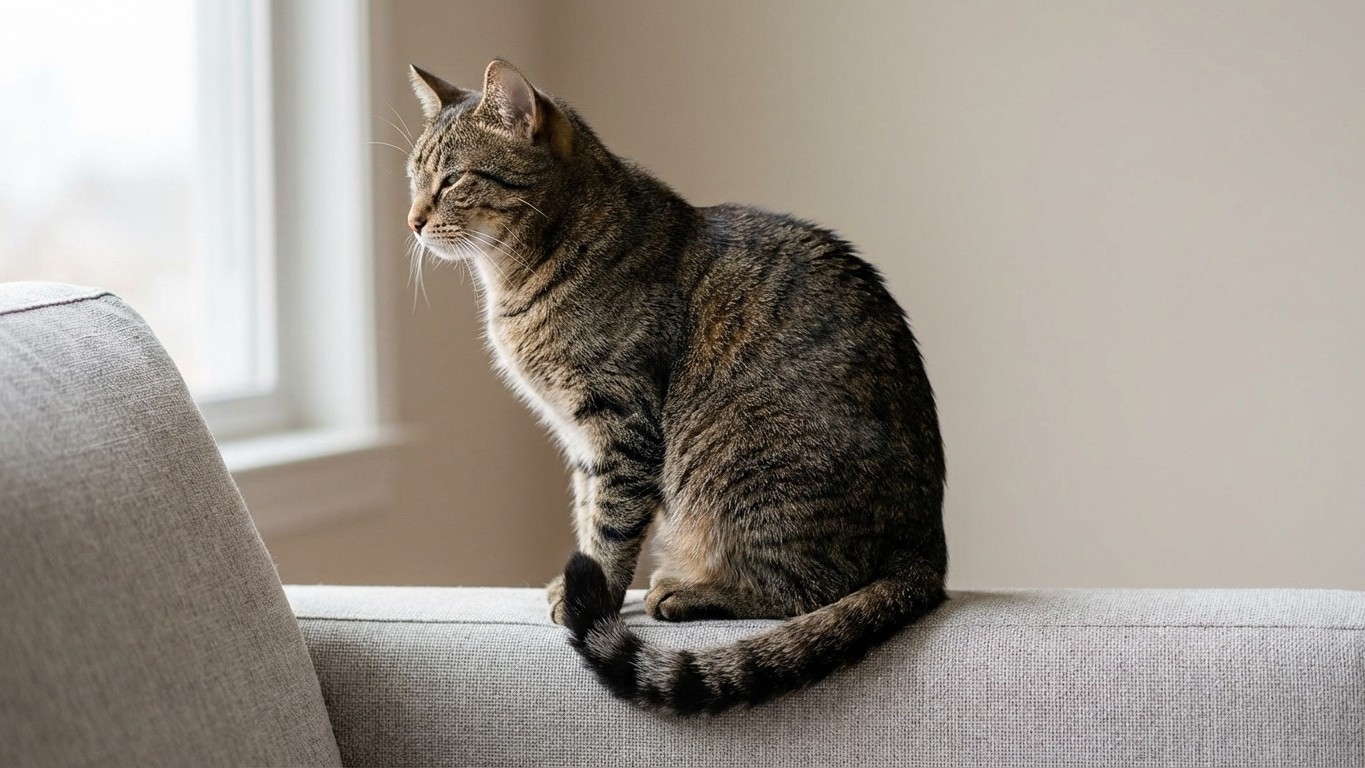
Cats are famously hard to read. They sleep through chaos, knock things off tables with apparent glee, and then sit just out of reach looking perfectly serene. For years, I watched my own cat, Biscuit, and assumed that a relaxed, lounging cat was a content cat. Then one afternoon, I noticed something about the way he was holding his tail, and Everything I Thought-my-cat-was-difficult-until-i-discovered-this-crucial-signal/”>Thought I knew started to unravel.
The tail is one of the most expressive parts of a cat’s body, and most of us simply aren’t trained to look at it properly. We glance at an overall posture and make a judgement. But a cat communicating through its tail is doing something quite precise, almost like semaphore, and once you learn the vocabulary, you start to realise how much You’ve Been Missing.
Key takeaways
- That calm-looking tail position you thought meant happiness might actually be signaling something very different
- A slowly swaying tail during petting isn’t contentment—it’s an escalating warning most owners completely ignore
- Understanding just a few tail signals could reveal why your cat behaves the way it does and transform your bond
The position that fooled me completely
The one that caught me out was the low, slightly tucked tail. Biscuit would sit on the sofa, looking perfectly calm, eyes half-closed, not hissing or growling. I read that as contentment. In reality, a tail held low or curled tightly beneath the body signals anxiety, submission, or Discomfort. He wasn’t relaxed at all. He was tolerating something, possibly the noise from a neighbour’s renovations, possibly something I’ll never identify. Either way, he was telling me something was wrong, and I was completely missing it.
A tail puffed up like a bottle brush is the one most people do recognise, the classic Halloween cat shape, indicating fear or aggression. But the subtler signals are where things get interesting. A tail held straight up, quivering slightly at the tip? That’s genuine excitement and affection, the feline equivalent of a wagging dog’s tail. Cats do this most often when greeting someone they love, and it’s one of the clearest “I’m happy to see you” signals in their repertoire.
What a slowly moving tail is actually saying
Here’s where it gets more complicated. A gently swaying tail while your cat is lying down is often mistaken for contentment, perhaps because we associate rhythmic movement with relaxation. In fact, a slow, deliberate swish typically means your cat is focused, mildly irritated, or overstimulated. If you’re stroking a cat and that tail starts moving with increasing tempo, pay attention. Many a hand has been bitten by an owner who ignored that escalating warning.
The speed and width of the swing matters too. A wide, slow sway in a cat watching a bird through the window is predatory focus, absorbed concentration rather than any emotional discomfort. A rapid, tight flick back and forth while you’re mid-stroke is something else entirely: stop what you’re doing, give the cat some space, and rethink your approach. Cats very rarely bite without warning. We just tend to miss the warnings they give us.
There’s a theory among animal behaviourists that many so-called “aggressive” cats are simply cats whose owners have chronically misread their signals. The cat repeatedly communicates that it wants to be left alone, gets ignored, and eventually resorts to the only method that reliably gets results. It’s a difficult thought, but probably an accurate one.
Reading the tail in context
No single body part tells the whole story. A tail needs reading alongside the ears, the eyes, and the overall posture. A cat with its tail low but ears forward and body relaxed might just be tired. A cat with the same tail position, flattened ears, and dilated pupils is genuinely stressed and might need intervention. Getting good at reading cats means learning to take in several signals simultaneously, which honestly takes practice.
The “question mark” tail, that cheerful upright curve at the tip, is one of the loveliest things to spot. Cats do this when they’re in a playful, inquisitive mood and feel comfortable in their environment. If your cat approaches you with a question mark tail, they’re essentially offering an invitation to interact. Accepting it with a bit of play or a gentle scratch under the chin will not go unrewarded.
Kittens are wonderfully expressive and will use the full range of tail positions from very early on. One study published in behavioural science literature found that kittens begin coordinating tail signals with other social cues by around five weeks of age, which suggests this communication system is deeply hardwired rather than learned. That said, every cat has individual quirks. Some breeds, like the Maine Coon, tend to be physically demonstrative in ways that differ from a more reserved Abyssinian. Getting to know your specific cat’s baseline is the only real shortcut.
What changed after I started paying attention
Once I started actually watching Biscuit’s tail rather than just his face, our relationship shifted. I caught the early signs of stress during fireworks season and made adjustments, a covered hiding spot, white noise, fewer visitors. I noticed the quivering greeting tail when I came home from trips away. I stopped stroking him past his tolerance point and started getting more genuine, relaxed contact in return. He didn’t change. I did.
There’s something quietly humbling about realising that your pet has been fluent in a language the whole time and you just hadn’t bothered to learn it. Cats have a reputation for being aloof and mysterious, but I’m increasingly convinced that reputation says more about human observation habits than it does about cats. They are communicating, constantly, with remarkable consistency. The question is whether we’re paying enough attention to hear them.
If you’re ever concerned your cat seems consistently anxious, in pain, or is behaving unusually, always speak to your vet. Some tail positions and behavioural changes can indicate medical issues, and a professional eye is always worth seeking out.