
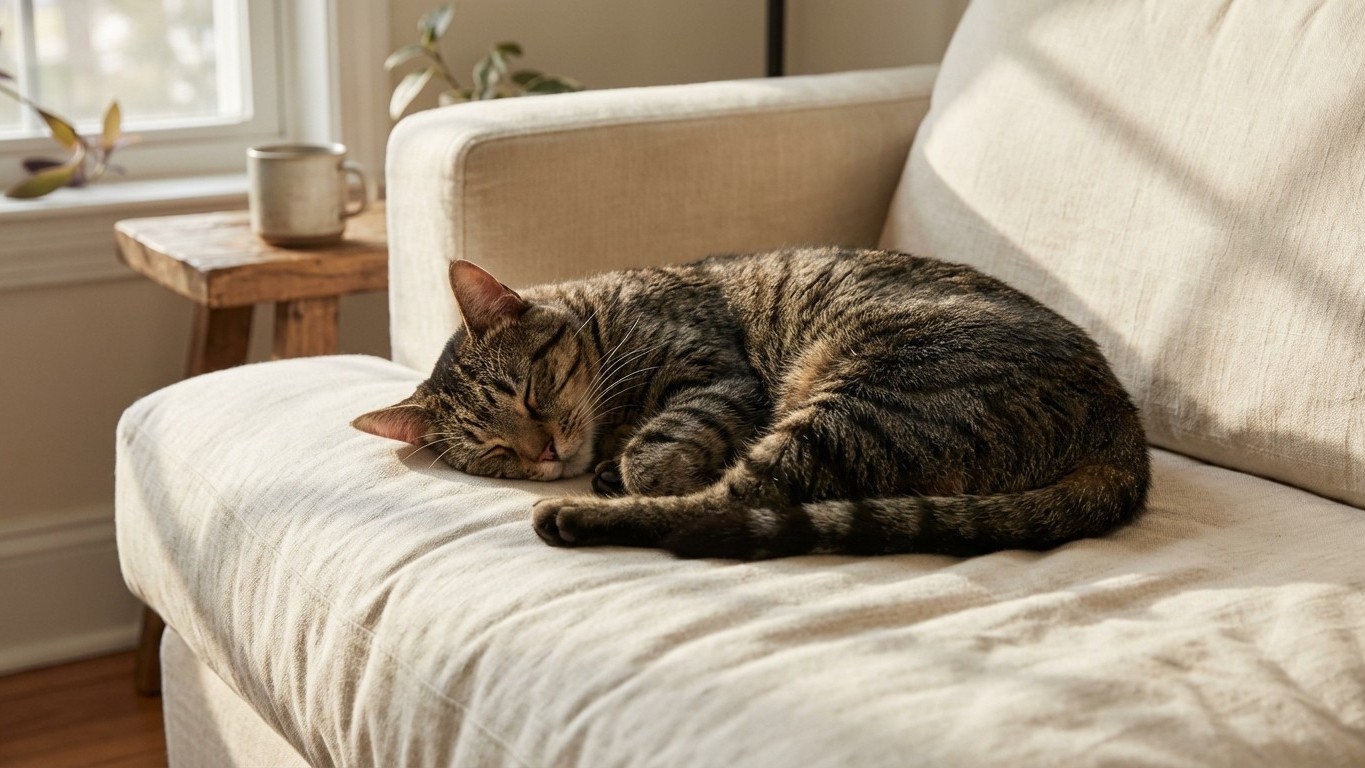
Your cat is not broken. Those long, languid stretches of daytime snoozing, the mid-afternoon staring into space, the early evening burst of chaos through the hallway, all of it is perfectly normal. But if you’ve been waking your cat up first thing in the morning because it feels kind and interactive, you may Actually-leave-your-cat-home-alone-veterinary-guidelines-for-2026/”>Actually be doing more harm than you realise. That one small daily habit, so well-intentioned, can quietly disrupt a feline sleep cycle that is nothing like your own.
Key takeaways
- Your cat’s sleep cycles are nothing like yours — and morning interruptions have bigger consequences than you realize
- That 5am yowling for breakfast? You may have trained your cat to do it by responding to early wake-ups
- The best gift you can give a sleeping cat isn’t affection — it’s letting them finish what their body desperately needs
Why Cat Sleep Is Not What You Think It Is
Cats are not nocturnal, exactly. They’re crepuscular, meaning their natural activity peaks fall around dusk and dawn. In the wild, these are the most productive hunting windows, low light, prey on the move, instincts fully engaged. The bulk of a cat’s day (and much of its night) is spent in recovery from these bursts, cycling through light sleep and deeper REM phases in patterns that bear very little resemblance to the consolidated eight-hour block humans aim for. Domestic cats sleep anywhere between 12 and 16 hours in a typical 24-hour period, with some older or particularly relaxed individuals pushing closer to 20.
The sleep itself comes in waves. A cat will drop into a light doze, twitch occasionally as if dreaming (they almost certainly are, research into animal sleep suggests REM activity in cats is structurally similar to that observed in humans), then rouse briefly, then settle again. These cycles are short, often 15 to 30 minutes long, and they stack across the day. Interrupting them repeatedly sends the cat back to square one each time, meaning it never reaches the deeper restorative phases that support immune function, memory consolidation, and overall wellbeing.
The Morning Wake-Up: Why It’s More Disruptive Than You’d Expect
Here’s where the habit creeps in. You get up at 7am. Your cat is curled into a perfect crescent on the sofa, and because you love it, you go over for a stroke and a chat. It’s warm, it’s lovely, it feels like connection. And sometimes your cat responds, a slow blink, a purr, perhaps a sleepy Stretch. You take this as an invitation. It isn’t, necessarily.
Cats who are repeatedly roused during dawn and early morning sleep are, in effect, being pulled out of what should be one of their deepest rest windows. Remember: dawn is the tail end of their natural active period. After a night of alert wakefulness (even if it looked to you like your cat barely moved), the early morning represents the body beginning a genuine, earned shutdown. Think of it like someone waking you just as you’ve finally drifted off after a long shift. Technically you responded, but you weren’t ready.
Over time, consistent early disruption can contribute to increased stress behaviours in cats. You might notice restlessness, more frequent vocalisation, Changes in appetite, or a cat that seems permanently on edge. None of these are dramatic enough to send most owners racing to the vet, which is precisely why the connection to sleep disruption often goes unnoticed. If your cat has been displaying any of these signs, a conversation with your vet is always the right first step, there are plenty of medical causes for behavioural changes that need ruling out before lifestyle adjustments are made.
What to Do Instead (Without Sacrificing the Bond)
The good news is that shifting this habit doesn’t mean withdrawing affection. Cats are far more receptive to interaction during their natural waking windows, and learning to read those signals makes every interaction richer for both of you. A cat that approaches you is a cat that has chosen engagement. One that you’ve prodded awake is… tolerating you. The difference matters, both for the relationship and for their health.
Watch for the spontaneous stretching and yawning that signals a cat finishing a sleep cycle of its own accord. That moment, when they open their eyes, have a good scratch, and begin to look around with interest, is the ideal time to offer fuss, play, or even just proximity. Some cats will seek you out during these windows on their own initiative, which is about as complimentary as a cat ever gets.
If you have a cat that wakes you at 5am demanding attention and food, the instinct is to respond immediately to stop the noise. Resist this where you safely can. Cats learn remarkably fast that a specific behaviour (sitting on your face, yelling, knocking things off shelves) produces a specific result (your eyes opening, your feet hitting the floor). Every time you reward that sequence, you reinforce it. Shifting mealtimes very gradually Earlier in the evening can help reduce the early morning urgency, as can puzzle feeders that extend the satisfaction of a meal and occupy that crepuscular energy spike before it reaches your bedroom door.
Creating a genuinely restful sleeping environment also helps. A warm, quiet spot away from morning light and household activity gives your cat somewhere they can actually complete those sleep cycles undisturbed. Many cats will use several different sleeping locations throughout the day, rotating based on temperature and noise levels, if you notice this behaviour, your cat is self-managing its environment quite cleverly.
There’s something worth sitting with here. We tend to project our own social needs onto cats, assuming that attention is always welcome and wakefulness is always preferable to sleep. But cats operate on entirely different terms. The most respectful thing you can offer a sleeping cat is simply to let it sleep. And honestly, a cat that comes to you rested, alert, and ready for play is far more rewarding than one you’ve coaxed out of slumber and who’s been blinking at you resentfully ever since. The question is whether your morning ritual is really for them, or really for you.