
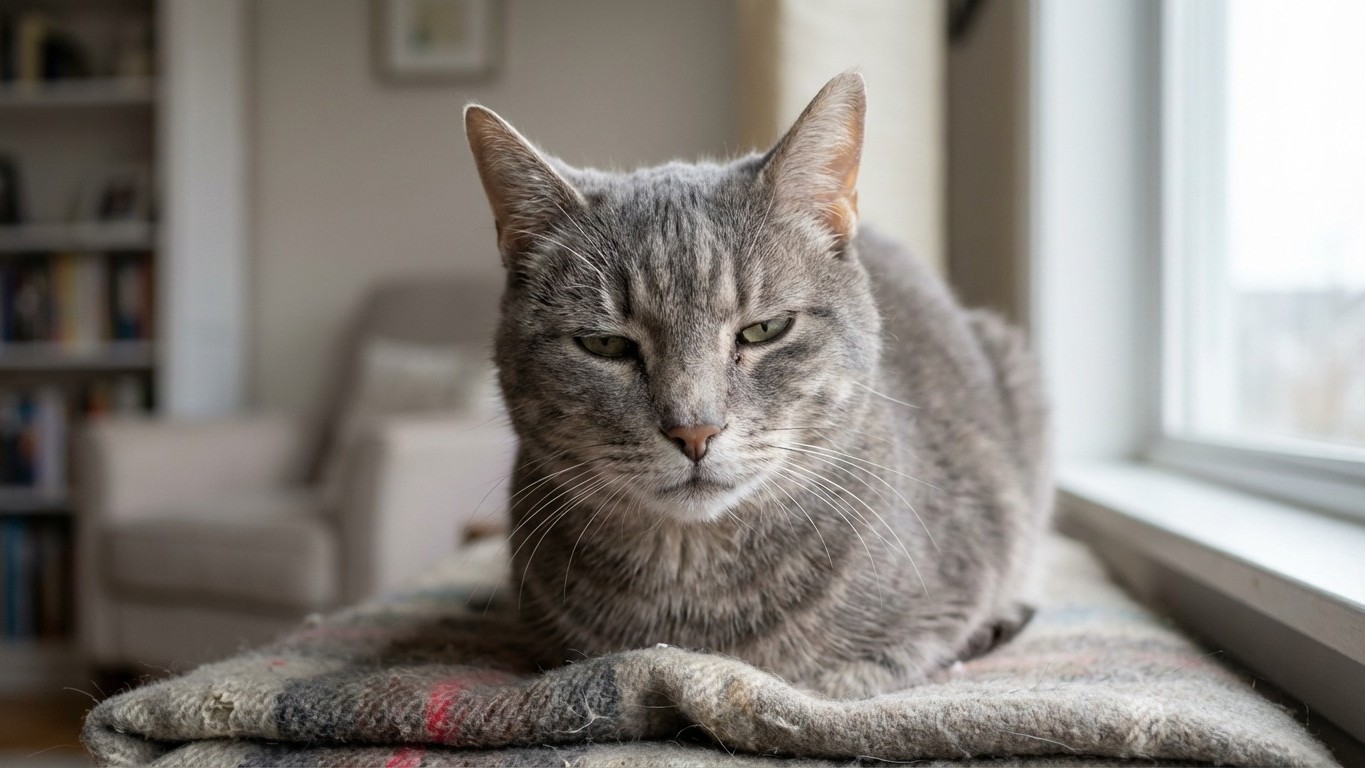
Cats are, by evolutionary design, expert deceivers. In the wild, showing weakness invites predators, so domestic cats have inherited a deeply ingrained instinct to mask pain and discomfort until it becomes almost unbearable. The result? Millions of British cat owners sharing their homes with a pet who is quietly suffering, and genuinely having no idea. Recognising the subtle Signals your cat sends when something is wrong could genuinely save their life.
Key takeaways
- Why your cat’s sudden aloofness or clinginess might not be personality—it could be pain
- The one litter tray change that can turn fatal within 24 hours if ignored
- How to spot feline arthritis before it becomes a crisis (hint: it’s hiding in their sleep)
The Myth of the “Low-Maintenance” Cat
There’s a cultural assumption in the UK that cats are largely self-sufficient, pop the food down, clean the litter tray, and they’ll sort themselves out. This idea does them a real disservice. Cats feel pain just as acutely as dogs do, and they experience anxiety, loneliness, and chronic illness, often without making a single sound that we’d recognise as a distress signal. A cat hiding under the bed isn’t being antisocial. A cat who’s Stopped jumping onto the sofa isn’t getting lazier with age. These are flags worth paying attention to.
One of the most commonly Overlooked signs of pain in cats is a change in grooming behaviour. A cat who suddenly becomes unkempt, with a dull coat or matted patches, may be Struggling to reach certain areas because movement is painful. Conversely, a cat obsessively over-grooming a specific spot is often responding to localised discomfort or nerve irritation. Both extremes matter. The middle ground, a cat who grooms themselves normally, is what you’re aiming for, so any significant departure from your individual cat’s routine is worth noting.
What Pain Actually Looks Like in Cats
Most people expect a suffering cat to vocalise loudly, cry, or limp dramatically. In reality, the signs are far quieter and easier to explain away. A cat sitting in a slightly hunched posture, with their weight shifted forward and their eyes half-closed, may be experiencing significant discomfort. Muscle tension around the face, particularly around the eyes and whisker pads, is something veterinary professionals are trained to assess using validated tools like the Feline Grimace Scale, a research-developed system that measures pain through subtle facial Changes.
Changes in litter tray behaviour are another frequently missed indicator. A cat who begins eliminating outside the tray, straining, visiting the tray more frequently, or producing unusually small or absent amounts of urine could be dealing with anything from a urinary tract infection to a life-threatening blockage. Male cats in particular are prone to urethral obstructions, which can become fatal within 24 to 48 hours if left untreated. Any sudden change in toilet habits should prompt an immediate call to your vet.
Appetite shifts deserve close attention too. A cat who skips a meal here and there might simply be being fussy, but a cat who refuses food consistently over 24 to 48 hours risks developing hepatic lipidosis (fatty liver disease), a serious condition that can develop surprisingly quickly in cats who stop eating. On the flip side, an increased appetite combined with weight loss could point toward hyperthyroidism, which is common in older cats and highly manageable when caught early.
The Behavioural Clues That Fool Even Devoted Owners
Personality shifts are perhaps the trickiest signs to interpret, because we tend to attribute them to mood rather than medicine. A cat who becomes suddenly aggressive when touched in a specific area is almost certainly reacting to pain at that location. A previously affectionate cat who withdraws and stops seeking contact may be managing chronic discomfort that makes physical interaction unpleasant. Equally, some cats in pain become unusually clingy, a less obvious presentation that’s easy to misread as sweet rather than symptomatic.
Sleep patterns are worth tracking. Cats sleep a lot under normal circumstances (anywhere from 12 to 16 hours a day), so it’s easy to dismiss increased lethargy as normal cat behaviour. A cat who seems reluctant to move, rarely changes sleeping position, or shows stiffness when rising from rest may be dealing with arthritis, which is far more prevalent in cats than many owners realise. Studies suggest the condition affects a significant proportion of cats over ten years old, though it often goes undiagnosed because cats compensate for joint pain so effectively.
Vocalisation changes cut both ways. Increased yowling in older cats, especially at night, can signal cognitive dysfunction (the feline equivalent of dementia), hyperthyroidism, or sensory decline. A cat who has become unusually quiet, meanwhile, may not simply be a calm individual, they could be conserving energy because something is wrong. Knowing your own cat’s “normal” voice and patterns is genuinely useful clinical information to share with your vet.
Building the Habit of Noticing
The practical takeaway here isn’t to become an anxious, hypervigilant owner who rushes to the vet at every sneeze. It’s about developing a baseline understanding of what normal looks and feels like for your specific cat, so that deviations register as signal rather than noise. Run your hands gently over your cat regularly, not just as affection, but as a way to notice lumps, weight changes, or areas your cat flinches away from. Watch how they move when they don’t know you’re looking. Notice whether they’re drinking more or less than usual.
Photograph or video any behaviour that strikes you as unusual. Cats tend to perform perfectly at the vet, which means a short clip of the limping or the straining or the glazed expression can make an enormous difference to what a vet is able to assess. If something feels off but you can’t quite articulate why, trust that instinct, owners who know their cats well are often the first to detect something genuinely wrong, even when they can’t name it yet.
There’s something quietly heartbreaking about an animal that suffers in silence because millions of years of evolution told it that showing pain was dangerous. Our cats live with us in safety now. The least we can do is learn their secret language.