
I’ve got solid information now. Time to write the article in Emma Hartley’s voice.
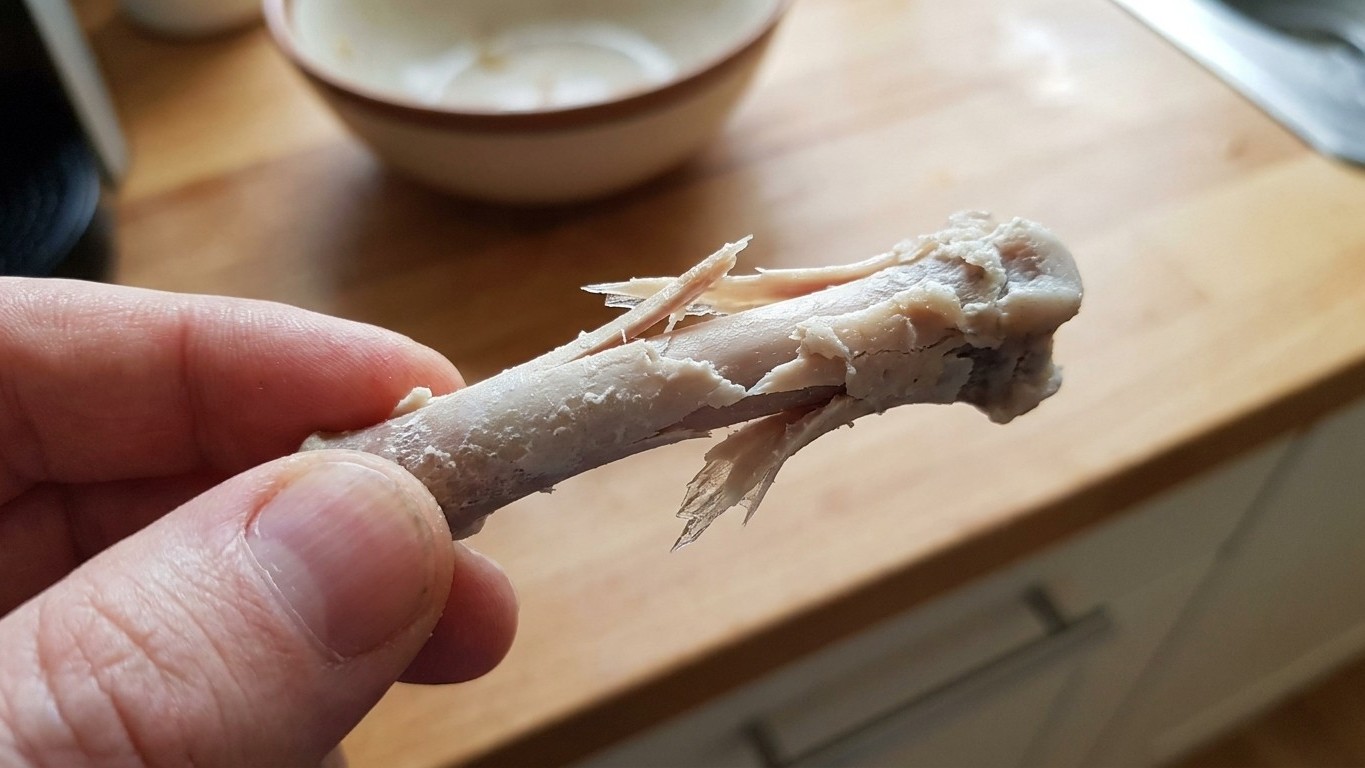
Grilled chicken bones left within paw’s reach are one of the most common ways cats end up on an emergency operating table, and the danger has nothing to do with size or greed. It’s chemistry. Cooking strips the collagen and moisture out of bone, turning something naturally flexible into a brittle, glassy structure that shatters into needle-sharp shards the moment a cat’s molars close on it.
That’s the bit most owners never learn until it’s too late. A raw chicken bone bends and crushes under pressure. A cooked one snaps like a dry twig, and the resulting splinters are exactly the shape and sharpness you’d expect from broken glass, thin, rigid, and pointed at both ends.
Key takeaways
- Heat chemically transforms bone into brittle splinters sharp enough to puncture a cat’s stomach or intestines
- Symptoms may not appear for up to 72 hours, creating a hidden danger window in your cat’s abdomen
- One simple habit—disposing bones in a sealed bin instead of leaving them accessible—eliminates this specific risk entirely
Why cooking turns bone into a weapon
Heat destroys the structural integrity of bone through collagen denaturation and mineral matrix embrittlement. In practical terms, the scaffolding that once let bone flex under a predator’s bite disappears in the oven or on the barbecue. Cooked bones fracture into sharp, needle-like splinters that can lacerate the oesophagus during swallowing, perforate the stomach, or puncture the small intestine, and the consequence of that puncture is peritonitis, an infection of the abdominal cavity that spreads with frightening speed.
Compare that to a raw bone from prey: raw bone structure, held together by collagen and mineral cross-links, remains stable at body temperature and throughout the cat’s digestive tract. This is precisely why wild and feral cats can crunch through small rodents, bones included, without shredding their insides, while a domestic moggy chewing on Sunday’s roast carcass is playing a genuinely different game. I’ll admit this surprised me the first time I read the veterinary literature: it isn’t that cats can’t handle bone, it’s that we’ve changed the bone into something their bodies were never built to process.
The clock starts ticking the moment they swallow
What makes this particular hazard so sinister is the delay. A cat can trot off looking perfectly normal after swallowing a splinter, purring on your lap that evening as if nothing happened. The sharp edges of cooked bones may perforate the oesophagus, stomach, or intestines, leading to internal bleeding and infection, and these injuries may not be immediately visible, developing over several hours or days. Some sources note it can take up to 72 hours for signs of an obstruction or perforation to appear, which is a long window for something potentially fatal to be brewing silently in the abdomen.
Watch for the warning signs rather than waiting for a dramatic collapse. Lethargy, abdominal pain, vomiting, bloody stool, and loss of appetite are the red flags, and a perforation is a veterinary emergency that often requires surgery, with delayed treatment risking sepsis or death. Smaller-bodied cats and kittens carry a higher risk simply because there’s less room for error inside a narrower gut. Cats with smaller bodies are especially vulnerable, as their digestive tracts are more easily damaged.
I always tell owners: don’t wait for blood in the litter tray before acting. If you even suspect your cat has swallowed a chicken bone, don’t wait. Call your vet and describe the situation in detail. Fast action could save your cat’s life. Vets will typically want to know what was eaten, how much, how long ago, and whether it was cooked or raw before deciding whether an X-ray or exploratory scan is needed.
What actually happens on the way through
The injury pathway isn’t limited to one dramatic stab wound. Sharp fragments can catch anywhere along the route. Bones can get stuck in the oesophagus, causing choking and difficulty swallowing, or larger pieces can cause a blockage in the intestines, preventing normal digestion and bowel movements. Sometimes it’s not one clean puncture but a slow, grinding irritation as jagged edges scrape against delicate tissue with every peristaltic contraction, a bit like swallowing broken crockery and hoping gravity does the rest.
If surgery does become necessary, the outlook depends heavily on how much time has passed. Vets generally agree that the most significant risk is a blockage or a tear in the gastrointestinal tract, either of which would require major surgery, and that surgery carries its own risks. Left untreated, the infection that follows a perforation can turn septic astonishingly fast, which is exactly why “wait and see” is the wrong instinct here.
What to actually do differently this weekend
None of this means chicken is off the menu. Plain, boneless, unseasoned cooked meat remains a perfectly good occasional treat for most cats. The fix is boring but effective: bones go straight into a lidded bin, not the open kitchen caddy, and definitely not left on a plate “for later” while the cat has the run of the house. Barbecue season is particularly risky because carcasses sit around on garden tables far longer than they would indoors, and a cat’s nose for roasted fat is remarkably good.
If you do catch your cat mid-crunch on a bone, don’t try to make them sick yourself. Vets consistently warn against inducing vomiting at home, because it can sometimes do more harm than good, especially if sharp bone fragments are involved. Call your vet instead, describe exactly what was eaten and when, and let them decide whether monitoring at home or an immediate check-up is the safer route. It’s a one-second habit to bin that bone properly. The alternative is a very long, very expensive night at the emergency vet, and that’s assuming you catch the symptoms in time.
Sources : dialavet.com | pawkeen.com