
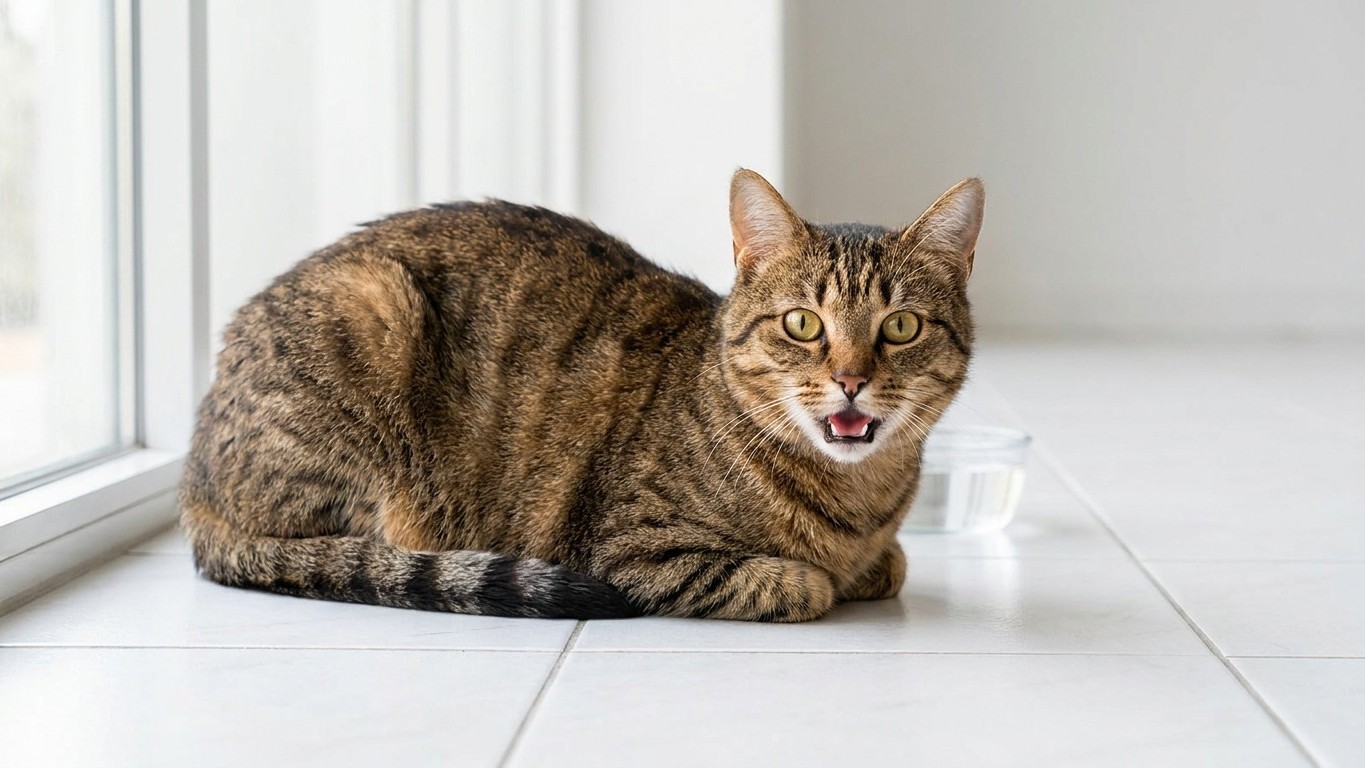
Panting with an open mouth is normal for a dog on a warm walk, but for a cat it’s a red flag that vets say demands immediate attention. Cats rarely pant unless they’re overheated or stressed, and unlike dogs, they don’t normally pant to cool down, so this behaviour should always raise concern. If your cat has been lounging in a sunny conservatory or shut in a warm car and starts breathing with its mouth open, that’s not a sign of contentment. It’s a distress signal, and During a Heatwave it can escalate within minutes.
Key takeaways
- A cat panting with its mouth open isn’t relaxation—it means their cooling system is already failing
- Heatstroke in cats can worsen from warning signs to critical emergency in just minutes, not hours
- Even after recovery, organ damage can develop silently for days, requiring close vet monitoring
Cats and dogs cool down in completely different ways
Dogs pant constantly because it’s their main cooling system. Cats have a different toolkit entirely, and it’s a far less efficient one when temperatures spike. Cats have a very limited ability to sweat, so instead, they control their temperature by licking themselves and seeking shade on warm days. Saliva evaporating off the fur mimics sweating, which is why an Overheating cat often grooms obsessively rather than pants.
There’s also a nose-shaped detail most owners never think about. Cats get rid of significant amounts of body heat through their nose as they breathe out, but brachycephalic (flat-faced) cats such as Persians struggle to release heat this way because they have much less space inside their nose, putting them at a much higher risk of heatstroke, even on seemingly cool days. That’s genuinely one of the more surprising facts in feline physiology: a squashed face isn’t just an aesthetic quirk, it’s a genuine thermoregulation handicap.
According to Dr Gary Weitzman, DVM, CEO of the San Diego Humane Society, “Cats don’t actively pant to cool off like dogs do,” though he notes they may do it briefly after intense exertion, stress or genuine Overheating. So panting in a cat isn’t a broken thermostat working as designed. It’s the system already failing.
Reading the signs: from mild heat stress to a genuine emergency
Not every instance of panting means your cat is dying, but the context matters enormously. A kitten who’s just finished a mad five-minute chase after a feather toy might pant briefly and recover within a quarter of an hour once calm. That’s very different from a cat panting after simply lying in a warm room. Early signs can be subtle: your cat may seem restless, seek cool surfaces, or breathe faster than usual. Watch closely at this stage, because early signs include seeking cool surfaces like tile floors or sinks and increased grooming, with mild low energy, slightly faster breathing, and warm ears.
Once panting itself appears, treat it as an amber-to-red warning. More concerning signs include panting, drooling, bright red gums, vomiting, diarrhoea, weakness, wobbliness, and acting confused, while severe heatstroke can cause collapse, seizures, pinpoint bleeding, trouble standing, or unconsciousness. Gum colour is one of the quickest checks you can do at home: gently lift your cat’s lip. Bright red gums indicate that their body is overheating, while pale gums suggest poor blood circulation, both of which are severe signs of heatstroke. On the numbers, veterinary sources put normal cat body temperature between 38.1 and 39.2°C, with anything above 40°C putting them at risk of heatstroke, which can cause severe dehydration, seizures, blood clotting problems, organ damage, coma and death. This isn’t a condition that develops gently over hours either; several vets stress that heatstroke in cats can worsen in a matter of minutes, making it a time-sensitive emergency that can escalate before many pet owners realise what’s happening.
Which cats are most vulnerable in a heatwave
Some cats carry a much higher risk profile than others, and it’s worth knowing where your own cat sits on that spectrum. Obese, long-haired, old, young and brachycephalic/flat-faced cats (such as Persians) are most at risk of developing heatstroke because they find it harder to cool down. A fluffy Maine Coon basking on a windowsill, or an elderly cat with a heart condition dozing in a hot spare room, is far more exposed than a lean, short-coated moggy with free run of a shaded garden. Owners of British Shorthairs, Persians and Exotics in particular should keep an eye out during any prolonged UK heatwave, since these breeds already struggle with normal heat dissipation before you even factor in a 30°C afternoon.
What to actually do if you see it happening
The moment you notice panting, don’t wait to see if it passes on its own. Move your cat somewhere cool and shaded straight away, ideally a tiled bathroom or a room with a fan, and offer fresh water without forcing them to drink. Vets are consistent on one point: avoid ice or very cold water on the skin, since using ice-cold water, ice packs, or forcing them to drink can lead to shock or other complications. Damp towels on the paws, belly and ears, replaced as they warm up, are safer and just as effective. If the panting doesn’t settle within about fifteen minutes, or if you spot drooling, red gums, vomiting or wobbliness alongside it, phone your vet immediately rather than waiting for opening hours. The faster your cat is cooled down, the better their chance of recovery.
One detail owners often miss: even a cat that seems to bounce back after a scare needs watching for days afterwards. Once your vet is happy for them to go home, you will need to watch them closely and let your vet know straight away if they deteriorate or develop symptoms such as vomiting, diarrhoea, confusion, increased thirst, or reduced appetite. Kidney damage from heatstroke can be a slow burn, showing up quietly days after the temperature itself has returned to normal, so don’t assume the danger has passed just because the panting has stopped.
Sources : rock-hill.carolinavet.com | pvecvets.com