
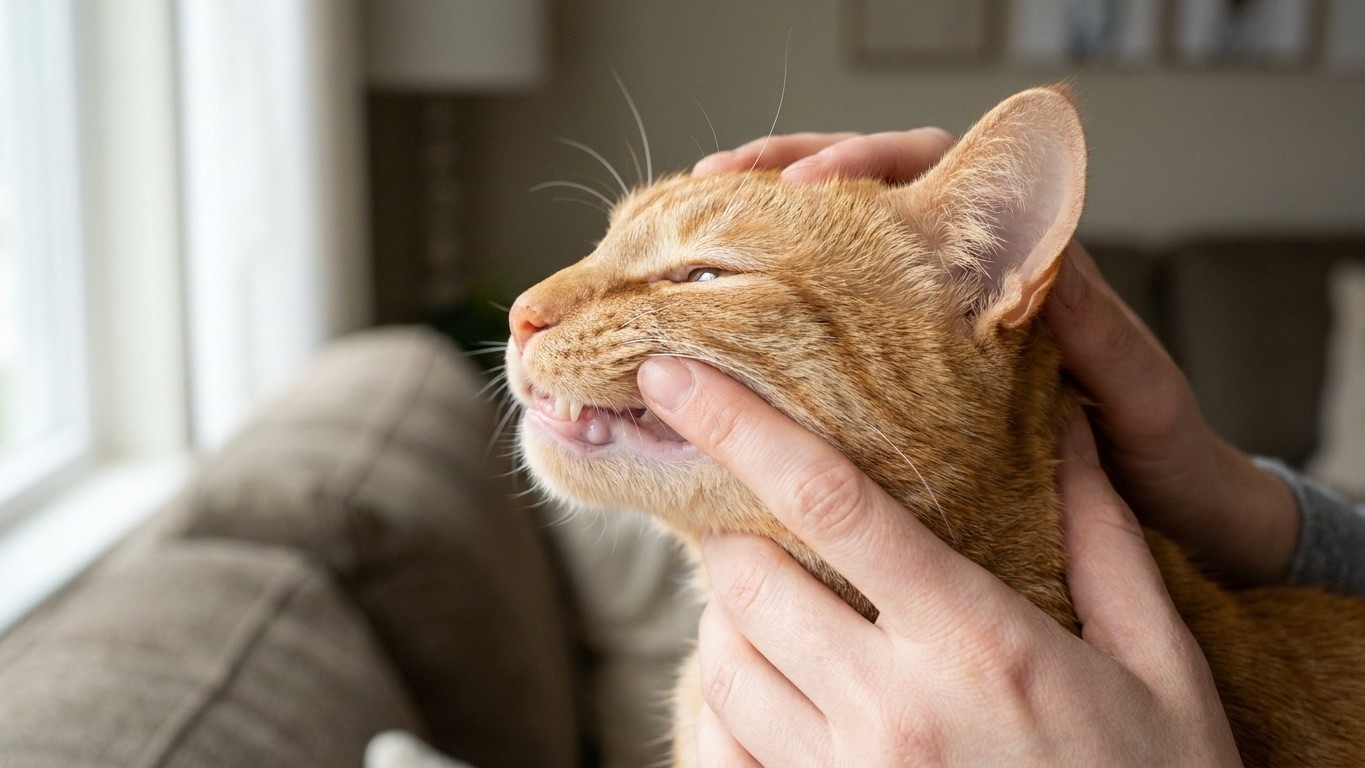
Cats are famously good at looking perfectly fine when something is quietly going wrong inside them. A cat sprawled flat on cool bathroom tiles on a warm afternoon is easy to dismiss, just a hot day, just a comfortable spot, just typical feline eccentricity. But there are times when that apparently harmless pose is the body’s way of waving a white flag, and the gums are where the truth lives.
Key takeaways
- Your cat’s gum color is a direct window into their circulation and oxygen levels—but few owners know to check it
- Kidney disease in cats progresses invisibly for months before symptoms appear, and pale gums may be the first visible warning sign
- A cat seeking cold floors while eating less and acting quieter might not be hot—they could be anemic and running low on red blood cells
Why Cats Seek Cold Floors, and When It’s Fine
One of the most common reasons cats suddenly switch to sleeping on the floor is temperature control. During warmer months, cats naturally seek out cool surfaces like tile, hardwood, or laminate flooring to help regulate their body temperature. They look for cool places such as tiled floors, shady spots, or under furniture to cool off, and by stretching out and increasing their body surface area, they can release more heat. In hot weather, cats often reduce their activity and spend more time resting or sleeping. None of this, on its own, is a red flag.
The behaviour only becomes a concern when context shifts. Sudden changes in behaviour can sometimes signal discomfort or health issues, such as fever or pain. The cat who has always been a sofa creature but has spent three consecutive afternoons glued to the kitchen floor in July is doing something different from a cat who casually rotates between spots. Changes in resting spots are not immediately cause for concern unless accompanied by other signs of illness such as lethargy, vomiting, or changes in appetite. The word “unless” is doing a lot of work in that sentence.
If your cat is seeking a cooler area to lie down, is panting, seems uncoordinated, or sluggish, or is having changes in its behaviour, then your cat is probably too hot. That describes heatstroke, an acute and obvious emergency. But a cat who simply seems quieter than usual, eating a little less, less interested in play, and gravitating to cold floors week after week? That is a different and far more insidious picture entirely.
What the Gums Actually Tell You
A cat’s gums are typically a healthy shade of light pink, and when you discover that your feline friend’s gums have turned white or pale, it’s natural to feel alarmed. This seemingly minor alteration in colour could signify a range of health-related concerns, from dehydration to other conditions, like anaemia or heart disease. The gums are, in effect, a window onto circulation. Gum colour reflects how well blood circulates and how much oxygen flows through a cat’s body. Healthy tissue needs steady oxygen and proper hydration. When something disrupts that balance, the gums change shade.
Checking them takes under a minute and requires no equipment whatsoever. Choose a calm moment, such as after a meal or during a relaxed cuddle. Place the cat on a stable surface and keep the body supported to reduce squirming. Gently lift the upper lip on one side to expose the gum line above the teeth. Look at the colour and moisture level, aiming for a light pink tone and a slightly glossy surface. Then go one step further with the capillary refill test: press your fingertip against the gum until it blanches white, then release. Count the seconds until the colour returns to pink. A healthy capillary refill time (CRT) is one to two seconds. A delayed CRT of more than four seconds can indicate dehydration, shock, or poor circulation and should be treated as a medical concern.
The colour spectrum matters enormously. When your cat’s gums are pale or white, it can indicate that there is not enough oxygen in their blood, their circulation is poor, or they have anaemia, a reduced number of red blood cells. Blue or purple gums can indicate a lack of oxygen in the blood, which could be due to respiratory distress, heart disease, or a neuromusculoskeletal issue. This is a medical emergency that requires immediate veterinary care. Yellow gums can be a sign of jaundice, which occurs when there is a buildup of bilirubin in the blood, and can result from liver disease, haemolytic anaemia, or bile duct obstruction. If you see white, yellow, or blue gums, always assume the situation is an emergency, regardless of your cat’s behaviour.
The Slow Slide That Goes Unnoticed for Weeks
Here is where the story gets uncomfortable for cat owners, because the scenario of “weeks of subtle decline before the penny drops” is not a rare one, it is almost characteristic of certain conditions. Cats are skilled at hiding discomfort, so visible gum changes often indicate that a condition has already progressed. The floor-lying, the reduced appetite, the slightly dull coat: each one is easy to explain away individually.
In the early stages of chronic kidney disease (CKD), it is very common for cats to show no obvious clinical signs, as their body is able to compensate for the decrease in kidney function. The kidneys have a large amount of spare capacity, so at least 66% of both kidneys need to be dysfunctional before clinical signs are seen. In many cases this means that the damage to the kidneys has been occurring over a number of months or years before failure is evident. Early signs such as weight loss and poor coat quality are often dismissed as normal ageing changes.
The kidneys normally produce a hormone known as erythropoietin, which is vital in the production of new red blood cells. Cats with CKD produce less of this hormone, leading to anaemia. Lack of red blood cells will cause cats to feel very lethargic, have a poor appetite, and have pale or white gums. Clinical signs of cats with anaemia of CKD include lethargy and social isolation, including hiding and decreased owner interaction. That cat on the cold tiles, strangely quiet, not quite himself for weeks on end? Anaemia linked to kidney disease is one explanation that fits the picture precisely, and it arrives quietly, in increments, until one day the gums are visibly wrong.
Kidney disease is far from the only culprit. Anaemia in cats can occur because of blood loss, autoimmune conditions, or bone marrow issues. Blood loss can occur because of trauma, internal bleeding, or even heavy parasite infestations. Fleas, ticks, and hookworms are examples of parasites that can cause anaemia. Heart disease, too, produces similar pictures: cats with heart disease may have poor circulation or trouble properly oxygenating their blood.
What to Do Right Now
To become better at monitoring your cat’s health, incorporate a gum check into your weekly routine. This allows you to catch issues early. Also, desensitises your cat to mouth handling. For senior cats especially, those aged seven and over, checking every few days is advisable, as they are at higher risk for dental resorption and systemic organ decline. Make it part of the same routine as checking food and water levels, thirty seconds, once a week, and you will build a reliable baseline for what your individual cat’s gums look like when well.
If your cat’s gums are very obviously pale or white, and especially if other abnormal symptoms of illness are present, this should be treated as a medical emergency. A life-threatening condition may be present. Always consult a vet promptly if you notice any gum colour outside the normal pink range, never try to guess or wait it out. When you bring your cat to the vet with a concern about pale gums, the vet will fully examine your cat and combine the appearance of the gums with other parameters like heart rate, respiratory rate, temperature, and energy level. If a medical concern is present, your vet will advise further testing with bloodwork. Bloodwork checks for the presence of anaemia, infection, and the function of major organs like the liver and kidneys.
One fact worth keeping in your back pocket: cats with severe anaemia or blood loss may have very cold ears, paws, and a cold tail tip due to poor circulation. So a cat who feels oddly cold to the touch despite normal room temperature, and who has been choosing cold tiles for weeks, may actually be running low on circulating red blood cells rather than seeking relief from heat. Two seemingly opposite observations, one shared underlying cause, which is exactly the kind of nuance that a quick gum check can start to unravel.
Sources : petscare.com | felinediabetes.com