
The summer barbecue is one of Britain’s great communal rituals. The sausages are sizzling, the patio chairs are out, and your cat is weaving between your legs with that very specific expression that means I will love you forever if you give me that pork rib. It feels like a kindness. In reality, those fatty leftovers can trigger something deeply serious inside your cat’s belly, and the ultrasound scan is often when the full picture finally lands.
Key takeaways
- Barbecue leftovers can trigger pancreatic inflammation that spreads silently through a cat’s body
- Cats hide their symptoms so well that serious damage may already be done before you notice anything is wrong
- The ultrasound scan reveals how one fatty meal can ignite inflammation across three organs simultaneously
What actually happens inside the pancreas
The pancreas is a small glandular organ located below the stomach that produces the hormones insulin and glucagon, as well as digestive enzymes essential for breaking down nutrients in the small intestine. Under normal circumstances, those enzymes stay dormant until they reach the gut. The problem starts when something disrupts that neat arrangement.
When a cat eats a high-fat meal, the pancreas can become inflamed and begin to leak digestive enzymes, a process akin to the organ digesting itself. Abnormal release and activation of digestive enzymes like lipase can lead to pancreatic inflammation, tissue damage, toxin release, and damage to other organs such as the liver. This is pancreatitis, and in cats, it can escalate with alarming speed from a mild episode to a life-threatening crisis.
Pancreatitis in cats is divided into two categories: acute (sudden) or chronic (ongoing), and mild or severe. The acute form is what tends to follow a single dietary indiscretion, and it is the version most likely to send you rushing to an emergency vet on a Bank Holiday weekend.
The deceptive calm before the vet visit
Here is the part that catches most cat owners off guard: the symptoms are so variable that an owner can miss a mild bout of pancreatitis entirely, but the damage has already begun. Dogs with pancreatitis will often vomit dramatically and hunch over in obvious pain. Cats are rather more stoic about the whole thing.
For cats, the signs may be vague, lethargy, anorexia, weight loss, and jaundice, where the skin turns yellow. A cat that simply seems “a bit off” and goes off her food for a day or two may easily be attributed to a stomach upset or just general feline sulking. The danger is that this apparent calm masks a cascade of internal inflammation.
There is also a sobering reality for owners who have been sharing titbits for years without apparent consequence. Even if a cat has regularly received table food or fatty foods, an adverse reaction can happen at any time. Many patients have received table scraps for an extended period and were fine, then one day, their pancreas decided it had had enough. Routine and tolerance are not the same as safety.
The BBQ context makes this especially tricky. Barbecue foods contain a lot of fat and salt, and around these occasions, most meat has been marinaded, grilled over high heat, and often contains butter and seasoning, which can trigger pancreatitis in pets. Add to that the sauces: ingredients like onions and garlic found in many marinades can cause severe poisoning, leading to symptoms such as lethargy, drooling, or even collapse. Both onion and garlic can cause severe damage to the red blood cells in cats, and garlic can be up to five times more toxic than onions, with the dried form typically used in BBQ sauce being more concentrated than the fresh one.
What the ultrasound reveals, and why diagnosis is complicated
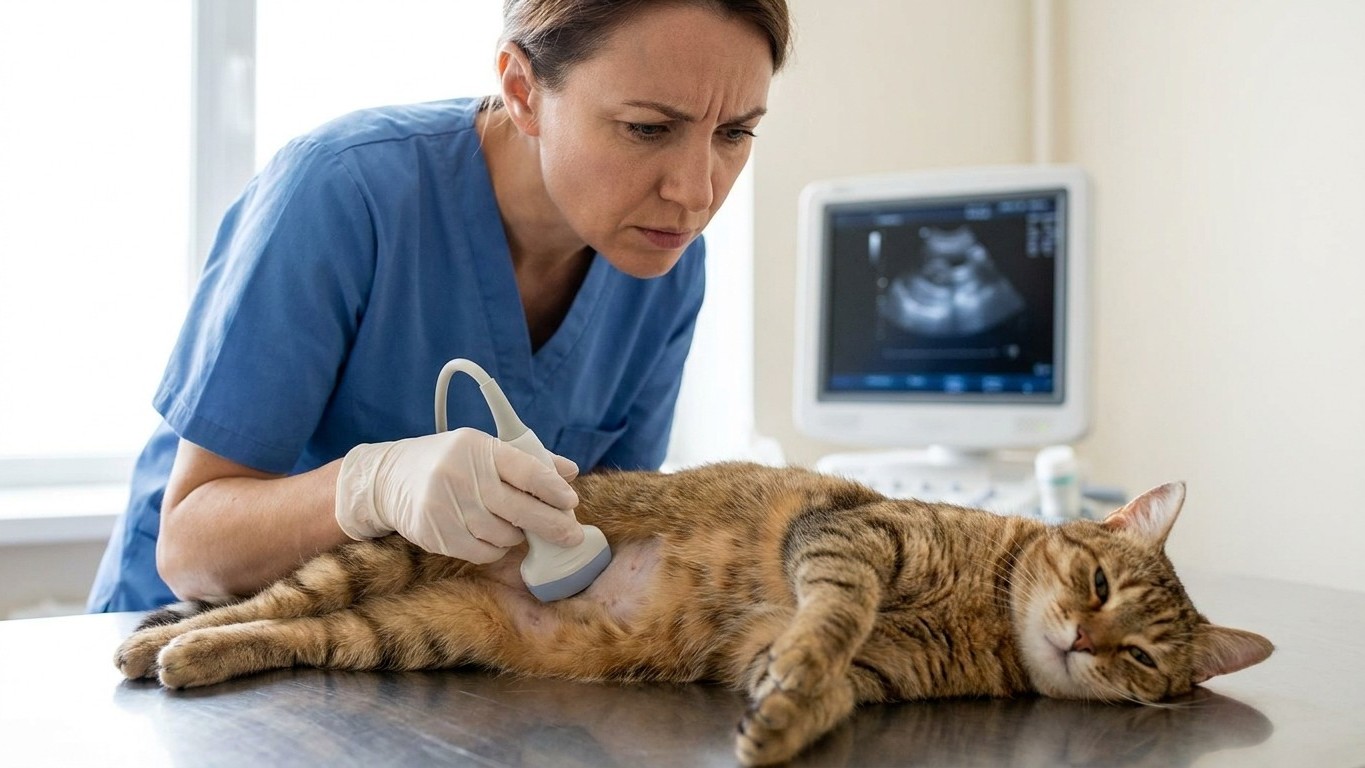
That moment in the consulting room, watching the vet move a probe across your cat’s shaved belly, is where the reality of the situation tends to solidify. Ultrasound examination by an experienced veterinarian can identify changes to the pancreas in up to two-thirds of cats with pancreatitis, including pancreatic inflammation, inflammation of surrounding tissue, pancreatic enlargement, or fluid surrounding the area.
The scan, though, is only part of the picture. There is a more specific blood test available called feline pancreatic lipase immunoreactivity (fPLI), which helps confirm what the ultrasound suggests. Sometimes a pet’s pancreas might look normal on ultrasound while the specific blood test shows elevated levels indicating pancreatitis, on the other hand, a pet with abnormal ultrasound results might still have normal lipase levels. Diagnosis, requires piecing together several clues at once.
And what the scan can also reveal is how far beyond the pancreas the problem may have spread. Triaditis is the simultaneous inflammation of the pancreas, liver and bile ducts, and intestines (IBD), it occurs because these organs share a common duct in cats. Triaditis has been reported in 50 to 56% of cats diagnosed with pancreatitis and 32 to 50% of those with cholangitis or inflammatory liver disease. One fatty barbecue meal can, in the right (or rather wrong) set of circumstances, set off a chain reaction across three organs simultaneously.
Treatment and what comes next
The four main goals of treatment for feline pancreatitis are the management of dehydration, nausea, pain, and nutrition. The most common approach is hospitalisation with IV fluids to correct dehydration quickly and restore electrolyte balance, alongside pain medications and anti-nausea medications.
Getting your cat eating again is not just a comfort measure, it is medically urgent. Studies have shown that the earlier a cat gets back to eating, the better the prognosis for a good recovery. Proper nutritional therapy not only helps cats recover more quickly from pancreatitis but prevents other complications of prolonged anorexia, such as hepatic lipidosis — a secondary liver condition that can develop when a cat refuses food for even a few days. Mild cases may improve in a few days, while severe pancreatitis often requires weeks of careful management and follow-up.
The practical takeaway for every summer gathering is straightforward. Not all cases can be prevented, but proactive care lowers your cat’s risk, provide a consistent, balanced diet made for cats, avoid fatty scraps and human foods, and stick to pet-safe treats. Cooked meat bones also pose a separate threat, as they tend to splinter and can lead to punctures in the digestive tract or choking if small bones get stuck. If you want to include your cat in the barbecue spirit, grilling a small portion of plain fish without any seasonings can be a safer treat.
One last thing worth knowing: there is no age, sex, or breed predisposition for pancreatitis in cats. Any cat, regardless of background, can develop it. The vet reading that scan is never delivering a predictable verdict, which is precisely why the moment carries such weight, and why what goes into your cat’s bowl at the next barbecue matters far more than it might seem in the moment.
Sources : mtshastavet.com | hollymeadvet.com