
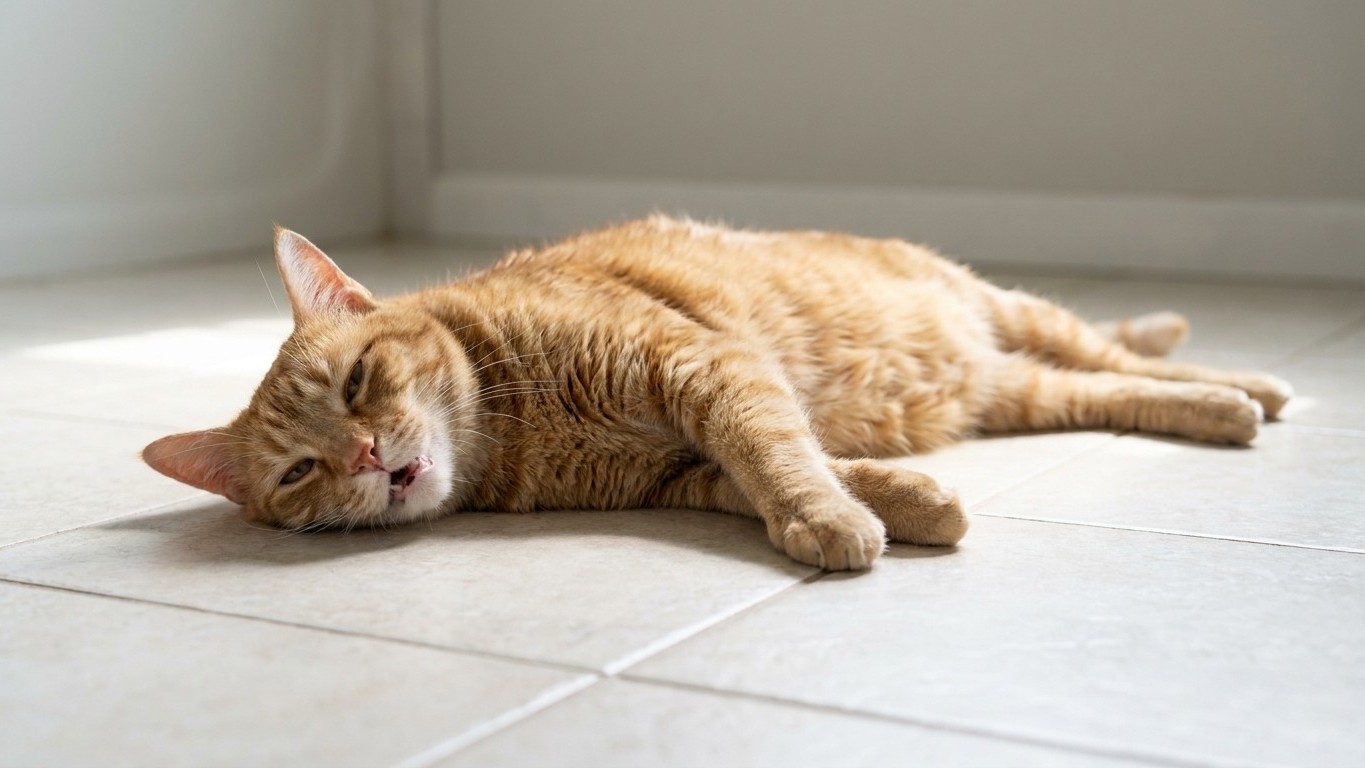
Lethargy in a cat during a heatwave looks, on the surface, exactly like a cat doing what cats do best: sleeping. That is precisely what makes it so dangerous. Every summer, vets across the UK treat cats whose owners waited hours, sometimes a full day, before seeking help, convinced their pet was simply enjoying the warm weather. By the time some of these animals arrived at a clinic, they were in full heatstroke, with organ damage already under way.
Cats are masters at hiding illness, but heatstroke is one emergency that shows clear warning signs, and recognising them quickly can mean the difference between life and death for your feline companion. The tragedy is that the earliest warning sign, unusual tiredness, is the easiest to dismiss.
Key takeaways
- One vet study found 1 in 4 cats with severe heatstroke do not survive—but early intervention saves lives
- The earliest heatstroke warning sign is so easy to miss that owners often wait hours before seeking help
- Certain cat breeds and conditions make them dangerously vulnerable, even on seemingly cool days
Why lethargy is the sign owners keep missing
One of the earliest signs that a cat may be experiencing heat exhaustion is a noticeable decrease in energy levels. Cats suffering from heat-related illnesses often show less interest in playing and may seem unusually sleepy or uncoordinated. On a hot July afternoon, that description fits roughly half the cats in Britain, which is exactly the problem. If your normally energetic cat is lounging more than usual and reacts slowly to stimuli, this could be an early warning sign, not just a lazy summer Tuesday.
The biology behind this is worth understanding. Cats have a very limited ability to sweat, so instead, they control their temperature by licking themselves and seeking shade on warm days. Unlike humans, cats only sweat through their paw pads. They also pant to expel heat through the mucous membranes in their mouth, and licking their fur helps cool them down by allowing saliva to evaporate, simulating the cooling effect of sweat. These mechanisms work reasonably well in mild heat, but high temperatures, especially with humidity, can quickly overwhelm these cooling mechanisms.
Cats are less likely to show early signs like panting, making heatstroke harder to detect until it becomes severe. That combination, subtle early signs and a natural tendency to hide discomfort, is why vets are so frequently seeing cats brought in far too late. In cats, the signs are often more subtle than in dogs, who tend to be far more dramatic about their distress.
From heat exhaustion to heatstroke: the timeline is brutal
Heat exhaustion is an early stage of heatstroke, when the cat’s temperature is approximately 103–104°F. Recognising the signs of heat exhaustion and acting quickly can prevent heatstroke in cats and tissue damage. If a cat’s body temperature goes above 40°C/104°F, they are at risk of heatstroke, which can cause severe dehydration, seizures, blood clotting problems, organ damage, coma and death.
Inflammation caused by heatstroke sets off several reactions that affect every major system of the body, causing the breakdown of essential proteins and enzymes, putting the cat at risk of organ failure and potentially death. The progression can be shockingly fast. Heatstroke in cats progresses rapidly, often catching owners off guard during hot weather or after accidental confinement in warm spaces.
Beyond the initial drowsiness, here is what the escalating picture looks like. Early signs include seeking cool surfaces like tile floors or sinks and increased grooming. A cat might show mild low energy, slightly faster breathing, and warm ears. Then, severe heatstroke shows as heavy panting, drooling, bright red or purple gums, and vomiting. Your cat may seem confused, walk unsteadily, or collapse. Seizures can happen in advanced cases as the brain overheats.
Panting deserves its own mention here, because it is deeply abnormal in cats. Panting in cats represents a critical warning sign since felines rarely pant under normal circumstances. Unlike dogs, cats don’t use panting as their primary cooling mechanism, so any open-mouth breathing indicates severe heat exhaustion. If your cat is panting, do not wait to see if it passes. That window for intervention is closing fast.
Who is most at risk, and where it usually happens
The most common cause of heatstroke in cats in the UK is being accidentally trapped in a hot, poorly ventilated space such as a shed, greenhouse, conservatory, or garage. Cats love finding a warm place to sleep, which is why most cases of heatstroke develop after being accidentally shut in such spaces. Every summer, the same scenario plays out: a cat sneaks into a greenhouse for a nap, the door swings shut, and no one notices for hours. Always check outbuildings before locking them.
While outdoor cats are especially vulnerable, indoor cats can also overheat, especially during heatwaves or power outages. A south-facing flat with no air conditioning and closed windows can become genuinely dangerous on a hot British day, and the UK now regularly sees temperatures above 30°C for sustained periods.
Certain cats face a significantly higher baseline risk. Obese, long-haired, old, young, and brachycephalic/flat-faced cats such as Persians are most at risk of developing heatstroke because they find it harder to cool down. The reason flat-faced breeds are so vulnerable is biological: cats get rid of significant amounts of body heat through their nose as they breathe out. Brachycephalic cats such as Persians struggle to release heat this way because they have much less space inside their nose, putting them at a much higher risk of heatstroke, even on seemingly cool days.
What to actually do, and the cooling mistake that makes things worse
Speed matters enormously here. Heatstroke is more dangerous the longer a cat’s body temperature stays high, so the quicker they are cooled down and treated by a vet, the better their chance of a full recovery. The first move is to get them out of the heat and ring your vet immediately.
For cooling at home, the technique is counterintuitive: cool water, not cold. Using ice-cold water can reduce blood flow to the skin, reducing their ability to cool down or even cause them to shiver, increasing heat generation. Use room temperature or slightly cool water on a towel applied to the cat’s belly, paws, and ears. A gentle fan can help increase cooling through evaporation. Change the towel every few minutes once it warms up, as a hot wet towel does more harm than good.
Even if your pet seems to be fine, it is important to have them checked, as the more serious signs of heatstroke may not be immediately apparent. Prolonged high body temperature can damage a cat’s kidneys, liver, heart, and brain. Kidney problems are common after heatstroke and may not show symptoms until days later. This is why a vet visit is non-negotiable, even if your cat appears to bounce back on their own.
One statistic worth keeping in mind: a study from the Journal of Feline Medicine and Surgery found that 1 in 4 cats with severe heatstroke do not survive, underlining the urgency of early intervention. And there is a detail many owners don’t know: cats that have experienced heatstroke may be more susceptible to it in the future. Heatstroke can cause lasting damage to vital organs, including the brain, heart, and kidneys, and these impairments can affect a cat’s ability to regulate body temperature, making them more vulnerable to overheating again. One episode, managed too slowly, can set up a lifetime of increased risk.
Sources : rvc.ac.uk | morningsideveterinary.com