
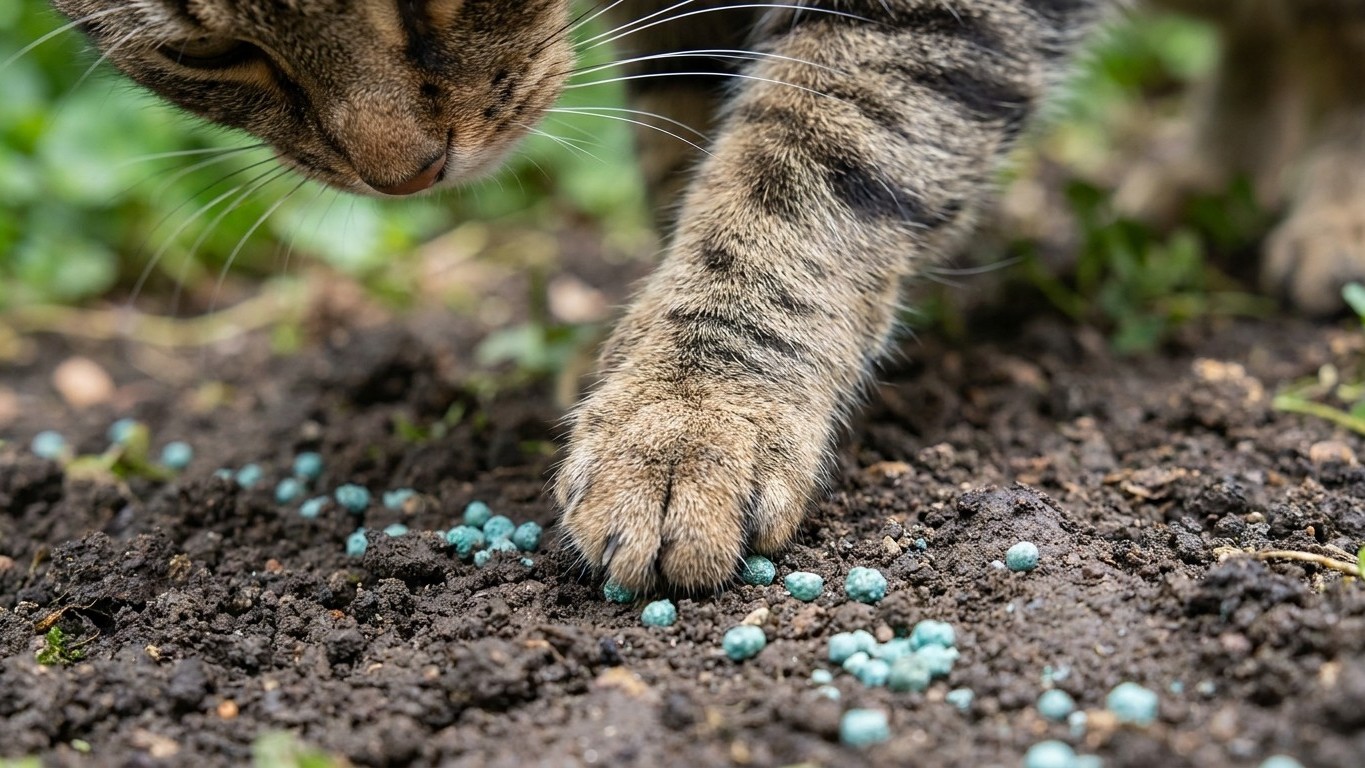
Every June, British gardens turn into a front line. The hostas need protecting, the lettuces are under siege, and millions of gardeners reach for the same blue-green pellets they’ve been scattering for decades. It feels routine, almost responsible. But for anyone who has watched their cat suddenly drop to the floor in full-body convulsions, the realisation of what those pellets actually contain arrives like a freight train. The culprit is metaldehyde, and the story of how it ended up in the soil of so many pet-owning gardens is one of the most alarming in everyday animal welfare.
Key takeaways
- A common garden product used by millions contains a chemical that can kill a cat with less than a teaspoon
- Symptoms develop terrifyingly fast: convulsions and organ failure can occur within 30 minutes to 4 hours of ingestion
- The ban happened in 2022, but old stocks still linger in sheds—and safer alternatives actually work better than you’d expect
A chemical hiding in plain sight
Metaldehyde, a cyclic polymer of acetaldehyde, is the active component in over 80% of slug and snail baits globally. For generations of UK gardeners, it was simply the blue pellet, cheap, effective, available at every garden centre. It works as a contact poison by damaging slug mucus cells, causing them to release excessive amounts of slime to the point they eventually dehydrate and die. On the surface, a reasonable solution to a frustrating problem. The surface, however, was never the whole story.
These pellets are flavoured with bran or molasses to make them more attractive to slugs, and are often dyed blue or green. That combination, a pellet that smells of food and looks visually distinct from soil — is catastrophic when you have a curious cat or dog exploring the garden. The formulation of slug pellets resembles that of dried cat or dog food, which is exactly why so many animals pick them up without the slightest hesitation. The lethal dose of metaldehyde in cats is very low, and less than a teaspoonful of many commercially-available products can lead to death. Read that again. A teaspoon.
This common garden pesticide ranks as the 6th most common poisoning reported to the Veterinary Poisons Information Service. That statistic sits in awkward silence alongside the fact that most people who used these pellets had no idea their cat could be at serious risk from a product sold on the same shelf as bird feeders and terracotta pots.
What happens when a cat ingests metaldehyde
Once ingested, metaldehyde is absorbed by the animal’s GI tract and metabolised, causing gastrointestinal and central nervous system damage leading to vomiting, incoordination, elevated body temperature, seizures, coma, and death. The speed of this is what makes it so terrifying. Symptoms may start as early as 30 minutes after ingestion and will develop within 3 to 4 hours.
The progression follows a grim pattern. Early signs may include drooling, vomiting, panting, and anxiety, which can progress to include depression, a wobbly gait, or the characteristic muscle tremors, seizures, and hyperthermia. Rapid, flicking eye movements (nystagmus) may also occur, especially in cats. Veterinary Professionals have given metaldehyde poisoning a blunt informal name: the signs are dubbed “shake and bake,” because animals may have severe tremors or seizures and an alarmingly elevated body temperature. The high body temperature may cause damage to internal organs, and some pets that survive the initial signs develop liver failure two to three days after ingestion.
There is no room for a wait-and-see approach here. Even small amounts can cause significant poisoning, and severe signs including incoordination, tremors, and convulsions can occur within an hour. Dogs or cats who have eaten the pellets should be seen by a vet urgently, as only rapid treatment can save their life. The window for effective intervention is narrow. The stomach should be emptied as quickly as possible, ideally within 30 to 90 minutes, either with an injection that causes sickness, or by pumping the stomach under anaesthesia.
No antidote or specific treatment for metaldehyde toxicosis is currently available. Activated charcoal can stop further absorption of chemicals. Intravenous fluids may be required to correct metabolic changes, as well as medications to counteract seizures. The pet will be hospitalised for monitoring during this time, with many doing well when treatment has been prompt. Cats that have ingested metaldehyde products are likely to need intensive hospital care for one to three days to control the tremors and seizures and manage complications. Always take the product packaging with you to the surgery, it helps the vet identify exactly what was ingested and in what concentration.
The ban, the loophole, and what’s still out there
As of 1st April 2022, metaldehyde pellets were banned in the UK. This was driven primarily by environmental concerns: the ban followed advice from the UK Expert Committee on Pesticides and the Health and Safety Executive about the risks that metaldehyde poses to birds and mammals, especially birds, toads, and hedgehogs. From a wildlife perspective, problems occur when animals higher up the food chain either eat the slug pellets directly or consume poisoned slugs. Toads, birds, and hedgehogs are all susceptible to metaldehyde, and there are concerns about declining numbers of some of these species.
The ban is genuine progress, but it doesn’t mean the problem has vanished overnight. Old stocks were still legally usable during a transition period, sheds across the country still hold forgotten boxes, and some gardeners are genuinely unaware the legislation changed. If a dog or cat accidentally consumes any leftover metaldehyde bait, contact a vet as soon as possible. The ban is also only on outdoor use; only those using permanent greenhouses will be permitted to continue using metaldehyde pellets.
The good news for gardens is that alternatives work. Pesticides containing ferric phosphate can provide effective slug control without carrying the same risks to wildlife as metaldehyde slug pellets. Ferric phosphate affects the calcium metabolism in the gut system of snails and slugs, causing them to stop feeding and die within three to six days. Ferrous phosphate pellets are organically approved and, in the UK and EU, further treated with a bittering agent to dissuade pets from eating them. They’re not entirely risk-free in large quantities, but the threshold for harm is dramatically higher than with metaldehyde. Beyond pellets entirely, copper tape around raised beds, beer traps, and encouraging hedgehog-friendly habitats all offer genuine slug control without putting your pets or local wildlife in jeopardy.
What every pet owner needs to do right now
Check your shed. This is not a metaphor. Toxicity is most likely to occur when an animal gets into a packet and eats a considerable amount in one go, rather than eating the odd scattered pellet on the ground. An unsecured bag of old pellets in a garage or garden shed is a genuine and immediate hazard. Dispose of any metaldehyde products through your local authority waste facilities, not in your household bin, and certainly not by scattering the remainder on your beds.
If you suspect your cat has been exposed, the signs to watch for are drooling, disorientation, twitching, and then, terrifyingly quickly, full seizures. Always contact a vet for advice immediately if you think your pet has ingested slug poison. If you aren’t sure what type of poison your cat may have ingested, it is helpful to take the package of the slug poison with you for your vet to establish what the substance was. Do not attempt to induce vomiting at home. Induction of vomiting or administration of activated charcoal should only be performed by a veterinarian. There is no safe way to induce vomiting or administer activated charcoal at home.
One detail that rarely makes it onto the pellet packaging: pets who walk through gardens containing bait in liquid or powder form are also at risk for toxin ingestion if they groom or lick their powder-covered paws. A cat doesn’t need to eat a pellet directly to be in danger. Wiping your cat’s paws after they’ve been in the garden, particularly in the weeks after any slug control product has been applied — is a simple habit that could matter more than most people realise.
Sources : vetster.com | growlikegrandad.co.uk