
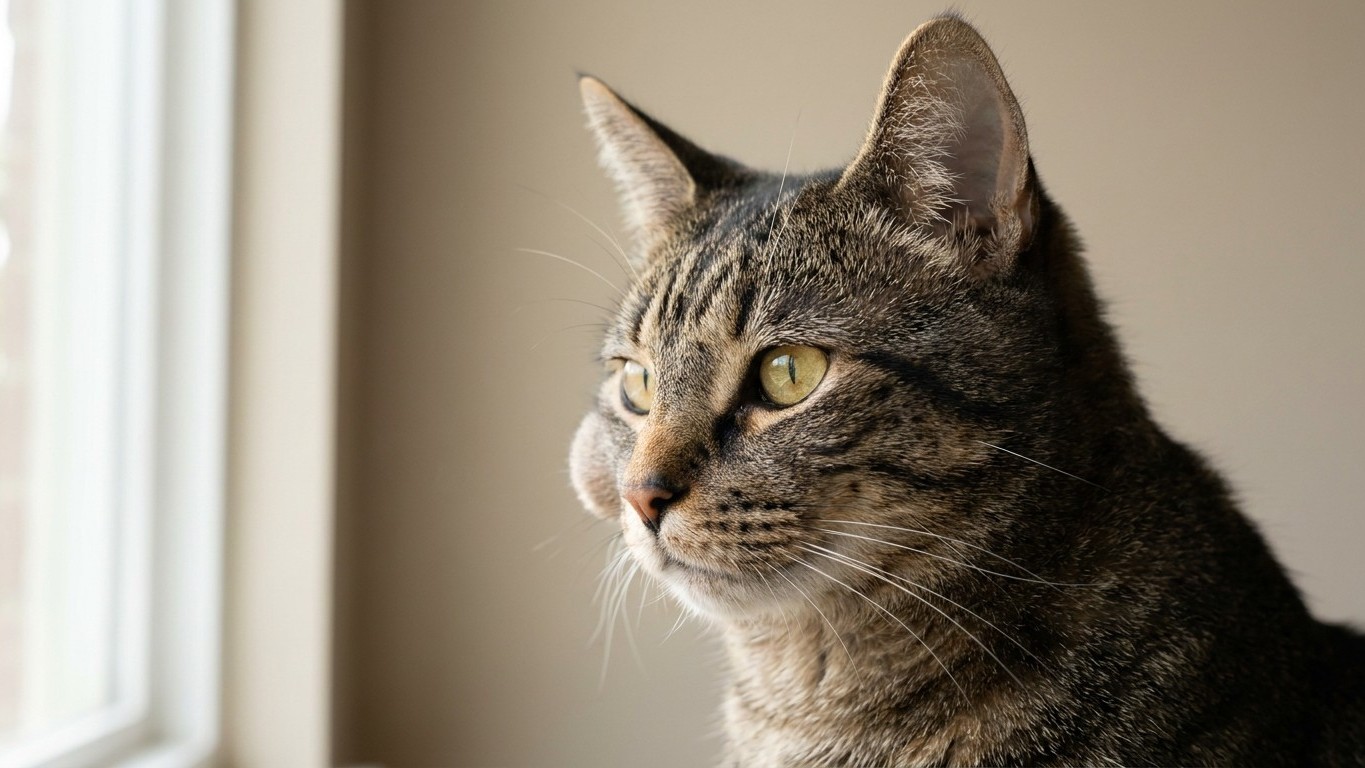
The face was puffy on one side. Your cat was squinting slightly, a bit subdued, off their food. You mentally filed it under “probably got too close to a bee” and planned to keep an eye on things. Then the swelling didn’t go down after 24 hours, it got worse. At the vet, what came out of that lump was not venom. It was a broken tooth fragment from another cat, buried beneath your pet’s skin and quietly poisoning the tissue around it.
This scenario is more common than most owners realise. A swollen face on a cat triggers an immediate, understandable assumption: insect sting. And sometimes it is. But the two conditions look deceptively similar in the early hours, and confusing them can mean losing precious time.
Key takeaways
- What looks like an innocent bee sting can actually be a dangerous abscess with a foreign object buried inside
- Cat bite wounds seal shut within hours, trapping bacteria that multiply invisibly—symptoms may not appear for days
- A vet’s discovery of embedded tooth fragments explains why simple antibiotics alone won’t solve the problem
Why a bee sting and an abscess can look identical at first
If your cat is stung by a bee or wasp, they are most likely to suffer from a swollen paw or face, which are the most common places for cats to be stung. Symptoms such as swelling and pain will likely appear within a few minutes. That rapid onset is the key distinguishing feature of a sting, and the first thing to check. Bees are the only insects that leave their stingers in their victims, and these abandoned stingers continue to pump venom into the bite area. So if you see your cat pawing at their face immediately after coming inside from the garden, and the area swells within minutes, an insect sting is a reasonable first thought.
A fight-wound abscess, on the other hand, is a slow-burn ambush. The bacteria which are trapped under the skin following a bite wound can multiply for several days before any signs of infection become apparent. Your cat may have scuffled with a neighbour’s tom two or three days before that puffy face appears, and you’d have no memory of the incident at all. You may not even know your cat has been bitten or clawed until the area swells, because upon exiting the skin, the tooth or claw may leave no visible mark, and often bleeding doesn’t occur. That’s the insidious part. The wound seals itself within hours, looking like nothing happened, while bacteria multiply quietly beneath.
The biology is almost grimly elegant. When a cat bites, the teeth go through the skin and then release quickly, resulting in small puncture wounds about the same diameter as the cat’s teeth, holes that seal and virtually disappear within hours, trapping bacteria from the cat’s mouth under the skin of the victim. The type of bacteria that live in the cat’s mouth thrive in an environment where the oxygen concentration is low, and once the wound seals shut, they can begin to multiply at a rapid rate.
What the vet actually found lodged under the skin
A persistent draining wound may indicate that foreign material, a broken tooth, claw, or soil, is present in the wound and may require surgical exploration. This is what happened in the scenario described above, and it is far from unusual. During a fight, a cat’s tooth can snap under pressure, leaving a fragment embedded deep in the tissue. The body walls it off, pus accumulates, and what you see from the outside is simply: a swollen face.
The hair is clipped, then the abscess is lanced and cleaned out thoroughly to check for any foreign material, such as nails or teeth. Without that step, simply draining the pus and sending the cat home with antibiotics would not resolve the problem, the foreign material would keep re-seeding the infection. If a foreign object caused the abscess, it is critical that it is fully removed or the abscess will return.
Occasionally, foreign objects such as splinters, thorns, or other debris can penetrate a cat’s skin, introducing bacteria and causing an abscess. These objects can be difficult to detect and may require veterinary assistance for removal. Imaging techniques like X-rays or ultrasounds may be used to visualise the abscess and determine its location and extent. It is worth bearing in mind, too, that cats can also get abscesses on their face from an infected tooth root, rather than a wound, so not every facial swelling is fight-related. A cat who has been quietly struggling with dental disease could present in an almost identical way.
The red flags that should send you straight to the vet
Timing matters enormously here. If your cat is still experiencing pain or swelling from a sting after 24 hours, call your vet for advice. But there are situations that should prompt a call immediately, regardless of what you think caused the swelling. Severe reactions (anaphylaxis) can be fatal, so quick action is vital, take your cat to the veterinary emergency clinic at the first sign of severe swelling around the head and neck that could compromise respiration. Difficulty breathing or wheezing is a serious sign — cats usually do not breathe through the mouth, so if your cat starts to pant, call your veterinarian.
Beyond the acute emergency signs, watch for the slower deterioration that points to infection rather than a sting. Swelling is the most obvious sign of an abscess, but it’s not usually the first symptom to appear, initially your cat might be lethargic, have a fever, or not eat as much as usual. It often takes two to four days for an abscess to develop, so before you see a swelling, you may notice other symptoms first. A cat who is hiding, growling when touched near the face, or refusing their food two or three days after a possible fight is showing classic signs of a brewing abscess, even if the lump hasn’t fully formed yet.
One practical test: gently feel the swelling (only if your cat tolerates it without distress). Typically, an abscess appears suddenly as a painful swelling that may be either firm to the touch or compressible like a water balloon. A sting reaction tends to be more diffuse and evenly distributed, whereas an abscess often has a defined, warm, tender pocket.
Treatment, recovery, and what comes next
Your vet will be able to properly diagnose the abscess, determine the cause, and administer appropriate treatment, which may include drainage, antibiotics, and pain relief. Your cat may need to be sedated or anaesthetised so the area can be safely cleaned and treated. Recovery is usually swift when treatment is prompt: with appropriate care, most abscesses heal within one to two weeks, with some cases taking longer depending on factors like the size and location.
Never attempt to squeeze or lance an abscess at home. Beyond the pain it causes your cat, you risk driving the infection deeper, missing embedded material, and introducing additional contamination. Never use disinfectants containing phenols, as these are toxic to cats, and never use hydrogen peroxide for cleaning a drained abscess, as this will delay healing and can worsen the problem.
There is one more complication worth raising, because vets do not always mention it unprompted. Although rare, bites and scratches can also spread disease such as Feline Immunodeficiency Virus (FIV) and Feline Leukaemia Virus (FeLV). FIV is most common in unneutered tom cats who fight rivals, and it tends to spread through bite wounds that introduce an infected cat’s saliva into another cat’s bloodstream. Most outdoor cats are routinely vaccinated for FeLV in the UK, but there is no effective vaccine available for FIV. Your vet might therefore recommend testing for FIV or FeLV, as these can be spread by cat bites or scratches. If your cat was bitten by an unknown cat, it is worth asking about this at the consultation, and potentially again a couple of months later, since it can take a while for your cat to test positive for these viruses after exposure through a bite wound.
The practical upshot for any cat owner: always consult a vet when a facial swelling persists beyond 24 hours, appears out of nowhere a day or two after your cat has been outside, or is accompanied by lethargy and reduced appetite. A bee sting is almost never what it looks like once a tooth fragment is involved. Cats allowed outside are much more likely to get abscesses than indoor cats, and the less you see of a fight, the more likely the injury is to catch you completely off guard.
Sources : chewy.com | preventivevet.com