
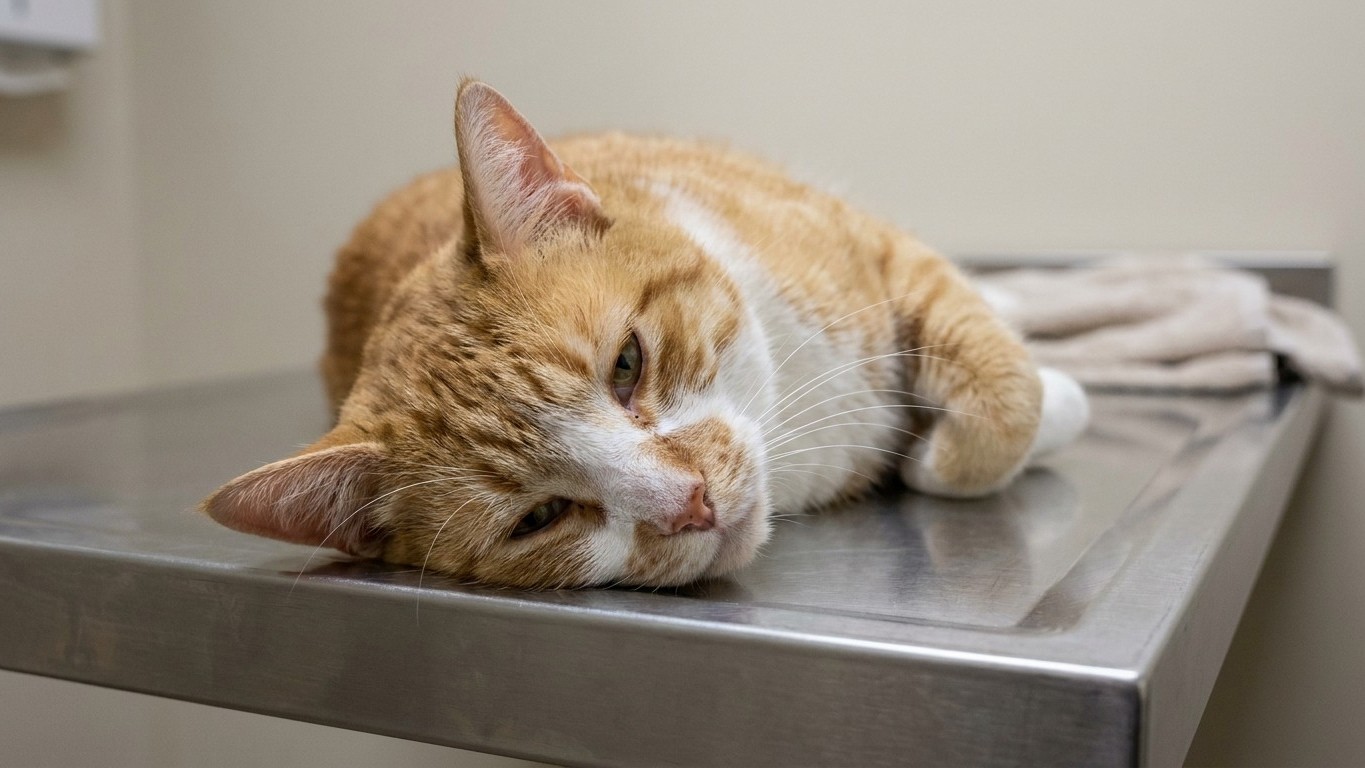
Four hours after applying what she thought was the cat’s spot-on flea treatment, a pet owner watched her cat collapse and lose the ability to stand. The cause: permethrin, the active insecticide in many dog flea products, and one of the most dangerous substances a cat can be exposed to. This kind of mistake happens far more often than most people realise, and the packaging is frequently to blame.
Key takeaways
- A single application of dog flea treatment caused complete paralysis in a cat within four hours
- Cats lack a critical liver enzyme that dogs have, making them unable to break down permethrin
- Symptoms can start in minutes or take up to 72 hours—creating a dangerous window where owners think their cat is fine
Why dog flea treatments are so dangerous for cats
Permethrin is a synthetic pyrethrin, a naturally occurring insecticide taken from the flowers of Chrysanthemum cinerariifolium. On dogs, it works brilliantly as a flea and tick killer. On cats, it can be lethal. The reason comes down to basic feline biology. Cats don’t have the protein needed to help break down permethrin in the body, so it builds up and causes toxicity. A dog’s liver handles the chemical with ease; a cat’s simply cannot.
The dose of permethrin given to even a small dog is enough to poison a cat, because the cat is missing a liver enzyme that would metabolise it effectively. This is a critical point that many multi-pet households don’t know. The tubes look almost identical in certain supermarket displays, side by side on the same shelf. A wide range of flea treatments for dogs contain permethrin, and these are often inexpensive, over-the-counter preparations provided without veterinary advice, meaning people may accidentally use a dog product on their cat, or apply it intentionally to avoid purchasing multiple products, not realising the risk.
Permethrin toxicity usually happens when a dog flea treatment is accidentally used on a cat, or when a cat comes into close contact with a recently treated dog. It’s one of the most common feline poisonings worldwide, with hundreds of cases reported every year in the UK. That figure is sobering. This isn’t a rare freak accident; it’s a routine emergency for many veterinary practices.
What happens to the body, and how fast
Permethrin is highly toxic to cats: it affects their nervous system, first causing it to become over-sensitive (twitching and seizures), and then causing paralysis. The progression can be terrifyingly swift. Effects of permethrin poisoning can start presenting within just one hour of being exposed. In the case of the cat described above, four hours was actually enough time for the neurological damage to become severe, with collapse and inability to stand being classic signs of the toxin overwhelming the nervous system.
The most common clinical signs are twitching, tremors, hypersalivation, dilated pupils, and seizures. In the mild to moderate affected group, signs may include hypersalivation, mild tremors, depression, and hyperexcitability. Some cats may roll on their back and rub it due to paresthesia, a pins-and-needles sensation. In more severely affected cats, disorientation, high temperature, muscle fasciculations, and full seizures can develop. That escalation from odd behaviour to complete collapse can happen within a single afternoon.
Symptoms usually occur minutes to hours after exposure to or application of the product, but may be delayed up to 72 hours. That delayed window is particularly dangerous, because an owner might think their cat has “got away with it” and not seek help until the situation becomes critical.
What to do immediately, and what the vet will do
If you realise the mistake quickly, before symptoms appear, speed is everything. If you believe you’ve accidentally applied the wrong treatment, wash the product thoroughly off the cat’s coat using a mild dish soap and lukewarm water. Pet shampoo won’t work here, as the medication is too oily. Then call your vet without hesitation, even if the cat seems fine.
Left untreated, permethrin poisoning is usually fatal. That sentence alone should make every cat owner double-check the box before reaching for the applicator. Once at the practice, treatment may include washing off any remaining permethrin from the skin and coat, anti-seizure medication if needed, medication to stop the permethrin causing further damage, and a fluid drip to keep the cat hydrated.
There is no known antidote for permethrin toxicity in cats, so treatment mainly consists of supportive care to treat the neurological signs and symptoms. However, research into intravenous lipid emulsion therapy is ongoing. Intravenous Lipid Emulsion therapy is a specialised treatment for severe cases, which acts like a permethrin trap in the cat’s bloodstream, removing the toxin from vital organs. It’s not yet standard everywhere, but it represents genuine progress in managing the most severe presentations.
Typically, a cat will be confined to the hospital for 48 to 72 hours. Cats who survive can take several days of intense care to recover. The financial and emotional cost is significant. The good news: for cases caught early and treated quickly, the outlook is good, and the cat should make a full recovery.
How to make sure it never happens in your home
The most practical step for anyone with both a dog and a cat under the same roof is choosing a permethrin-free flea product for the dog. If you own a cat, it’s best to avoid using permethrin flea treatments for any dog in the same house. When a cat rubs against a dog, or even sits on the same furniture, permethrin can transfer to the cat’s coat and cause poisoning, so “keeping them apart” isn’t always realistic in a normal household.
If you do use a permethrin-based product on a dog, separating cats from the dog for at least 72 hours after a concentrated permethrin product has been applied is recommended. And always buy flea treatment designed only for cats. It can be easy to pick up the wrong product when dog and cat treatments are displayed side by side in shops. Buying flea products through your vet, rather than from a supermarket shelf, dramatically reduces that risk, a vet will always ask which species you’re treating.
One final detail worth knowing: the Veterinary Medicines Directorate ensures all veterinary medicines have gone through safety checks, and has deemed certain cat collars containing permethrin safe for use in cats, as they contain very low doses. So the ingredient on a label isn’t automatically a death sentence, concentration is everything. Spot-on treatments are very concentrated and contain high levels of permethrin, so even a small amount of dog flea treatment containing permethrin is likely to cause toxicity in your cat. The same chemical, a fraction of the dose: safe. A dog-strength tube: potentially fatal. That distinction is the one detail every multi-pet household needs to have burned into memory.
Sources : wagwalking.com | vetster.com